Workout Accountability Apps That Support Proof-Based Logging for Pairs
Photo check-ins between partners close the gap between effort and encouragement in real time.
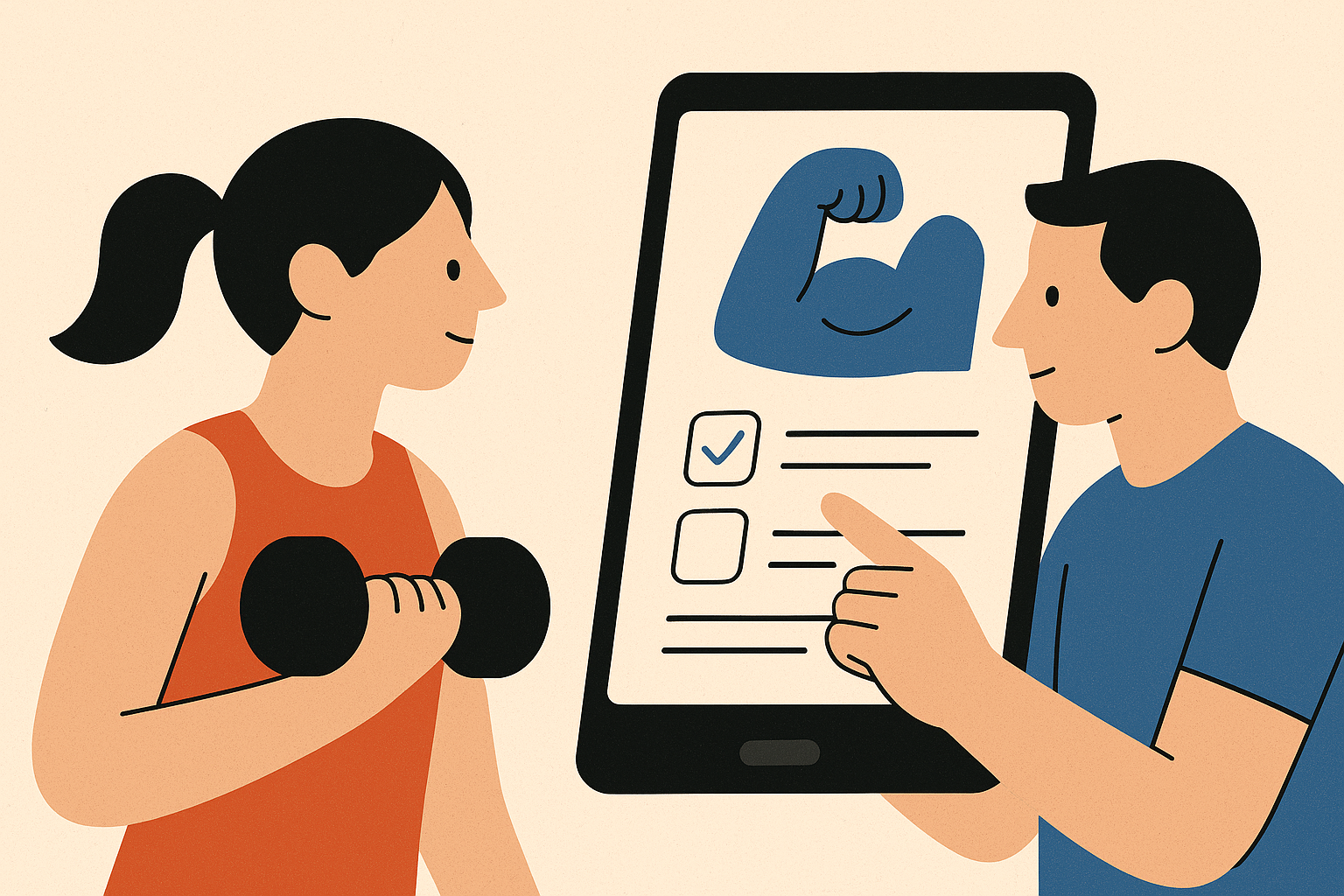
Workout accountability apps for pairs work best when they make showing up visible. For two people whose main hurdle is getting a workout done, a private photo check-in closes the gap between making the effort and having someone notice. The right tool builds around that exchange, without turning a shared promise into another dashboard to manage.
Why workout logging fails pairs before they even miss a session
A workout log helps only after someone has exercised. That is the catch for pairs who need help getting there. Apps that record sets, reps, and progression can show what happened in a session, but a private entry gives the other person no immediate signal. Each partner can finish a workout, or skip it, in silence. By the time the subject comes up, the chance for timely encouragement may have passed.
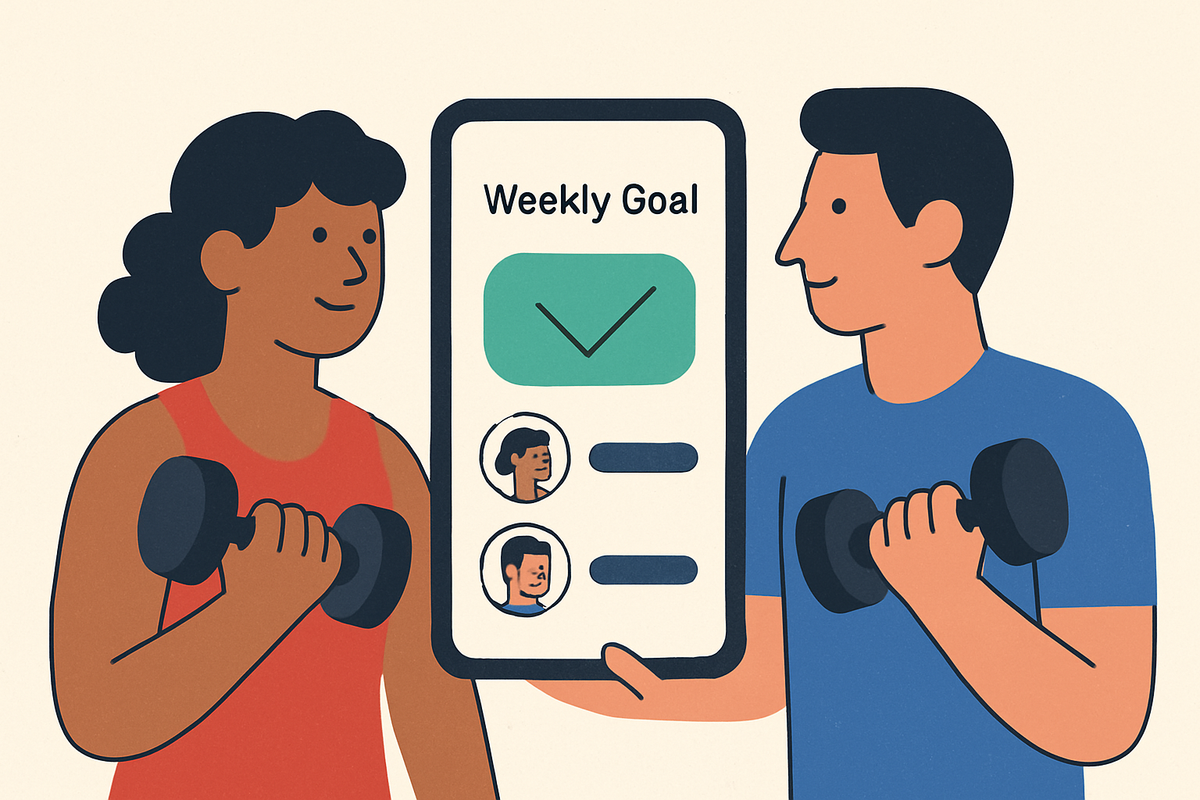
That gap is the accountability lag. During it, one person’s effort cannot serve as the other person’s cue, because the other person knows nothing about it. The weakness can become more apparent as the novelty of a new routine fades. Weeks three through eight are a good time to watch for that change, though science has set no deadline for when a habit will fail. A pair needs a way to make effort visible while it can still prompt effort, rather than waiting for a weekly conversation that feels suspiciously like a status meeting. Sweatmates, a shared fitness tracking app for couples that layers photo check-ins, weekly goals, and friendly wagers over whatever workout routine each partner already follows, was built around exactly that problem.
Why a photo collapses the accountability lag where other signals cannot
A workout photo sent during exercise brings the effort and the signal together. The partner can see it as it happens. Unlike a check-box or a logged set, the image shows a face, a place, and a moment, making presence legible without a separate explanation. It lets each person share what they did while still training on their own schedule. The photo reaches the partner right away, with no need for a live conversation.
The photo also asks something small of the sender. Framing a shot creates a pause to notice posture, breath, and presence, so the check-in can be part of paying attention during exercise. The recipient’s job is even smaller. They need only see it, without decoding workout notation or composing a suitably inspirational reply between meetings.
The University of Aberdeen’s study of exercise companions found that having a new exercise companion increased exercise frequency, with emotional support being the most effective quality. That finding supports the social principle. A promise made to someone they know gives each partner someone to answer to, and the photo shows that person when they have followed through. The benefit is therefore not simply better coordination of gym visits, but a more supportive connection around exercise.
The objection is that documentation can turn exercise into a hunt for approval. That risk deserves a clear distinction. A private two-person exchange is structurally different from a public feed, where strangers, comparison, and attention can become part of the reward. Its audience is one person who already cares. Privacy cannot guarantee healthy motivation, but it removes the public-performance dynamic from the design.
What a proof-based pair app actually needs to do — and what it should leave out
For readers choosing an app, the first test is whether a check-in reaches the partner immediately. Batch delivery defeats the central purpose. The photo should be quick to send during a workout and private to the pair, rather than placed in a public feed or offered up to an algorithm. These are not decorative conveniences. With these features, the app creates a small moment of connection, while without them it becomes another task that both people start postponing.
The next requirement is a modest consequence for a missed weekly goal. Without one, the pair may just be keeping a shared diary. A light wager, such as dinner or a chore, gives the agreement weight without requiring a financial commitment to the app. The pair handles the consequence within the relationship. It should support the promise.
Good design is also clear about what it leaves out. Duration, workout type, and intensity show how someone trained, while the photo shows whether they showed up. Leaderboards bring in competition with strangers, and a large network asks a pair to participate in a different social model. Neither is necessary for this job.
One reliable partner can make a promise feel much more concrete than a broad audience, but an unreliable partner becomes a single point of failure. Instant delivery cannot make someone pay attention. A pair app also needs to let people judge what is fair when a week goes wrong, so an exception need not count as a broken promise. That flexibility cannot replace a willing partner, but it can keep an otherwise sound agreement from becoming brittle.
How SweatCam photo check-ins implement the proof mechanic for pairs
SweatCam is the photo check-in feature at the heart of the Partner Fitness Review model. Partners agree on workout goals for the week, then each takes a quick photo while working out. The photo becomes instantly visible to the other person. A notification gives the recipient a prompt to exercise too, so either partner can set the loop in motion. There is no public feed, audience of strangers, or performance score to manage.
If a goal is missed, the agreed dinner or chore comes due, without an app-mediated financial penalty. The photos remain private between the two partners, preserving the closed loop described above. The home-screen widget can also show the latest photo without the other person having to open the app. The signal gets a place outside the app itself.
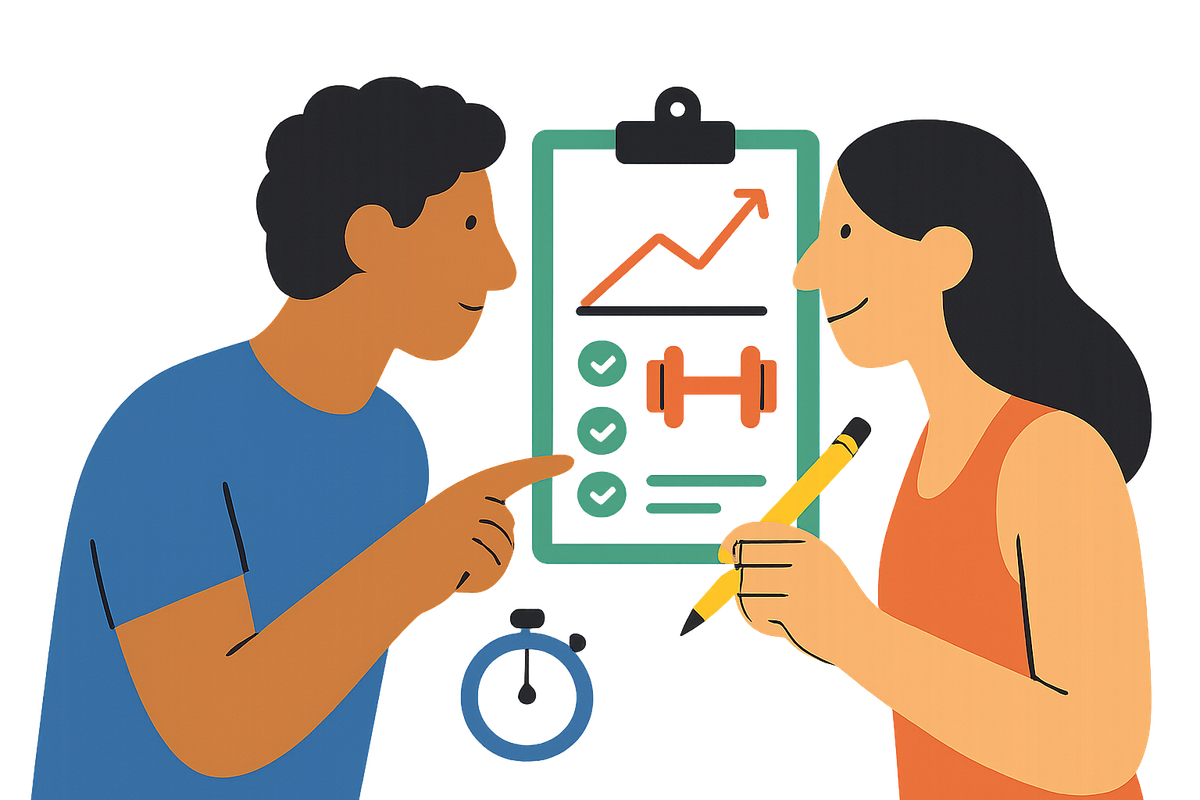
The History feature adds a longer view. It records a streak of consistent weeks and a detailed past-weeks record with daily workout photos, so the pair can see a pattern across check-ins. SweatCam leaves out tracked duration, workout type, and performance stats by choice.
Pinky Promise gives the pair authority over exceptions. One partner can ask for grace, and the other decides whether to grant it. That is a small but important difference from a system that treats a missed target as a verdict nobody can question. It provides a way to resolve an awkward week without discarding the standard altogether, although it cannot solve the deeper problem of a partner who has stopped participating.
The trade-off is equally clear. This format suits pairs whose obstacle is showing up. A photo can establish that a session happened without explaining whether the training plan is effective. Keeping those jobs separate makes the product easier to judge on its actual purpose.
Where other pair-compatible apps fit when the photo-proof model is not the right match
Hevy serves pairs who already train and want to share the details. It is primarily a strength-training logger for sets, reps, and progression, with a social layer that lets friends see logged sessions in a feed. The diary is the main event. For partners interested in each other’s programming, that visibility adds useful context to the record. It is a different exchange from waiting for a photo that says someone made it to a workout.
Sweat’s Fitness App For Women addresses another need, which is knowing what to do when training begins. It offers structured programming from beginner through advanced, including HIIT, strength, yoga, barre, cardio, and pregnancy and postnatal options. Pilates appears mainly in combination programs such as Strength & Pilates. Its coaching roster includes Kayla Itsines, Kelsey Wells, Britany Williams, and Cass Olholm.
Sweat also offers two at-home Peri & Menopause programs tailored to those life stages, with guidance from Christine Roderick. Its “sweaty selfies” feature supports motivation within a broader community rather than a closed pair, while Apple Watch and Apple Health integration support activity tracking. That is a different social setting. Ongoing use requires an active subscription.
StickK is built around commitment contracts and financial stakes. Based on commitment-contract research from Yale economists, it lets users sign a contract that sends money to a person, charity, or organization they dislike if they miss their goal. The nudge is loss aversion. Its web-centric format is less mobile-native than the other options, and its purpose is a defined push. For pairs who respond to financial consequences, that may fit, although penalties do not teach anyone to enjoy training and can add stress during a rough stretch.
Stridekick fits pairs whose shared activity is better represented by steps. It connects most major wearables or a smartphone and supports shared step challenges, leaderboards, and light social interaction. The format also accommodates a wider friend group or family, while step counts are less useful for representing strength training or yoga. Across these choices, the useful distinction is the reason the pair struggles, whether that is attendance, programming, commitment, or coordinating everyday movement.
How to set up a photo proof habit that survives past the first month
To put the photo-proof approach into practice, treat the setup as an agreement. Start with a weekly goal that both partners can reach on a difficult week. The floor is the useful target. A routine calibrated to perfect conditions has very little room for travel or long workdays. The model’s emphasis on simple goals also makes a miss an occasion for reflection.
Choose a wager that creates a little discomfort without straining the relationship. Dinner, a chore, or the choice of a weekend activity can give the promise social weight without app-held money or financial pressure. If the agreement makes exercise feel adversarial, it works against the emotional support that gives the partnership its value. The person receiving a check-in should still feel like a partner.
Agree on what counts before the first disputed check-in. Does a ten-minute walk on a busy day count, or have both partners agreed that it takes a full session? For edge cases, Pinky Promise lets one partner request grace and leaves the decision with the other. Flexibility then has a place in the agreement without making the agreement meaningless.
Use weeks three through eight as a practical review window. As novelty fades, a partner’s notification can become the external cue that helps keep the routine going. The History view makes accumulated effort visible. Its value is not just the streak number, but the evidence that ordinary, imperfect weeks can still contain exercise. A difficult patch tests whether the arrangement fits real life, rather than proving that either person lacks discipline.
Different schedules do not have to defeat this arrangement. Partners can exercise separately because the photo exchange does not require them to be available at the same time. One person sends evidence of effort, and the other receives a connection to it without having to rearrange the day. Over time, the strongest outcome is a shared routine that becomes part of how two people show up for each other.