A Month-by-Month Workout Calendar Bride and Groom Can Follow Together to Peak on Wedding Day
Couples who train together stay accountable and finish stronger.
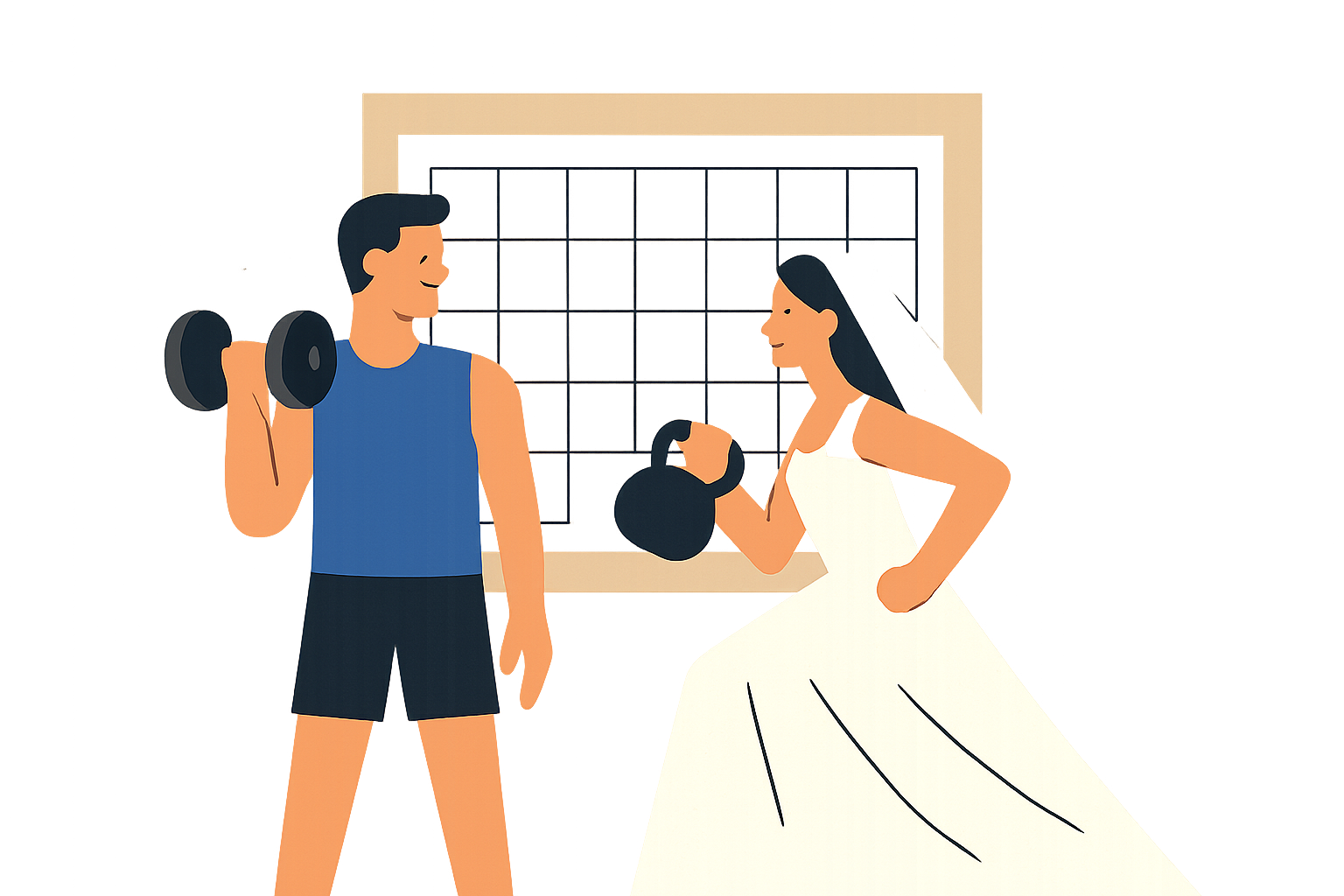
A workout plan for engaged couples works best when it shares the schedule while allowing individual weights. Build the habit first, progress strength training over several months, then maintain through fittings and taper toward the wedding. This month-by-month calendar helps bride and groom feel strong, sure of themselves, and close to each other on the day, while avoiding the exhaustion of a last-minute crash plan.
Why couples who train together quit less often than those who train alone
Wallace, Raglin, and Jastremski tracked married adults through a 12-month fitness program and found dramatically lower dropout among couples training together than among married people training alone. That gives a shared calendar a purpose beyond arranging appointments. Your partner expecting you at 7 a.m. adds accountability that a solo intention lacks. The alarm clock finally has backup.
That accountability works through more than the prospect of disappointing someone. Visible effort can be contagious, with a partner pushing through a hard set making the work feel less demanding to the person watching. Training together over time also becomes part of who they are as a couple, so skipping a session breaks a routine they share. Research published in SAGE Journals found that partner exercise increases positive feelings during workouts, improves mood afterward, and boosts relationship satisfaction.
But what if one partner already trains and the other is starting from scratch? Matching their workouts exactly could derail both people. Parallel programming answers that objection with the same schedule and check-ins but different weights, intensities, and modifications. Your relationship does not need a matching set of dumbbells.
Why a wedding deadline is a legitimate planning horizon — and where it goes wrong
A wedding deadline can trigger crash behavior, including last-minute overtraining and demands for an appearance change that a date cannot guarantee. That is the risk this calendar is designed to prevent.
The science of performance tapering in endurance sport supports getting ready for a target date by building a base and then choosing to cut back on training. Proper tapering can improve performance compared with not tapering, although that does not promise a particular wedding-day silhouette. The useful principle is the sequence of preparation followed by recovery. Sustainability and a well-timed finish are compatible when the plan allows room for both. Couples run into trouble when they turn that sequence around and save the hardest work for last.
When planning a wedding, couples can be especially tempted to do this because they feel more stress and have less time to train. Couples may skip sessions, then try to make up for them with long, intense workouts. Yet high-intensity sessions beyond a certain duration are more likely to raise cortisol than lower it. More exercise is not automatically more relief. The calendar therefore gives the wedding date a specific job, marking the end of a taper.
How to set up the shared calendar before the first workout
To put that approach into practice, agree on a weekly session target before choosing individual workouts. Two or three sessions per week is a realistic starting goal for most couples. Count the sessions both partners finish instead of calories burned or miles covered, so they track their work in the same way. Keep the agreement simple enough to remember without a spreadsheet.
Next, choose a check-in that works when work, travel, or venue appointments prevent training together. SweatCam uses photo check-ins so one partner can send proof of a completed workout and the other can see it instantly. Agree beforehand on a small, playful consequence for missing the weekly goal, such as buying dinner or doing a chore. Finally, mark beginner and veteran tracks side by side, with shared times and check-ins but individual loads and modifications.
Months 12 through 9: building the habit before building the body
The danger in these first months is making training so demanding or unpleasant that the calendar collapses before the body-composition phase begins. Forcing a reluctant gym-goer into a barbell program is a poor foundation for a joint habit. Enjoyment has a practical role here. Choose activities both partners actually want to repeat, rather than treating dread as proof that the plan is serious. The goal is to make showing up normal.
Build the week around two to three full-body strength sessions plus moderate cardio. In calendar terms, that means shared strength appointments, with cardio drawn from activities you both enjoy. Hiking, dance classes, swimming, and partner bodyweight circuits let couples do the same activity while each chooses how hard to work.
For the experienced partner, this phase means dialing back highly individual or sport-specific training enough to establish a shared base. Peak solo performance is not the target yet. Celebrate completed sessions even when nobody records the weight on the bar, because attendance is the useful measure during months 12 through 9. When schedules split, a SweatCam notification provides a visible cue that one partner has done the work. That check-in gives the other a pull to show up during the phase when willpower is least dependable.
Months 8 through 5: where body composition actually changes
Sustainable changes in muscle tone and energy take several weeks to a few months of consistent training. This phase builds on the habit of showing up in the earlier months. Shift the strength work toward compound movements, including squats, deadlifts, overhead presses, and rows. These work the whole body and keep the nearest mirror from choosing the exercises. Consistency now needs a clear progression.
Make that progression concrete by adding weight or repetitions over the weeks, with working sets taken close to failure at an appropriate individual load. Simply accumulating more exercise is not the same thing. The beginner is still adapting to load, while the veteran can push progressive overload more aggressively. Both can follow the same movement patterns in the same session without using the same intensity.
For a bride wearing a strapless or open-back gown, plan two to three sessions per week that focus on the shoulders, back, and arms, and keep the full-body strength work. For a fitted silhouette, integrate core stability and posture work into each session. For a groom wearing a fitted suit, emphasize shoulders, chest, and posture, which are the areas the suit highlights.
Keep the weekly calendar readable as that focus develops. The week still has the same shared appointments, while each partner's track shows which areas to work on, the load to use, and how to build on it. A beginner's productive session can look quite different from a veteran's. SweatCam check-ins make the sequence of completed sessions visible as the weeks accumulate, while the planned increases in weight or repetitions give that consistency direction. The photograph supports accountability. The training progression does the physical work.
Nutrition also needs a place in this phase. Training alone leaves a major part of visible pre-wedding change outside the plan, because food and hydration help drive the result. Put time to prepare meals together into the calendar instead of assuming it will fit somewhere between work and wedding admin.
Months 4 through 2: locking in the silhouette before the first fitting
The first dress or suit fitting becomes the practical deadline now, because changes afterward can affect whether alterations are needed. Treat that appointment as a boundary in the calendar. The aim shifts from building aggressively to maintaining and refining the shape the clothes are being fitted around. Strength work goes on, but the plan no longer calls for big jumps in load.
For strapless or open-back gowns, keep working on shoulder and arm definition, with the same volume and no big jumps in load. For fitted silhouettes, move core stability and posture work to the front of each session. Grooms can focus on thoracic extension and shoulder retraction, posture work that helps a suit sit properly. A fitting is useful feedback.
At the same time, vendor decisions, seating charts, and family logistics can consume the hours previously reserved for training. When a full session will not fit, use the shorter options already suited to this phase, including a 15-minute high-intensity burst, walking during vendor calls, or a brief partner stretch before bed. Keep explicit rest days and one weekly active recovery session, such as mobility, yoga, or a gentle walk. A SweatCam check-in now signals that the habit remains intact even when the workout looks less impressive than it did a month ago.
The final eight weeks: tapering rather than peaking through panic
Long, high-intensity sessions are more likely to raise cortisol than lower it, making them a poor answer to mounting stress in the final stretch. Training should decrease. As the maintenance phase reaches the final eight weeks, shift the emphasis toward mobility, Pilates, Zone 2 cardio such as steady-state walking or light cycling, and breathwork. The earlier months supplied the training base. This period gives recovery a larger share of the calendar.
That shift can feel counterintuitive when the wedding is getting closer and the urge to do more gets louder. But a taper is the planned payoff of the build. The calendar no longer needs to keep chasing heavier loads or harder sessions. The reception is not a surprise endurance qualifier.
Make the final week a formal rest week, with no new strength sessions and only light walking or stretching. Put sleep first and keep an eye on hydration. At this stage, sleep and hydration do more visible work than another gym session could.
To keep the accountability without preserving the workload, shift SweatCam from workout photos to recovery check-ins. A post-walk photo or morning stretch snapshot keeps the shared ritual alive. Couples who trained together consistently through the earlier phases report lower stress and feeling more “in sync” during the high-pressure final weeks. The useful result is not just physical. The same joint routine that supported attendance now supports connection when planning demands are at their loudest.
Keeping the habit going after the wedding
The English Longitudinal Study of Ageing found that when one partner starts exercising, the other is far more likely to become active too. That partner influence gives the calendar a role beyond the wedding. Continued enthusiasm from one person can help draw the other back when motivation dips after the honeymoon. A functioning shared routine is more durable than a one-day target.
After the wedding, return to the foundation structure of two to three sessions per week, a shared weekly goal, a simple check-in, and a light wager for a missed week. There is no need to rebuild the system. A missed session should prompt rescheduling, because the calendar exists to help you return.