How to Get a Reluctant Partner Excited About Training Together Before the Wedding
Choosing activities together and celebrating small wins matters more than perfect workouts.
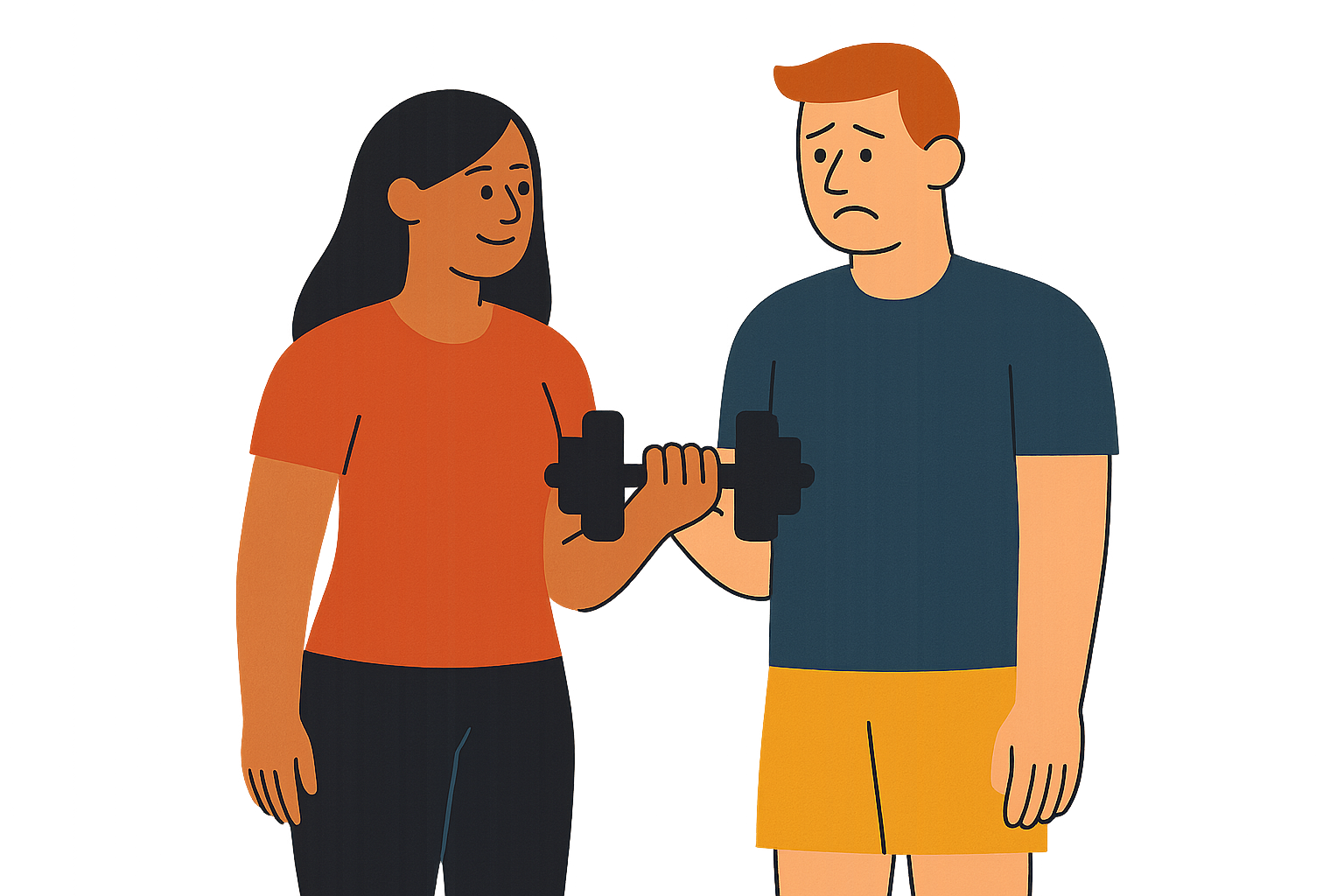
The best workout plan for engaged couples before the wedding starts with connection. Invite a reluctant partner into an activity they help choose, set achievable weekly goals, and make showing up a shared win. A plan both people want to repeat beats a perfect one that feels like homework.
Why reluctant partners resist fitness together — and why the usual approach backfires
A schedule, a program, and a goal weight can look helpful to an eager partner and feel like a performance review to the person receiving them. The person receiving them can feel included or marked for improvement. Before a wedding, pressure to look good can make even a well-meant suggestion sound like another inspection. Nobody wants their relationship to get its own quality-control department.
That is why partners need to talk about reluctance before choosing a workout. Treating it as a shortage of motivation misses the question underneath, which is whose idea of success the couple will be pursuing. Jumping straight to exercises leaves that question unanswered, even if the first session happens. The fix is not a better workout, but a better first move.
What the research says actually happens when couples train together
Research in the Journal of Social and Personal Relationships found that partners said they were in a better mood during exercise and throughout the day, and were happier with their relationship, on days they exercised together compared with days they exercised on their own. Those findings give a partner who has doubts a reason to try the idea beyond looking different in wedding clothes.
Research on relationship quality also identifies shared physical challenges as valuable bonding experiences. Finishing a walk, completing a hard set, or trying something new gives a couple something they accomplished together. The challenge does not have to look impressive from the outside to become a meaningful memory. Its value comes from sharing the effort.
Couples can gain those benefits even when one partner is fitter than the other. The Köhler effect suggests that a less-fit partner can feel motivated to work harder in the presence of someone more capable. The fitter partner can help by cheering the other on, so the difference in ability gives them a boost.
Why low stakes and visible shared wins are the active ingredients
Self-Determination Theory research on exercise names three needs that help people stay active, which are autonomy, competence, and relatedness. In everyday terms, people need choice, a sense that they can do the activity, and connection with someone else. A partner who takes over as coach can undermine all three at once. An achievable first session protects them by making the experience feel chosen, manageable, and shared.
Low stakes work best when the win is also visible. A completed workout streak, a photo check-in from both partners, or a weekly recap gives the couple something concrete to point to. Sweatmates puts shared workout tracking and weekly recaps at its heart, showing progress through what the couple does together. The wedding supplies a meaningful deadline, but the shared record supplies evidence that the couple can keep going. A small goal starts to feel like it has a purpose without becoming a second seating chart.
How to make the first ask — framing and timing the invitation
Lead with wanting time together before the wedding. That makes the invitation about the relationship instead of an implied fault in someone’s body or habits. Keep the emphasis on how both partners want to feel during the months ahead and on the day itself. Wedding-body language turns that focus toward how someone looks and away from how much they enjoy it.
Timing helps the message arrive as intended. Choose a moment after a positive shared experience, rather than attaching the invitation to a stressful planning conversation. Someone already overloaded with decisions is unlikely to welcome a surprise fitness brief.
Then make the first step small enough to answer without reviewing an entire calendar. “Want to go for a walk Saturday morning?” offers something concrete without committing either person to a full program. The reluctant partner still needs a real say in what they do, when, and how often, so those details must be open to change. The first ask succeeds when both people choose the next step.
What is the best way to work out together before the wedding with different fitness levels or interests
The best first activity is something the reluctant partner already likes that overlaps with being active. For a sedentary or returning exerciser, a 20-minute walk counts as a complete workout. Treating it as legitimate matters because calling it merely a warm-up puts the fitter partner’s standards back in charge. The useful criteria are willingness, a manageable challenge, and room for both people to enjoy themselves.
Partner exercises can make cooperation part of the movement itself. The couple could try partner push-up high-fives, which add a shared high-five to push-ups, or medicine ball core rotations, which involve turning with the ball. Partner resistance band rows use a band for the rowing movement. These are optional activities whose appeal is coordination and contact. An exercise with “partner” in its name still has to suit both partners.
A new activity offers another way around the experience gap. A dance class, a new hiking trail, or a climbing gym can put both people in the position of trying something unfamiliar. Neither has to turn up as the expert. A mix of workouts together and on their own lets each person keep doing what they like without feeling that exercising alone means giving up on the couple’s plan.
How photo check-ins turn showing up into something both partners look forward to
The first session has novelty on its side, but the fourth week has to compete with ordinary life. A quick workout photo can help the habit feel shared even when partners exercise on their own. It confirms that the session happened, invites a response, and includes the person who was not there. The photo is less a receipt than a small window into the other person’s day.
One user compared the SweatCam mechanic to BeReal, describing a snap of where someone actually is that invites a reply and a comment. Seeing the partner’s photo became something to anticipate. A second user in a long-distance relationship described it as “this little moment of like, oh ok, he's taking care of himself — that's hot”. That reaction says more about the appeal than a chart of completed sessions could. The photo communicated care and self-respect.
The important part is who receives the photo. A picture stored without reaching someone emotionally invested does not provide the same accountability as a check-in a partner sees and responds to. With Sweatmates’ SweatCam feature, partners set a weekly goal and log sessions with a quick photo that the other person sees instantly. This gives the couple a way to stay involved without requiring the same gym or schedule. A photo sent straight to a partner can work in the same way.
Check-in photos do not have to become body-progress photos. The latter serve a separate purpose by making visible changes that daily weigh-ins may miss, but that purpose is secondary here. For someone with disordered eating or body image concerns, progress photos may be the wrong place to start. Strength gains, energy levels, or how clothes fit are alternatives, with photos introduced only when and if the person is ready.
Setting a weekly goal structure that beginners and experienced exercisers can both sustain
A shared weekly goal gives the couple something to aim for even when their days run on different schedules. It absorbs the unpredictability of work and wedding planning while keeping the commitment specific. Each person can have an individual goal and contribute check-ins toward a joint weekly target. Shared fitness tools, including Sweatmates, can support that arrangement without imposing one program on both people.
For beginners or returning exercisers, the early priority is making exercise easier to start. Short, repeatable sessions put frequency ahead of intensity. Habit instigation means attaching the new behavior to an existing routine, such as getting out of bed or getting in the car after work. A photo check-in after a 20-minute walk is a complete entry toward the weekly goal. The beginner should be able to finish and reasonably imagine doing it again.
An experienced exerciser needs to keep doing their own training in a way that matters to them without taking over the sessions they share. A simple week can include a shared walk on Saturday morning and separate sessions that each partner logs toward the same weekly target. That is a flexible framework rather than a prescribed training schedule, because the couple chooses the frequency. Early on, partner comments and visible check-ins provide external support, which can gradually give way to self-monitoring as the habit becomes more automatic.
What to do when the reluctant partner hits a wall — and how not to make it worse
A missed goal is normal, especially during the first several weeks, but it can still feel discouraging to both people. The eager partner may worry that the whole plan is slipping away, while the reluctant one may feel they have proved that someone was right to expect so little of them. Neither feeling needs to become a verdict. The response to the dip matters more than treating the dip as a crisis.
Support asks what got in the way, while pressure points out that a promise was made. That distinction is the balance between accountability and autonomy in everyday conversation. A partner can care whether the goal happened without taking ownership of the other person’s behavior. Treating every session as a chance to coach can bring back the feeling of being managed that made the first invitation hard. Good intentions do not make unsolicited supervision feel romantic.
The missed week therefore needs reflection. Ask what would make next week easier instead of demanding an explanation for insufficient effort. Then return to the lowest-friction version of the habit, such as one shared walk or one photo check-in. There is no need to turn missed sessions into a debt collection exercise.
Turning fitness into something the relationship carries past the wedding
The wedding gives the plan a deadline, but it does not have to give the habit an expiry date. A routine built around connection can keep feeling like time together after the event is over.
A walk completed, a hard set finished, or an unfamiliar activity attempted becomes a meaningful memory because it belongs to both people.
The same flexibility that helps before the wedding can carry the habit through travel, different schedules, and new cities. Workouts together give the couple time with each other, while an easy photo check-in helps them feel connected when they work out in different places. Neither depends on a perfect week. A system that tolerates imperfection leaves room for both people to remain themselves. Beyond the wedding, the real payoff is a relationship in which each partner feels supported, included, and seen.
Sources
- Partner Power: Workouts You Can Do with a Friend for Maximum Impact - Australian Institute of Fitness
- Enhancing Exercise Adherence and Enjoyment Psychological Strategies to Improve Motivation and Mental Health Outcomes
- Want a happier marriage? BYU study suggests one simple habit - BYU News
- Doctor Explains Benefits of Exercising with Romantic Partner
- What can you do to maintain exercise motivation? - Harvard Health
- Couples workouts: Expert tips for training as a pair - David Lloyd Clubs