How Real-Time Sync Between Two Accounts Changes the Way Couples Train Together
Shared workout photos keep couples accountable when training apart.
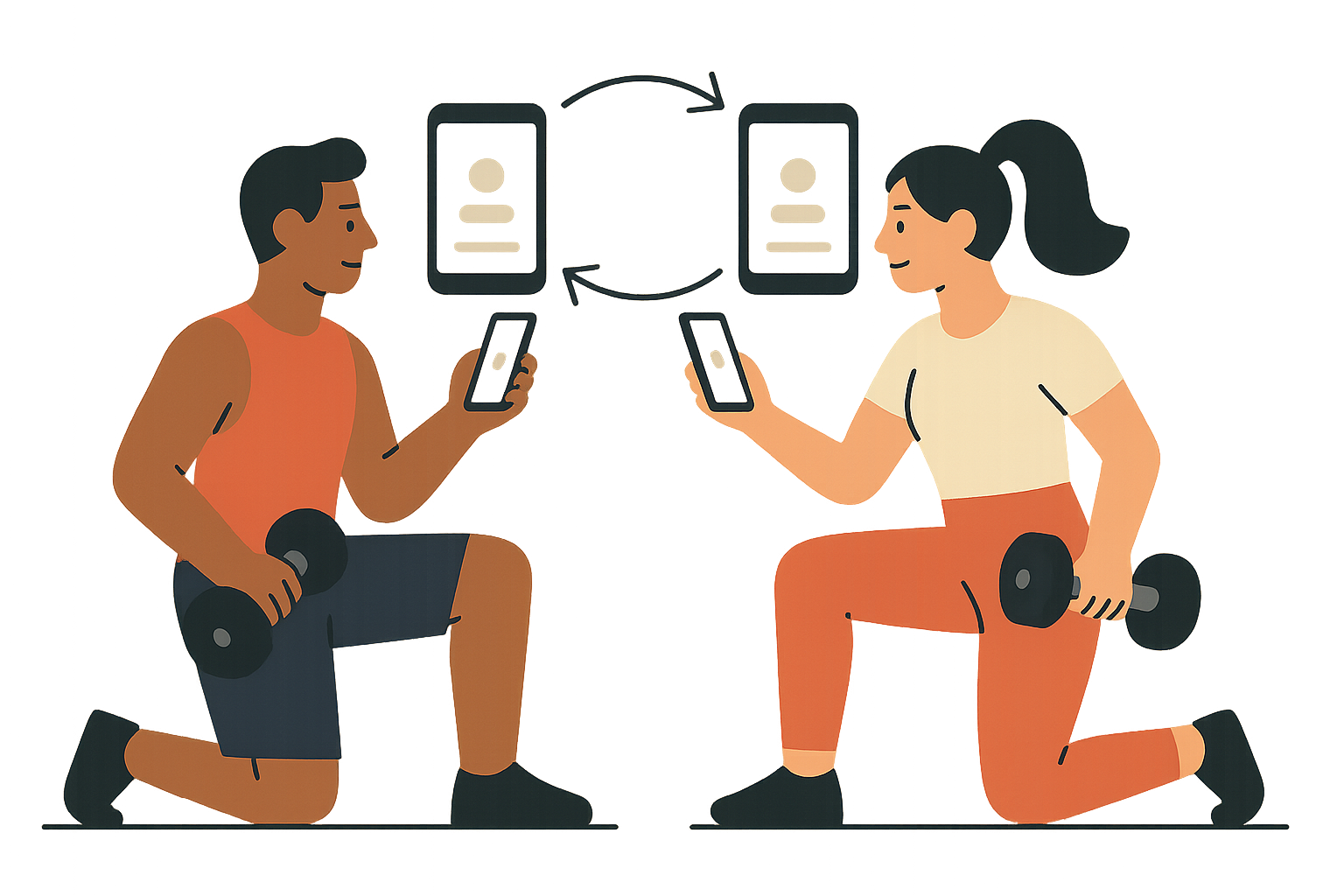
For couples who work out in different locations, Sweatmates is an option for instant photo check-ins and shared visibility of individual weekly goals. FitWithLove: Couple Workout offers guided partner exercises at home instead. The best fit depends on whether couples need a workout to do together or a way to feel together while training apart.
Why training alone is the consistency problem most fitness tools ignore
Two partners agree to exercise more, make their plans, and then quietly fall off them. Neither has stopped caring about fitness or the other person. But when each session happens separately, showing up becomes a private event that the partner may never see. Skipping is just as private, so it slips through the day suspiciously easily. The obstacle is not always a lack of effort or information, but the absence of anyone who knows that effort happened.
Most fitness tools help people plan workouts, track them, or see how much they have improved. Those are useful jobs, but a well-organised training log cannot supply companionship. Couples can share a goal while remaining functionally alone in the work of reaching it. Apps like Sweatmates address that gap by making each partner’s workout visible to the other in real time through a simple photo check-in. That visibility restores a small social consequence to the choice of whether to go, without requiring a partner to stand nearby holding a clipboard.
What "real-time sync" actually means in a couples fitness app
In a photo-based couples fitness app, real-time sync means that a workout check-in reaches the other account immediately. Sweatmates implements this through SweatCam, which lets one partner log a session with a quick image that the other sees instantly. Each partner works toward an individual weekly goal, and both can see progress throughout the week.
The home-screen widget gives that exchange a place outside the app. It displays the partner’s latest photo, so seeing it does not require opening a dashboard or starting a conversation. The check-in photos are private between partners. Sweatmates also describes a light wager for missing the weekly goal, such as buying dinner or doing a chore.
This differs from performance tracking in a precise way. The photo check-in shows that someone showed up, while the weekly progress view shows how close they are to their attendance goal. Shared visibility of separate targets is not the same thing as syncing a workout programme or analysing results.
How a photo creates shared presence without shared time or place
A dashboard tells a partner something happened. A photo gives that fact a human face, which changes what the exchange can mean. It is not simply a record to inspect later, but a signal from someone who is making an effort now.
That is the central value of the mechanic. A partner can witness the effort without supervising it, and the person training can feel noticed without having to request attention. This resembles the “silent witnessing” of a companion who is present but non-intrusive. The photo carries one important part of exercising together across the distance: someone who matters knows that the session happened.
The widget then extends that brief exchange into the rest of the day. Sweatmates users describe this ambient visibility as “presence without interruption,” a way to check in without requiring a full conversation. The image remains in the background while both people get on with their separate obligations. For busy partners, that is a meaningful distinction between connection and another message demanding an answer.
Privacy supports the same effect. When only the partner can see the check-in, the reward is being recognised by that person. There is less reason to turn attendance into a production.
Can couples with different fitness levels and separate schedules keep the loop going?
A shared workout can become awkward when one partner trains regularly and the other is returning after a break. A programme pitched at one level may hold the fitter partner back or push the less fit partner too far. The photo model avoids that particular mismatch because attendance is the unit both people share. The intensity, duration, and type of exercise can differ without making either check-in less valid.
Separate schedules follow the same logic. One partner can train at 6 a.m. and the other at lunchtime, with neither required to rearrange the day to make the exchange work. Real-time delivery means the photo arrives when the effort happens. Their progress bars can still show how close each is to their own weekly target. They can stick to their shared commitment because each knows what the other is doing, even when their calendars differ.
The arrangement can feel lopsided if one person chooses a trivially easy goal while the other takes on an ambitious one. Partners can discuss targets that feel equally challenging to each partner. That conversation is part of the relationship work the app prompts.
What the research on joint exercise says about relationships, not just retention
Researchers at Brigham Young University’s School of Family Life, drawing on data from 1,693 couples, found that joint exercise “may enhance marital outcomes,” publishing their findings in Family Relations in August 2026. Exercise can also be a shared practice through which couples recognise effort and care.
A photo check-in gives that idea a small, repeatable form. One person makes an effort, and the other becomes aware of it during an otherwise separate day. The exchange can keep what they both want in mind between conversations, instead of leaving it buried in their last talk about getting fitter. In that sense, the workout becomes something the couple participates in together, even when the exercise itself is separate.
The research does not show that photo sync helps couples in the same ways as joint exercise. Nor does an association settle which way the influence runs, since stronger couples may be more likely to exercise together in the first place. Both directions may matter. Photo check-ins offer a low-barrier way to practise mutual awareness around exercise.
How habit formation timelines explain why sustained visibility matters most in the first months
Exercise habits take longer to form than most people expect. During the first several months, the reward of exercising may not yet be strong enough to carry attendance through a difficult week. Motivation can launch the plan, but it does not automatically maintain it. The social layer matters because it remains available after the launch speech has lost its sparkle.
Without social reinforcement, one missed workout can become several private decisions to postpone. With a shared check-in habit, the sessions that do happen remain visible even in an imperfect week. Showing up three times still produces three photos and three moments of recognition.
For beginners, leaving performance data out of this exchange also removes a common source of anxiety. There is no pace to explain or weight to compare, only the fact of having gone. For returning exercisers, the check-in can reconnect an existing habit to a commitment another person can see. Neither case requires the partner to become a coach.
A small, achievable weekly target fits this early stage better than a daily streak. It lets them miss a day without treating the whole routine as broken. That flexibility is important because sustained visibility is not the same as perfect attendance.
Where photo-only sync has limits and what to do about them
Photo-based sync provides accountability without analysis. Couples who need progression tracking for sport or strength goals will still need a separate logging tool. A picture can show that a session happened, but it cannot replace a sets-and-reps record or route data. This design boundary matters for anyone whose main question is whether training is improving. Attendance and performance are different things to measure.
The more delicate limit is emotional. A partner’s attention can encourage effort, but in an already strained relationship it can also turn into guilt. Missing a goal should therefore lead partners to think about what happened without feeling ashamed. A wager works only when it stays light and mutual, such as dinner owed or a chore done. The consequence should make skipping only mildly inconvenient.
Unequal commitment can also change what the feed means. If one partner checks in regularly and the other rarely does, the photos may start to document imbalance. That calls for a relationship conversation the app can surface but cannot resolve. Likewise, having someone to answer to does not by itself make a person want to exercise, though caring about a partner’s response can feel more rewarding on a personal level than a streak counter.
Photo sync needs proportionate expectations and honest conversation around it, with a separate training log where detailed analysis matters.
How to set up a photo-based accountability loop that actually holds
Start with a weekly goal each partner can meet on a bad week. In the first two months, the target’s job is to keep the routine alive. Partners at different fitness levels should agree on their own targets that feel equally hard given where each is starting. A smaller shared commitment that lasts is more useful than an impressive one that immediately becomes a source of friction. Ambition can come later.
Keep the check-in itself simple by taking the photo at the moment of exercise. That shows the effort as it happens and lets the partner know without leaving another task for later. In Sweatmates, partners choose their workout days for the week, log sessions with SweatCam, and see each other’s progress bars. The shared exchange requires only a photo. That low burden is part of what makes repetition practical.
Choose a light wager, such as buying coffee or doing a chore at home. It should make a missed target only slightly uncomfortable. Turn on the home-screen widget and workout notifications so the partner’s effort can appear without either person initiating contact. This is where the ambient design earns its place, by keeping the connection visible without demanding constant attention.
At the end of the first month, whether both partners are still sending photos is a useful measure.
Sources
- Sweatmates: Couples Fitness
- FitWithLove: Couple Workout - Apps on Google Play
- Sweatmates: Partner Fitness - App Store - Apple
- Fitness Accountability With a Partner - Sweatmates
- Want a happier marriage? BYU study suggests one simple habit - BYU News
- ACE - Certified™: March 2025 - The Science of Habit Formation: A Guide for Health and Exercise Professionals