Wedding Countdown Fitness Plans Built for Two People With Different Starting Points
Separate workouts at matching intensity levels keep engaged couples on track.
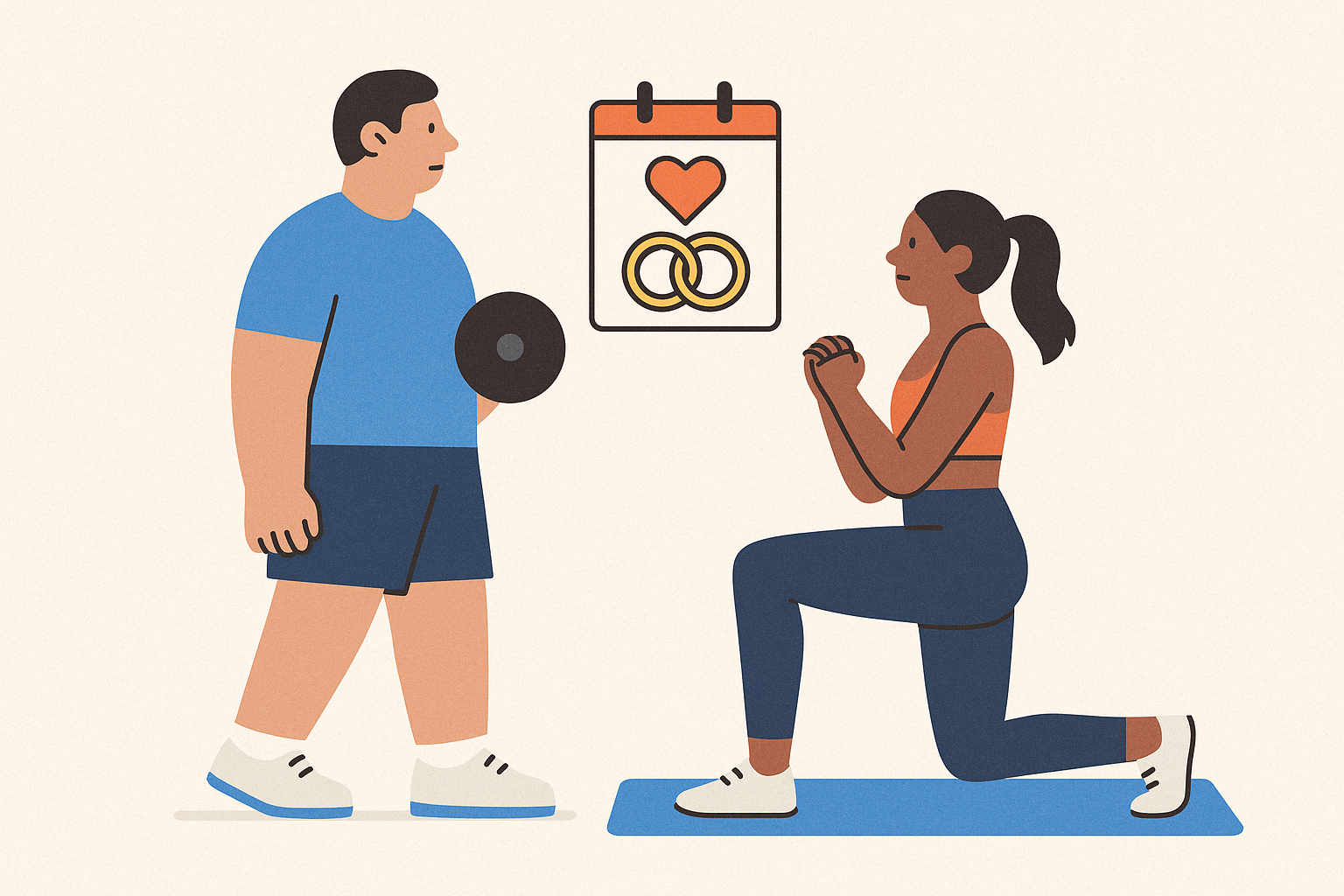
A wedding countdown fitness plan for two different fitness levels works best with separate workouts and shared accountability. Sweatmates is an option for couples training in different locations who want individual weekly goals, photo check-ins, and progress recaps in the same app.
Why wedding fitness plans fail couples with different fitness levels
One partner already has a lifting routine, while the other is trying to make exercise fit between work and venue calls. They agree to train together, then discover that the same session feels like a warm-up to one and a survival exercise to the other. Neither reaction means they lack commitment. It means the plan has mistaken a shared wedding date for a shared starting point.
Setting the difficulty for the experienced partner can burn out the beginner. Setting it for the beginner leaves the experienced partner without enough stimulus. Splitting the difference can under-challenge one person while over-challenging the other, which is an impressive way to disappoint everyone efficiently. The Sculpt Society’s bridal program has separate beginner and intermediate-advanced tracks so each partner can train at a level that fits. More enthusiasm cannot reliably resolve a mismatch in workout difficulty.
What "different starting points" actually means in practice
The beginner is building the habit of showing up alongside strength or stamina. At first, the workouts can feel new and exciting, and with plenty of support a beginner can show up as often as an experienced partner or even a little more often. That does not mean the habit is secure. Roughly weeks three through eight can be shaky because the early excitement can wear off before showing up feels automatic. A busy week then tests a behavior that has not yet settled.
The seasoned exerciser has a different problem. Training already has a place in their life, but their demanding solo program may leave little room for their partner. Wedding Fit addresses this person with a focus on getting lean before the wedding and building strength and habits that carry into married life. Its home and gym options also acknowledge travel and disrupted schedules. This partner needs to keep a training routine that works for them while keeping the couple’s plans tied to each other.
The structural answer: parallel intensity tracks, one shared accountability layer
The architecture is simple enough to remember. Each partner uses an intensity track that fits them, while both set goals, check in, and look back on the week in the same way. Exercise difficulty belongs to the individual. Accountability belongs to the pair.
The Sculpt Society offers separate calendars and says its workouts can be done together as a couple. Wedding Fit has home and gym versions of every session with equipment swaps, so the countdown can stay on track when the place or gear available changes. These options help couples choose workouts they can do where they are, but they still need a connection between their separate sessions.
That connection can take the form of photos and a regular goal-setting conversation, whether handled directly or through an app such as Sweatmates. Each person’s appropriate workout becomes part of a commitment the other can see.
How to build the timeline: what each phase asks of each partner
The Foundation Phase begins six months or more out. For the beginner, the priority is establishing a repeatable habit rather than copying the experienced partner’s workload. For the seasoned exerciser, it means maintaining familiar compound movements, including squats, deadlifts, and overhead presses, rather than escalating simply because a countdown has begun. Both can also find an occasional shared activity, such as a weekend hike, dance class, or walk.
The Dress and Suit Phase, four to two months out, makes the work more specific once attire is selected. Strapless or backless styles can guide attention toward face pulls, lat pulldowns, tricep dips, and lateral raises. Fitted or mermaid silhouettes can bring glute bridges, weighted lunges, planks, and Russian twists into focus. Ballgowns and heavy fabrics put a practical emphasis on posture and strength through goblet squats, deadbugs, and rows. These are movement options, with loads and volume suited to each partner.
For the beginner, this phase builds on attendance already established. For the seasoned partner, it favors precision over simply adding work. If the intended shape is reached by the first fitting, typically two to three months out, maintenance helps avoid expensive last-minute alterations.
The final eight weeks are the Sustain and De-stress Phase. Mobility, Pilates, and lower-intensity cardio give both partners a calmer gear. Type A Training recommends shorter, lighter sessions, nothing new, and plenty of sleep in the final week.
Why posture and consistency matter more than transformation on a wedding timeline
Standing comfortably with steady energy is a more useful wedding goal than pushing both people to reach the same body-composition target. Type A Training explains that fat cannot be spot-reduced from the arms or waist. Strengthening the upper back and shoulders, stretching the chest, and practicing posture can, however, help both partners stand taller and look more relaxed in photos. That is a result available without requiring matching weight loss.
The practical cues are ears over shoulders, shoulders down and back, and ribs stacked over hips. Rows and band pull-aparts can have a place each week, with difficulty suited to the person. The emphasis is on carrying the body well.
Four manageable sessions maintained through wedding week are more useful than a five-day bootcamp abandoned around week three. Type A Training also warns that crash diets and cleanses can leave people tired and run down. Energy is part of the outcome.
How photo check-ins create a daily connection between two separate workouts
Separate workouts need a small, visible signal of completion. The experienced partner can post a morning session, and the beginner can see it during the day before posting their own later. Neither needs to match the other’s time, location, or effort. Each photo acknowledges attendance without turning the exchange into a performance comparison. A bodyweight workout does not need an impressive number attached to deserve recognition.
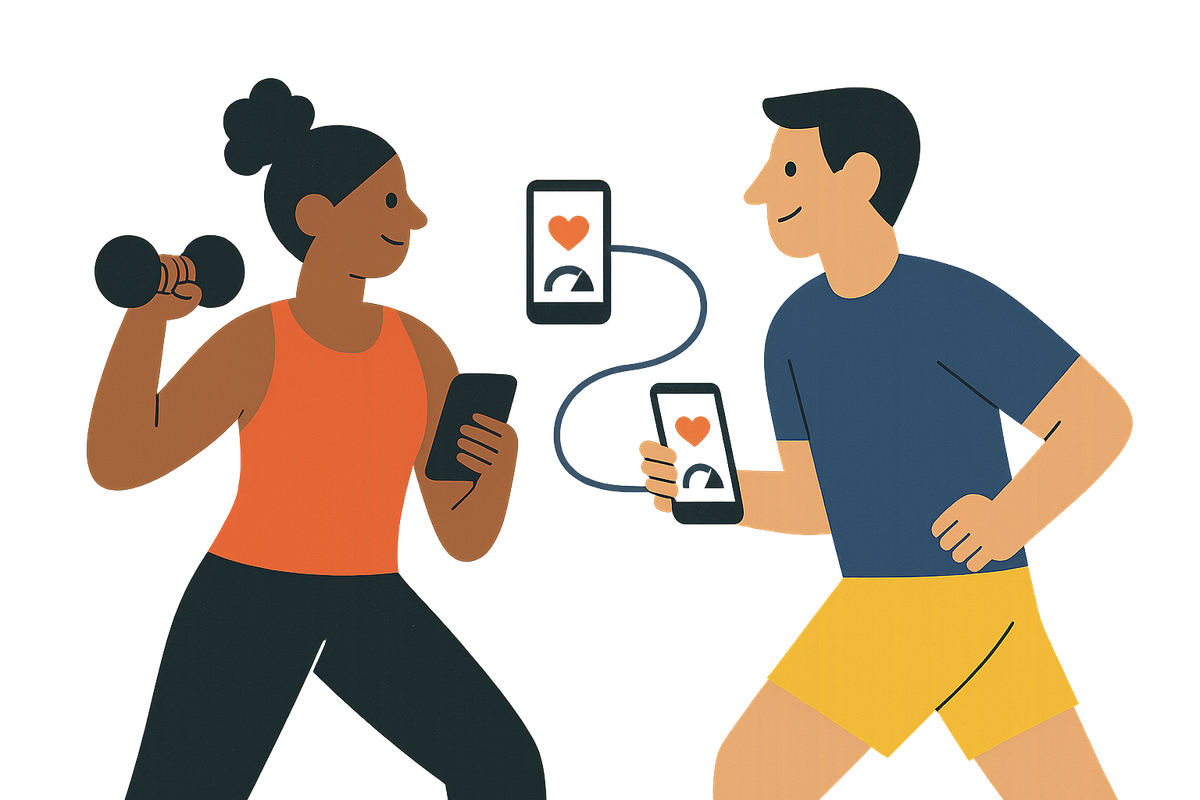
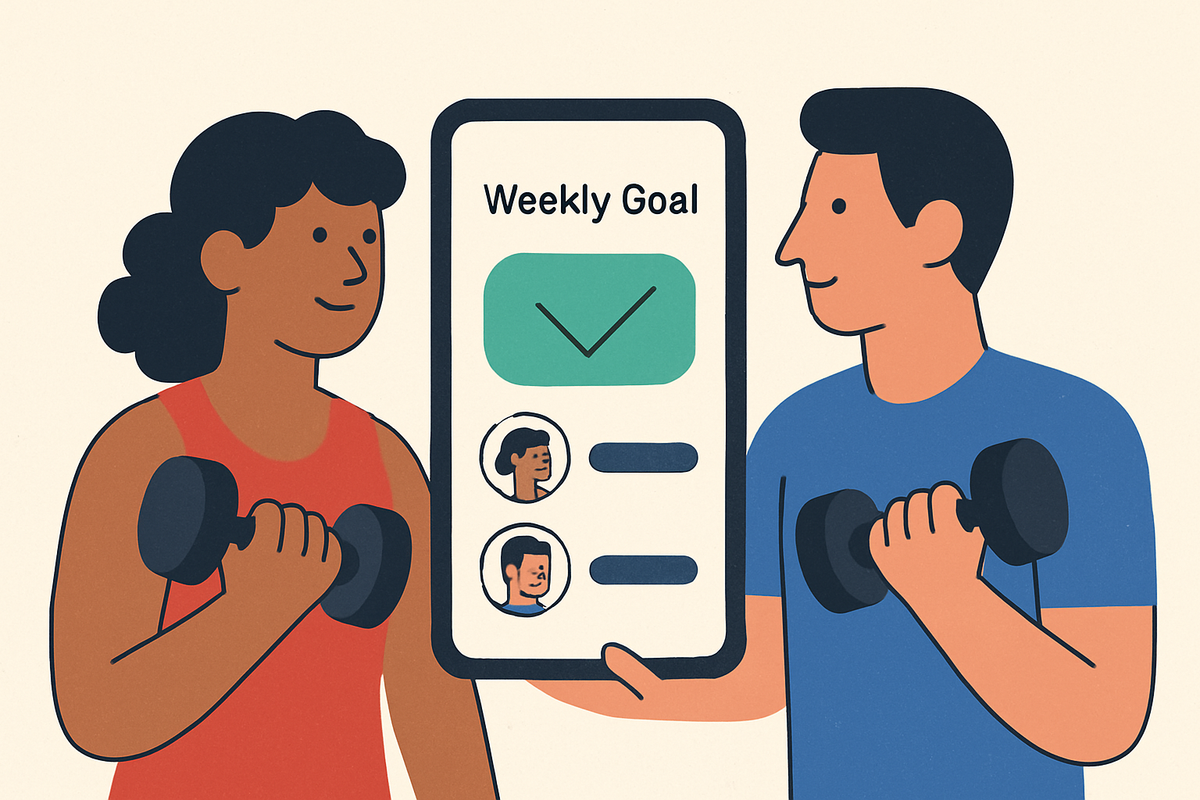
SweatCam fits this role through photo check-ins that make each partner’s workout visible to the other. Sweatmates also helps couples build the habit together by letting each partner set their own weekly goal and linking workout photos with progress recaps. Keeping goals in one place need not mean making them the same.
There is a practical wrinkle with SweatCam’s dual-camera check-in. In a public gym, it can feel awkward if other members think the camera is filming the surrounding floor. Knowing about that friction beforehand helps keep an awkward first photo from becoming the end of the check-in habit.
Friendly stakes and shared goals that keep both partners engaged past the six-week mark
Daily signals work better when there is also a weekly commitment to return to. A study using a Mars Athletic Club dataset found that approximately 50% of gym members did not maintain their attendance streak past the six-week point. A Sunday reset gives the couple a regular moment to decide what the coming week can hold.
Three sessions each can be a fair shared aim even when the sessions differ, while a new personal record for both asks very different things of two bodies. If their schedules require different targets, each can set their own.
A light wager can make the commitment memorable. Missing might mean cooking dinner or taking on a wedding planning task the other partner dreads, rather than receiving a lecture disguised as encouragement. Tools such as Sweatmates combine photo check-ins with weekly goals and recaps to keep that social reinforcement available after novelty fades. The stakes should invite reflection.
What each partner's weekly schedule can look like in the middle phase
An illustrative middle-phase week, roughly four to six months out, shows how little the sessions need to resemble each other. The beginner’s example includes rest or mobility on Wednesday, followed by full-body bodyweight strength and a photo check-in on Thursday. Friday can be steps, an easy walk, or active recovery. This partial example leaves the remaining days unspecified. Its purpose is to show room for training and recovery.
For the seasoned exerciser, Monday can include squats, rows, and overhead presses, followed by cardio or conditioning on Tuesday. Wednesday can include another strength session, with cardio or mobility on Thursday and strength again on Friday. Photo check-ins on Monday and Friday make those sessions visible without requiring the beginner to join them.
Saturday is where the tracks can converge through an optional hike, dance class, or longer walk. That shared activity is time together. Sunday is for rest and setting the next week’s goals. Across both schedules, photos on at least two or three days, an occasional joint activity, and the Sunday reset provide the common structure.
Low-impact options that let both partners train with less strain during the planning crunch
During a hard planning week, a lower gear is a useful alternative to a demanding session. For the beginner, incline walking, Pilates, barre, and controlled bodyweight circuits can provide cardiovascular or strength work without making high impact the price of admission. Low-impact training is a good place to start in its own right. It gives the habit somewhere manageable to live.
For the seasoned exerciser, Zone 2 cardio and mobility can serve as recovery when work and planning already demand plenty. Both partners can do lighter work even though they usually need different things from their training. Lower impact is not a promise of zero injury risk.
A walking pad can serve two different schedules, just as a home workout can preserve a session that a gym trip would crowd out. Food need not become another planning spreadsheet. Protein and a range of meals can help keep energy up without adding a strict food list to all the other plans.
How to reset when one partner falls behind without losing the other
Suppose the beginner has a brutal week at work while working out the final details with the venue and misses three sessions. On Sunday, the couple names what happened and sets a lighter target for the coming week, even one session each if that is what fits. The missed week is information about capacity.
If a small wager was agreed, it can be settled and left behind. Cooking dinner is a bounded consequence. Doubling the next week’s exercise is not the recovery protocol, and neither is a running commentary on missed sessions. One person takes control when they start telling the other how hard to work.
The experienced partner can keep training and posting their own check-ins. There is no need to stop out of solidarity or to make continued attendance into a rebuke. Their photos preserve a visible, non-judgmental connection that the beginner can rejoin. The plan survives because it has a response to disruption.
What to carry forward after the wedding day
The countdown can end without dismantling the structure that made it useful. Wedding Fit says its work on strength and habits carries into married life. The Sculpt Society recommends finding a suitable next program based on each person’s current fitness level. Both ideas let each person keep choosing workouts that fit them as they move on from their wedding-day routines.
What deserves to continue is the shared habit of noticing effort. A photo, a weekly goal, and an honest reset remain useful when there are no fittings or vendor calls left. The beginner has built repeatable behavior, while the seasoned partner has kept training connected to the relationship. Neither needs to become the other’s coach.