Training for a 5K Together as a Shared Fitness Goal
Couples who train together report stronger relationships and better results than those who go solo.
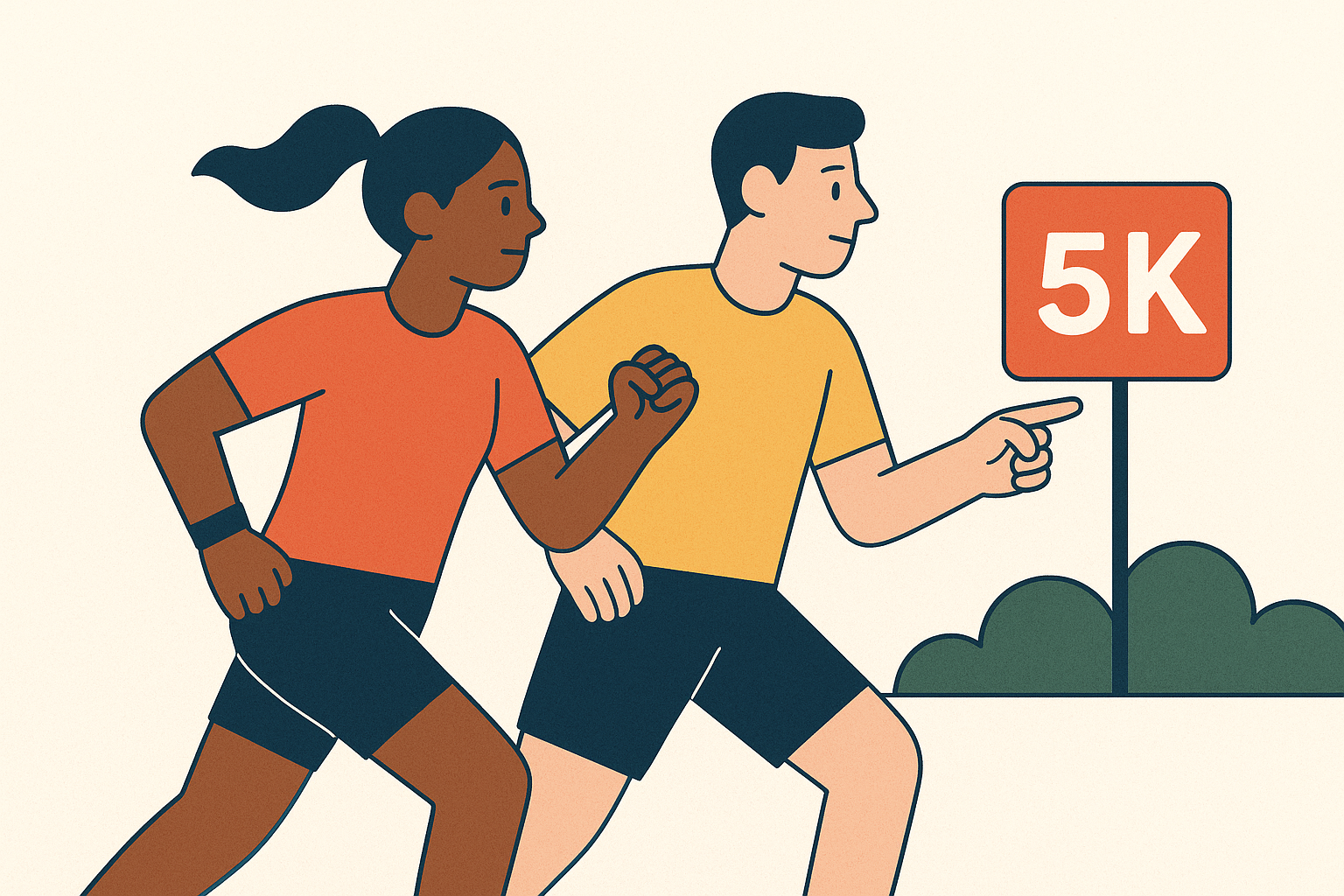
Training for a 5K together works because the process is simple. Fifty million Americans ran in 2024, and races of 5K or shorter made up 54% of all events and 66% of registrations, according to RunSignup's 2025 Race Trends Report. Most of those people picked a distance short enough to finish without turning a Saturday into a triathlon, and that's the whole appeal in one sentence.
What a beginner training plan actually looks like over 8–12 weeks
Skip the custom plan, since building one from scratch, at this stage, is solving a problem that's already been solved. Most couples starting from zero should just run some version of Couch to 5K, a framework that has been widely adopted by health organizations and running communities alike. A plan that gets picked up by a national health system and still gets used decades later has survived contact with a lot of out-of-shape strangers, and that track record beats any single study on a running blog.
The structure is almost boring, and boring is the point. Three workouts a week, about 30 minutes each, with rest days built in between, is the whole framework. Early weeks alternate walking and running in short bursts; by week nine, most people can run 30 straight minutes without stopping to gasp at a tree.
A few rules matter more than the rest, and skipping any of them is how beginners quit by week three.
- Conversation pace. If you can't speak in short sentences while running, you're going too fast, with no watch or app required, just lungs telling on you.
- Rest days are non-negotiable. Skipping them is one of the fastest ways beginners get hurt or burn out. Couples sometimes feel pressure to train every single day to "prove" commitment, and that impulse backfires almost every time.
- Going out too hard, too early, is the single most common mistake, and week one is not the week to be a hero.
- Shoes are the one purchase that actually matters. The right pair prevents the injuries that end most beginner attempts early: shin splints, cranky knees, that specific ache that shows up on stair descents.
The plan works for couples specifically because it removes decisions, with fixed days, a predictable 30 minutes, and visible progress week over week. Coordinating two calendars around an open-ended "let's run sometime this week" is a nightmare; coordinating around "Tuesday, Thursday, Saturday, 30 minutes" is just logistics.
What the research says about couples who exercise together
Research has found couples who exercise together report higher relationship satisfaction, and the effect tracks more with time spent together than with how hard the workout was. That's the real case for a 5K over a marathon: modest and finished beats ambitious and abandoned by February.
Related research has found something distinct. Couples who take on a new, mildly challenging physical activity together report feeling more satisfied, and more in love. A first 5K fits that description almost too neatly, since it's novel enough to feel like an event, hard enough to require real effort, short enough that nobody's threatening to end the relationship over it.
The Journal of Social and Personal Relationships found couples report more satisfaction on days they train together versus solo. Researchers Stel and Vonk (cited in Psychology Today, 2010) describe a mechanism behind that pattern called "nonverbal matching," where partners unconsciously sync movements, like matching pace on a run, and that syncing reinforces emotional connection on its own. Matching someone's stride does something to the brain that matching their Netflix queue never will.
Penn State researchers found "collective support, motivation, and responsibility" were the biggest drivers of couples sticking with healthy changes, ahead of any performance metric. Research has found that when one partner improves their fitness habits, the other is significantly more likely to follow suit, so habits are contagious, in a good way, apparently.
One nuance worth sitting with before week one: research has found women reported greater increases in relationship satisfaction from vigorous activity than men did, so the payoff isn't symmetrical between partners. Worth knowing going in, so nobody's disappointed when the emotional lift doesn't land the same way for both people.
The physical and mental benefits that make the training worthwhile on its own
Strip away the couples angle entirely, and the training still pays for itself. Regular running strengthens the heart, lowers blood pressure, and improves lung capacity, cutting the risk of heart disease and stroke. Research cited in the National Library of Medicine found runners have a 25 to 40% reduced risk of premature death and live roughly three years longer than non-runners, which is a real gain, not a rounding error.
Here's a detail most people get backwards: more running doesn't mean better running, at least not at the beginner level. Research suggests the benefits are strongest at moderate doses, which happens to describe Couch to 5K almost exactly. Beginners aren't running enough to hit the diminishing-returns zone that ultramarathoners worry about, which means the beginner plan doubles as real training in its own right, dose for dose.
The mental health case is just as direct. Research cited by National Geographic found that swapping 15 minutes of sitting for 15 minutes of running can cut depression risk by as much as 26%. Add the shared endorphin hit from training together, and the mood lift compounds. Research has found couples who work out together report higher relationship satisfaction than those who train solo.
None of this requires either partner to fall in love with running. Someone can finish the whole plan, cross the finish line, decide running just isn't their thing, and still walk away with a healthier heart and a better week, which is a fine outcome on its own.
How different fitness levels between partners actually play out — and how to handle them
Here's where most couples hit their first real snag: one partner runs faster, or has done this before, and the other hasn't. A common mistake is training to the faster partner's pace, because slowing down feels like admitting something. That approach tends to backfire, and it's the fastest way to turn a shared goal into a referendum on who's more athletic.
Match effort, not pace, full stop, which means the faster partner runs at a genuinely easy, conversational recovery pace while the slower partner runs at their actual working pace. Both people train hard relative to their own bodies, even though the numbers on a watch look nothing alike, and starting every run at the slower partner's pace should be the default. For the faster runner, that's a legitimate easy-run day, the kind coaches build into every serious training plan anyway.
A short conversation before lacing up solves most of the friction before it starts. Agree on pace, distance, and what happens if one person pulls ahead, before you're standing outside negotiating in real time. Splitting up mid-run still counts as a shared training day: one partner running ahead and looping back, or the two meeting at a landmark down the road, keeps the plan intact. Some couples run separate sessions on different days entirely and stay accountable through a quick check-in afterward, like a photo or a two-line text about how it went.
Watch for competition, specifically. Some couples thrive on a little friendly rivalry, while for others, it quietly wrecks motivation for whoever's slower, so figure out which type you are before race day, not during it. When someone misses a run, treat it as a scheduling conversation, since the goal is getting back on the calendar together, not assigning blame for Tuesday.
Making the training schedule actually work across two lives
Three runs a week is the floor, low enough that most couples can find three overlapping windows without treating it like a merger negotiation. The trick is anchoring runs to fixed cues: same time, same starting point, same route, at least for the first few weeks, so the decision gets made once instead of every single morning.
Registering for the race early works as a commitment device. Money on the line and a date on the calendar turns "we should probably train" into an actual deadline, and a short weekly check-in, just "what days are we running this week," heads off the schedule conflicts that quietly kill momentum before they turn into skipped sessions.
Rest days matter here too, just differently. Couch to 5K's built-in rest days can double as recovery walks, stretching, or time together that has nothing to do with running. That keeps the partnership engaged without adding training load on top of it.
Tools help when they stay simple, and get in the way the moment they don't. A shared photo thread, a basic logging app, or a paper calendar taped to the fridge all do the same job: making progress visible without turning training into a spreadsheet exercise. Apps that let partners follow each other's runs and drop a quick "nice work" carry real weight here, and interest in that kind of social run-sharing has climbed noticeably among younger runners recently. The impulse to cheer someone on from a distance is real, even when the distance is just from the kitchen to the front door.
Small rewards along the way beat waiting for the finish line to celebrate anything. Finishing week three, finishing week six, the first day of running straight through without walking: all of it is worth marking.
Race day as the shared payoff — and what comes after it
Race day feels nothing like a training run, and that's the point. The crowd, the bib pinned to a shirt, the finish line, the nervous energy beforehand: all of it is social first and athletic a distant second. A couple experiences that together no matter what the clock says at the end.
The culture around 5K events backs this up. Turkey Trots, charity runs, themed community races: they're built to feel like an occasion, not a time trial. Some major Turkey Trot events have seen finisher counts jump substantially year over year, which says plenty about what people actually want out of race day, since a reason to show up beats a personal record every time.
Finishing side by side, or one partner waiting at the line for the other, makes for a more durable memory than any split time ever will, and nobody frames a finish-line photo based on the minutes on the clock.
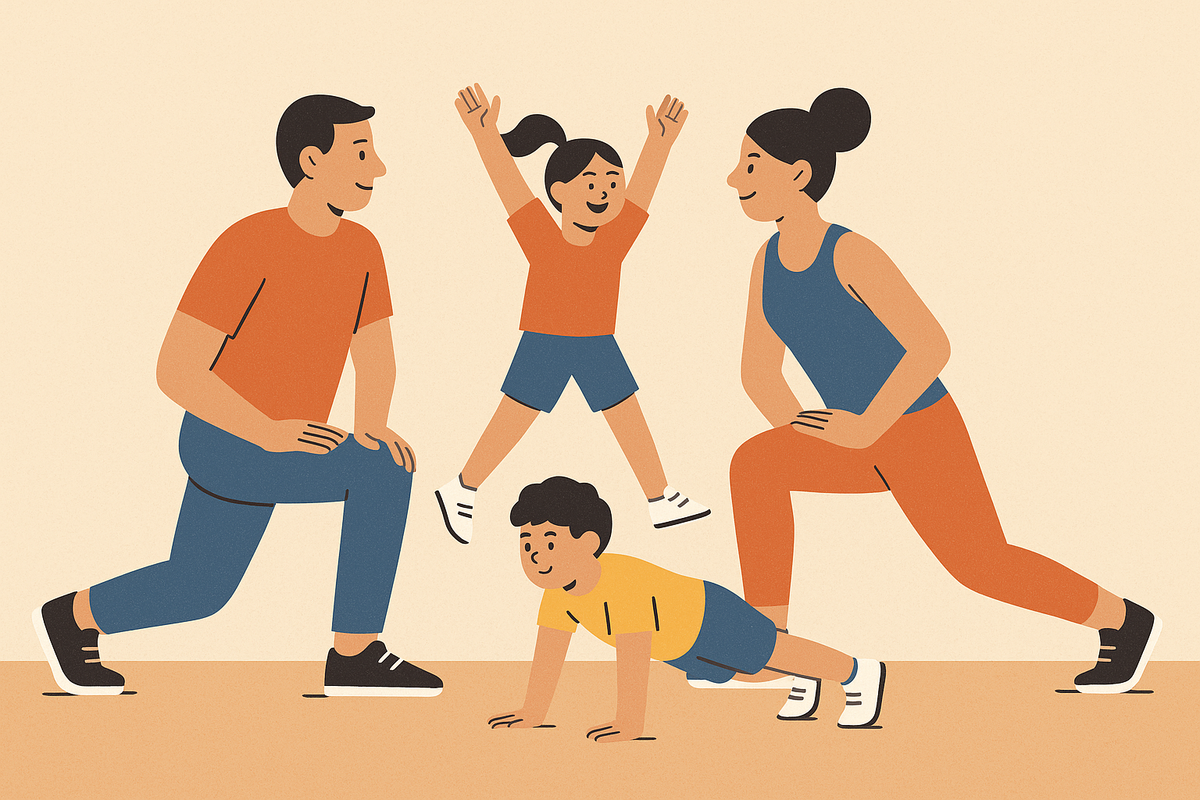
Here's the real question, and it's not how race day goes. It's what happens in week 13, after the plan technically ends, and whether the habit ends with it. Three months of showing up together, three days a week, has already built the infrastructure for whatever comes next: a second 5K with a real time goal, a 10K, some other shared fitness project entirely. The specific goal matters less than keeping the routine alive. Research published in Pediatrics found kids are more likely to pick up healthy habits when they see their parents modeling them, so for couples with kids, this does double duty: a relationship habit and a family example, running on the same three days a week.
The whole thing works for a plain reason. Two people showed up on the same three days a week for two or three months, and came out the other side with a habit, a photo, and a reason to keep lacing up.