What to Look for in a Couples Wedding Fitness App Before You Download
Couples need separate plans at their fitness level, not one shared workout.
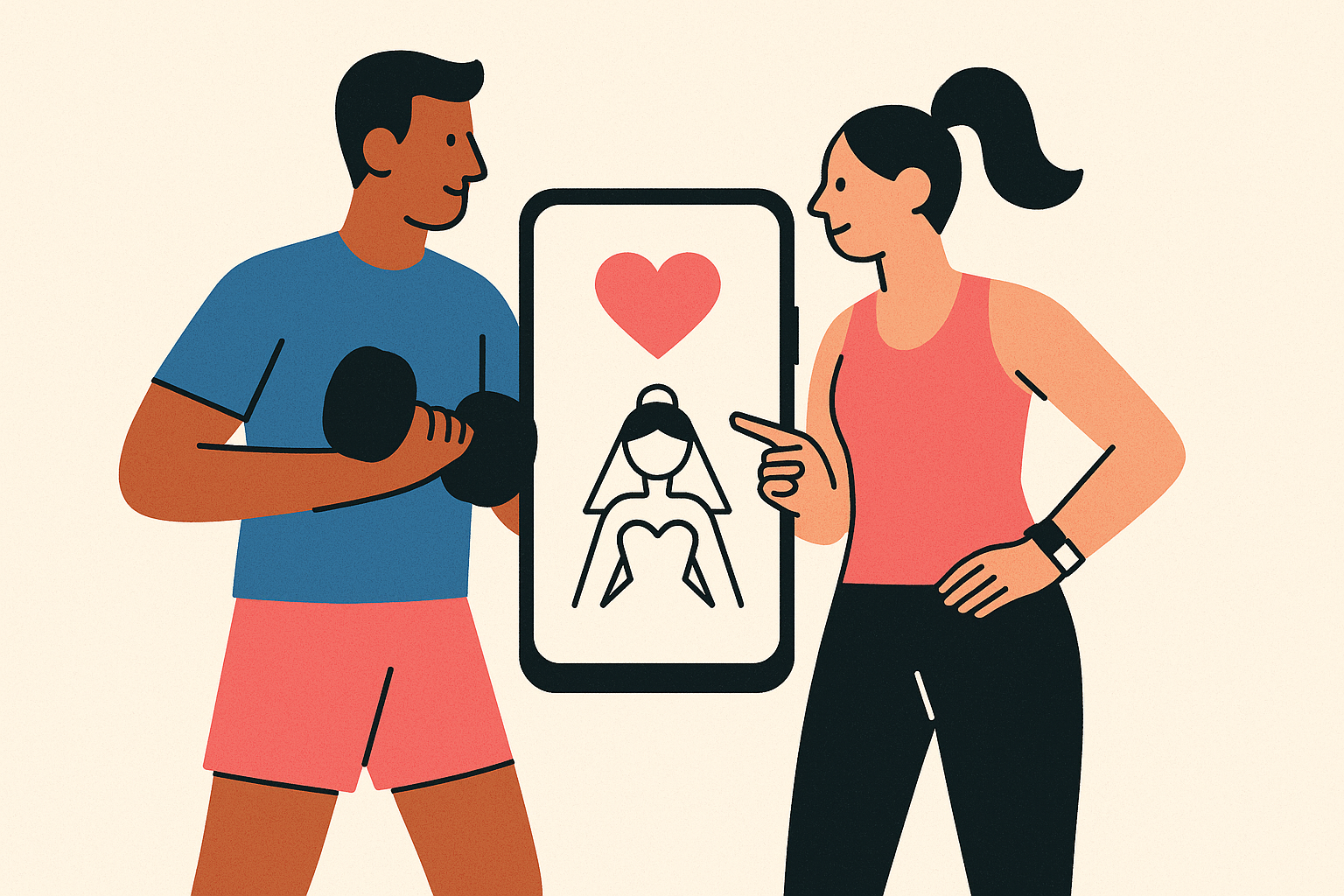
A couple that works out together is dramatically more likely to keep working out, period. But the app most couples download to make that happen is usually built for one person, not two, and that mismatch is why so many well-intentioned fitness habits quietly die by week six.
Why Couples Who Train Together Keep Going
Married adults who joined a fitness program with a partner dropped out at a fraction of the rate of those who joined alone. A habit that survives February is built differently than one that never makes it past the first cold snap.
The mechanism is simpler than it sounds. Shared commitment works differently than willpower does. Guilt fades, motivation comes and goes, but knowing someone else is lacing up their shoes because you said you would too carries its own quiet weight. Skipping a shared one costs you a conversation.
Effort is contagious, too. After months, this becomes something the couple simply does, so missing a session doesn't just skip a workout. It breaks a small piece of how the relationship runs.
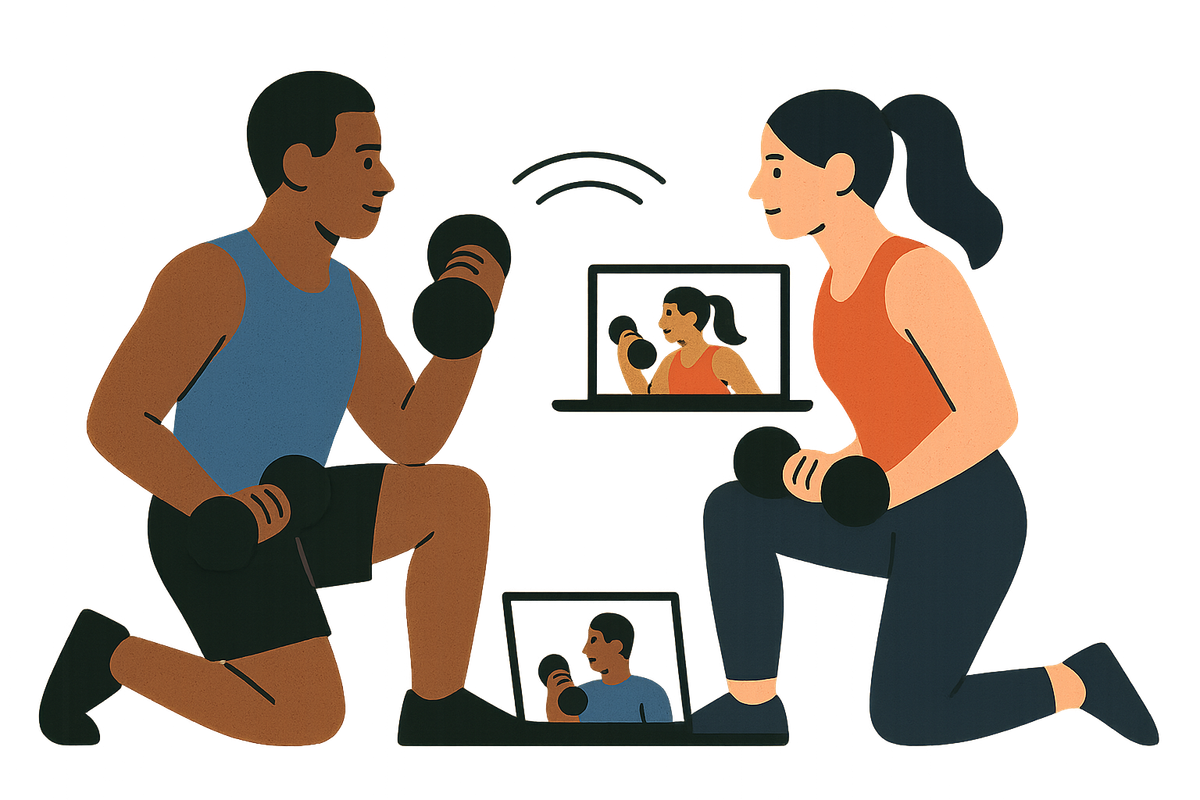
Any app lets two people exercise at the same time, so the app itself matters because of how it handles two different fitness levels. Because most fitness apps are built for individuals, and two people rarely arrive at the same fitness level on the same day. The habit doesn't collapse from low motivation. It collapses from bad design, the same way a pair of shoes two sizes too small will eventually stop you from walking, no matter how much you want to.
The Wedding Timeline Makes App Choice More Consequential
Engaged couples work against a tighter clock than the average gym-goer, and that clock changes which features actually matter. A six-month runway to a wedding date is a fixed window with a fixed deadline, and that pressure makes the cost of choosing the wrong app much higher than it would be for someone with no particular date in mind.
An overly aggressive program, the kind built around sprinting toward a single-day goal, tends to leave couples burned out or hurt right when they need energy most for table assignments and seating charts, not recovery. A wedding fitness plan that actually holds up needs strength work, cardio, mobility, and recovery built in from the start. An app offering only one of those will stop working for at least one partner long before the invitations go out.
The stress-relief side of training together eases the pressure of these final weeks more than progress toward an aesthetic goal does. Couples who train together during high-pressure stretches report lower stress and a stronger sense of being in sync with each other, which, with a wedding bearing down, might be worth more than any physique goal. That only holds up, though, if the app reinforces the togetherness instead of burying it under features that complicate an already packed schedule. Sweatmates leans toward simple, sustainable check-ins rather than a growing list of dashboards, which matters more in month five of planning than it does in month one.
The right question going into this is which app the couple will actually still be opening the morning of the wedding. That gets answered by how livable the app is day to day, not by how long the feature list reads in the app store.
The feature that most apps get wrong: separate plans for two different people
Before anything else, check whether the app gives each partner their own plan, calibrated to their own level, rather than one shared program built for an imaginary "average" of the two of them.
A fitness gap between partners is the rule, not the exception. A single shared plan at one fixed difficulty fails both people at once: too easy for the stronger partner, too hard for the other, and within a few weeks, the habit comes apart at that seam.
What to actually look for: the ability for both partners to train in the same session, sometimes on the same movements, with sets, reps, and difficulty set separately for each person. Better yet, a plan that adjusts automatically as each partner improves, so nobody hits a ceiling and nobody gets left behind as fitness changes over the months leading up to the wedding.
A well-designed platform is built around this principle. Each partner gets a fully personalized plan at their own level, and they can still train together on the days that work for both of them. The plan flexes around busy weeks, so a hectic stretch of vendor calls and cake tastings doesn't knock either partner out of their program.
The obvious objection: can't couples just pick different difficulty settings inside the same app? Not really, because a static difficulty tier isn't the same thing as an adaptive plan. A beginner who improves needs their program to evolve with them. An app that only offers a manual switch between "easy" and "hard" just hands the work of designing a real program back to the couple, defeating the purpose of downloading an app.
Why workout variety determines which partner eventually stops showing up
Even a perfectly calibrated plan loses a partner if the app only offers the kind of training one person actually likes doing. Couples rarely share identical taste in workouts. An app that covers only one of those is really an app for one partner, and the other partner quietly stops opening it, taking the shared habit down with them.
What to check for: coverage across yoga, mobility, strength, cardio, and dynamic movement, wide enough that each person can find sessions they actually want to do. The same workout format on repeat gets old well before any wedding date arrives.
This is exactly the problem a well-designed platform is built to solve: separate plans for each partner's goals mean a couple where one person runs and the other lifts can share a platform without either one compromising their own program.
A simple test before downloading anything: have both partners scroll the workout library on their own and each pick out two or three sessions they'd genuinely choose. If one partner can't find any, the app won't hold both of them for long.
What shared visibility means and how to tell if an app has it
Shared visibility means both people can glance at the week and know whether they're both on track, which builds connection instead of creating a reason to check up on each other.
A lot of apps bolt on a "follow your partner" feed that streams individual workout logs past each other. That's individual tracking wearing a social costume. Real shared visibility is lighter than that: a shared sense of the week, not a performance breakdown.
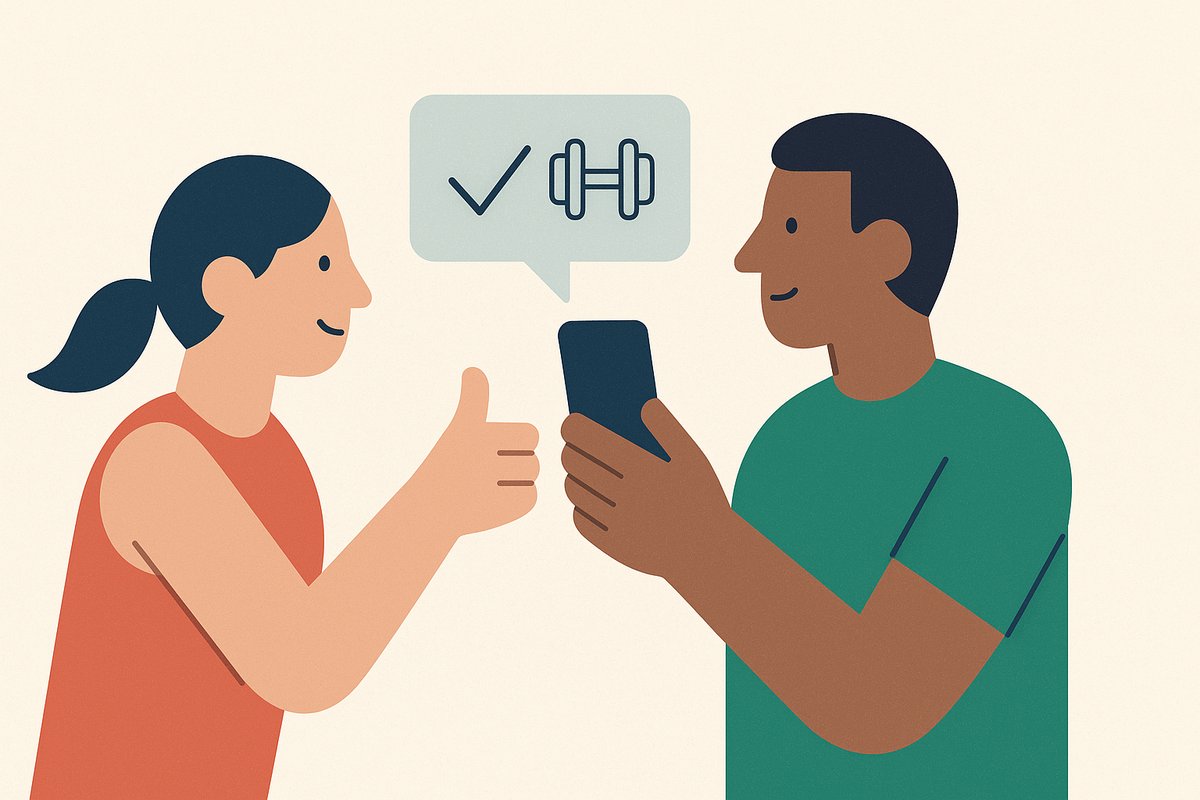
Sweatmates takes a deliberately minimal route here. Couples set a weekly workout goal, log each session with a photo through SweatCam, and both partners can see the other's progress across the week. A missed goal triggers a small, agreed-upon wager, something like buying dinner or doing a chore. Hitting it carries no consequence. The stake exists to keep the goal real, not to punish anyone.
The photo detail confirms someone showed up, which matters more than a performance chart. A photo is immediate and human in a way a chart never is. It confirms someone showed up without demanding any performance data in return, which lines up with an approach to accountability that celebrates presence over output.
Some apps take a different route.
In practice, check three things before downloading anything: Can both partners see a shared weekly picture of consistency? Can they respond to each other's sessions, not just log their own? And does that visibility feel encouraging, or does it feel like being watched?
How Accountability Mechanics Should Work
Accountability features are the single element most likely to save the habit or kill it, and the outcome depends entirely on the design and how well it fits the couple using it.
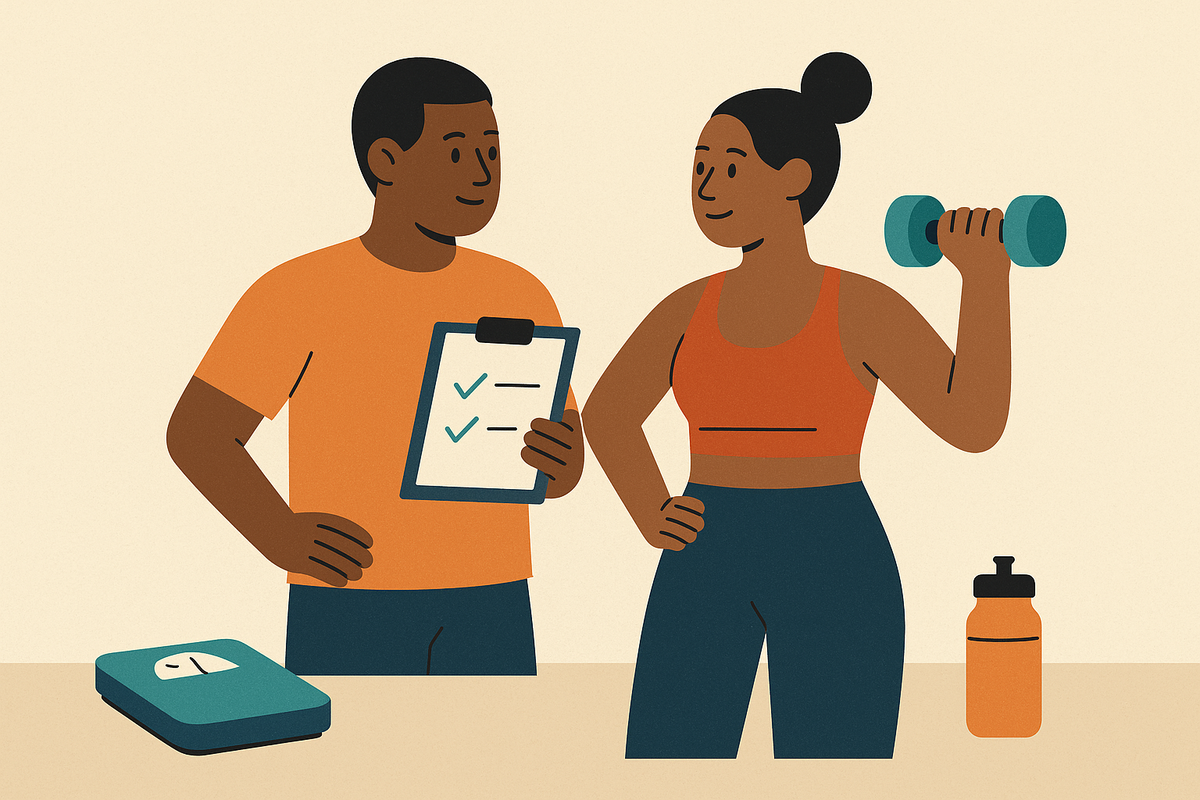
The features that work tend to reward showing up, not performance: badges and streaks for consistency, reminders that nudge rather than scold, completion certificates worth sharing. The whole system is built around milestones, not missed sessions, and that distinction is the difference between an app that motivates and one that nags.
Shared XP, collectible rewards, calendar-based challenges all meet a basic need for connection by turning consistency into something the two of you are building together.
The risk sits on the other side of the same coin.
Before downloading, ask: does the system celebrate showing up, or does it punish missing? Can both partners miss a session without the app making one of them feel worse than the other? Is there room to reflect on a rough week without it turning into an argument? Missing a goal should prompt a bit of reflection, not shame, and any app worth keeping is built around that idea.
Form guidance and exercise instruction matter most to the less experienced partner
When one partner is newer to training, the quality of the app's exercise instruction decides whether that partner builds confidence or quietly stops showing up to avoid getting hurt or looking foolish in front of someone they love.
A flat, single-angle video demo gives a beginner no real way to check their own form. Look for clear, step-by-step instruction on every movement, ideally with 3D demonstration or multiple camera angles so a beginner can orient their own body correctly without a trainer standing over them.
This matters even more on a wedding timeline. An injury in month two of a six-month program doesn't just pause progress for one person. It can take down the shared routine entirely, since the uninjured partner often keeps training solo and the rhythm of doing it together disappears.
Couples who are both experienced lifters may never notice instruction quality one way or the other. Couples with a real fitness gap between them should treat it as a filter, not a detail to check later. A fast pre-download test: open a beginner-level workout and watch the first exercise demo. If a total beginner could follow it safely with nothing else to go on, the instruction clears the bar.
Timing tools for when partners train together in the same session
When couples train in the same room at the same time, a timer built specifically for two removes a surprising amount of friction before the workout even starts.
TimeLift (version 2.1, published May 25, 2026) was built for exactly this problem: guided intervals, audio cues, automatic switching between partners, alternating and simultaneous workout modes, and an interface that keeps running while the phone is locked. It runs on a subscription, $4.99 a month or $29.99 a year for TimeLift Pro, and developer Jose Samaniego states the app collects no user data.
This is a narrow tool by design. It doesn't replace a full training program, it solves one specific coordination problem, and it does that one thing cleanly enough to be worth knowing about. The best setup pairs it with a programming app that gives each partner their own individualized plan, the kind discussed earlier: TimeLift handles the session when both partners are physically together, and the programming app handles the days they train apart.
Data privacy is the evaluation step most couples skip entirely
Fitness apps collect some of the most sensitive personal data a couple will ever hand over together, and the legal protections around that data are thinner than most people assume.
Heart rate, body weight, sleep patterns, GPS routes, none of it is covered by HIPAA. But that's a notification requirement, not a ban.
This matters doubly for couples, since both partners' data lives on the same platform, and a breach or a sale touches both of them at once. Before downloading anything, check three things: Does the app explicitly rule out selling health data to third parties? Is data encrypted in transit? Can a user request full account deletion?
FitWithLove states it shares no data with third parties, collects no data, and encrypts data in transit, a clear and transparent position. Sweatmates may share app activity data with third parties; data is encrypted in transit, and users can request deletion, which is worth factoring in for any couple planning to log workout photos regularly.
The features to ignore: what sounds impressive but rarely determines whether couples keep going
The features couples fitness apps advertise the loudest are often the ones that matter least to whether both partners are still opening the app three months from now.
A massive workout library sounds like a selling point, but a couple who finds five or six sessions they both genuinely enjoy builds a far more durable habit than one with access to hundreds of workouts and a different pick every single time. Advanced analytics and performance dashboards are built for people optimizing athletic output. Most couples building a habit ahead of a wedding just need one honest signal: did we both show up this week? Social features beyond the two partners, leaderboards, public challenges, mostly add noise to what is, at its core, a private system between two people. Competition only helps if both people actually enjoy competing.
The better question to ask before downloading is whether this is something both partners will still be opening in month four. That gets answered by how the app handles different fitness levels between partners, how easily it shows shared progress, and whether the accountability built into it feels like support or like pressure.
The best fitness system is the one two people actually keep using together. A simple weekly goal and a photo of your partner finishing a workout will do more for a couple's wedding fitness than an elaborate plan neither of them opens past week three.