apps for couples tracking shared workout goals
Couples who exercise together stick with it—here's which apps actually support that dynamic.
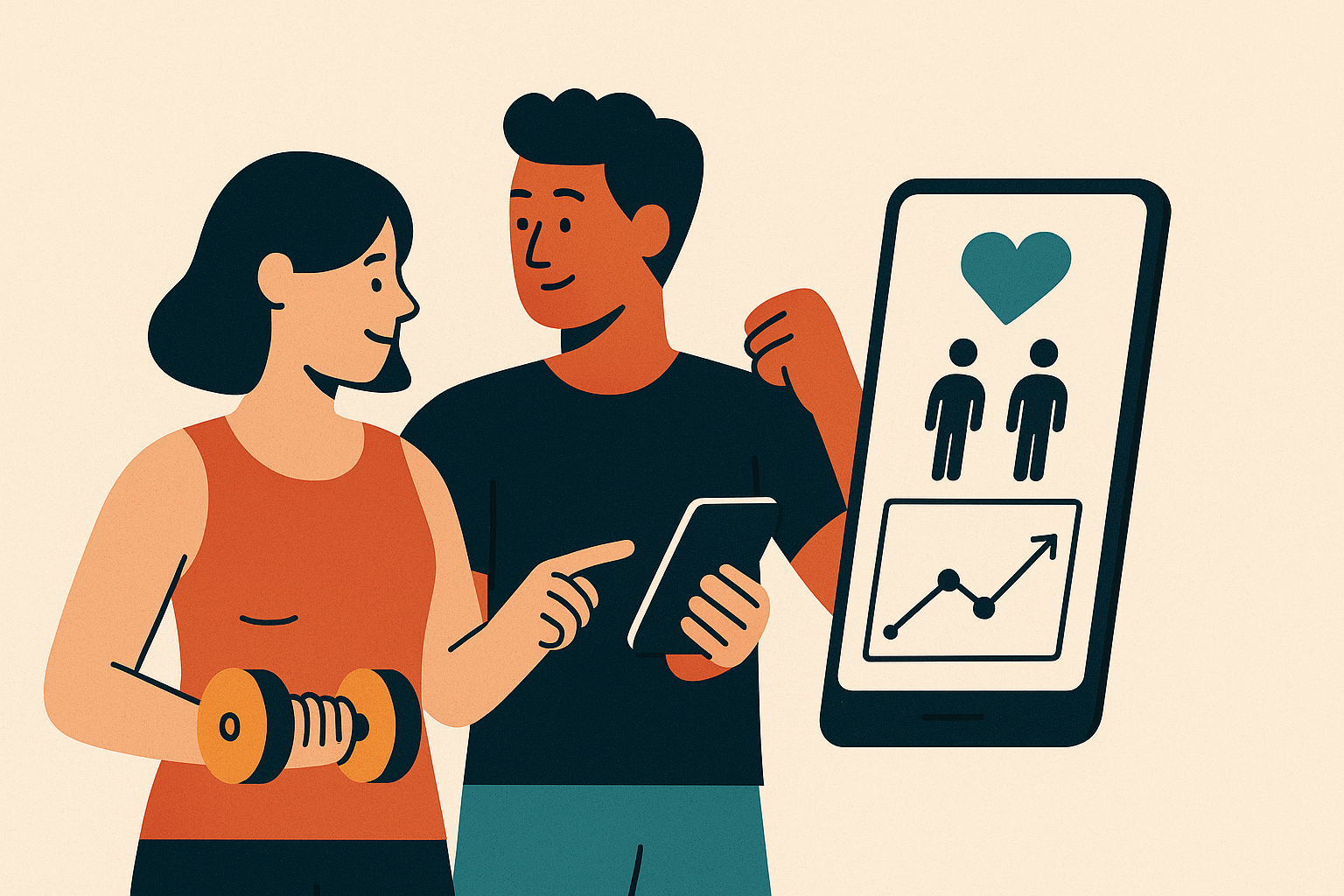
Couples fitness apps hit a wall because they're built for one body, not two. Most fitness apps assume a single user with a single dashboard, then bolt on a "share with a friend" button and call it social. That frame misses what couples actually need: they often have different fitness levels, different schedules, and goals that overlap in some places and not at all in others. This piece looks at which apps actually solve that problem, weighing real fit over feature counts.
What the research says about why shared exercise holds couples together
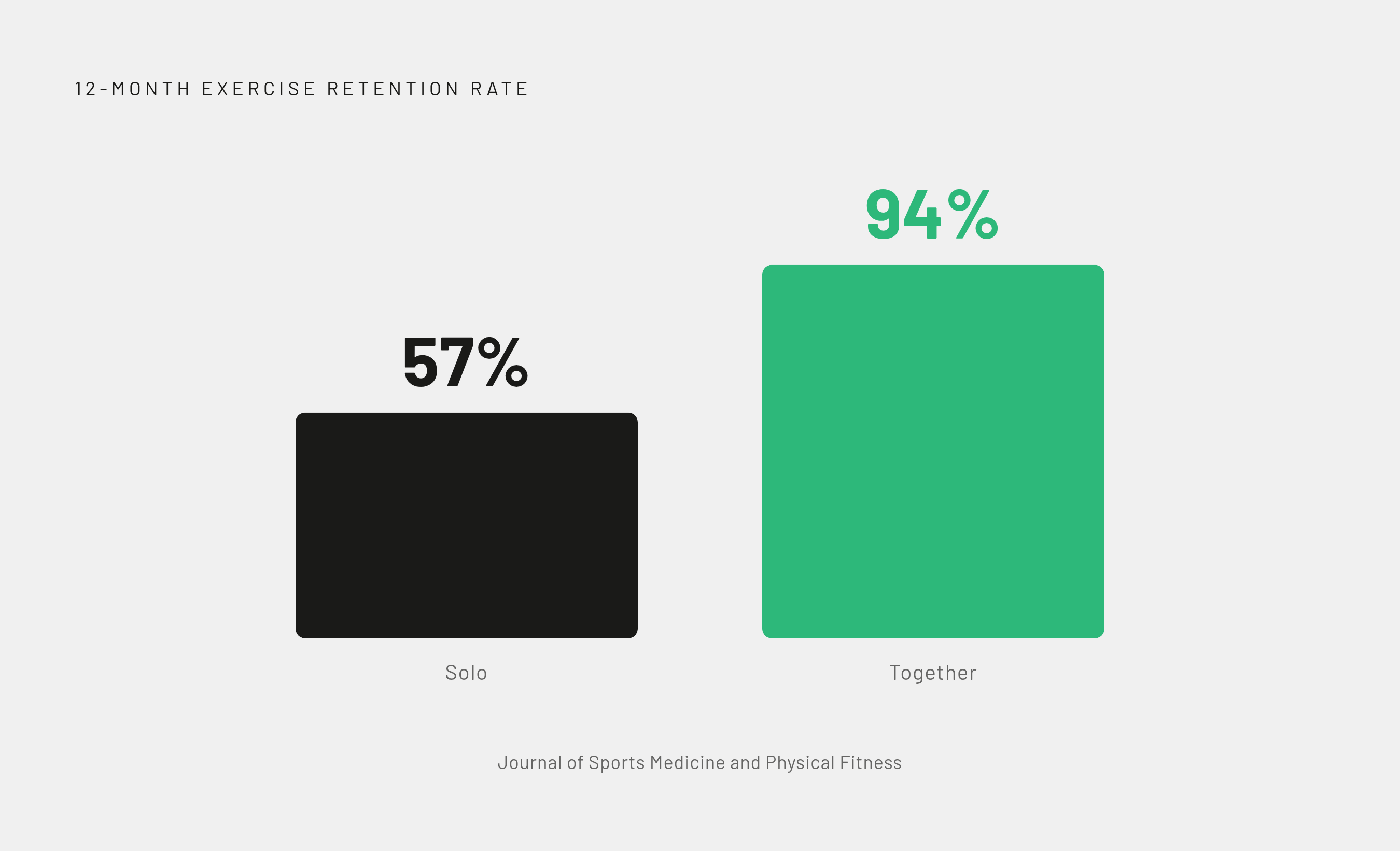
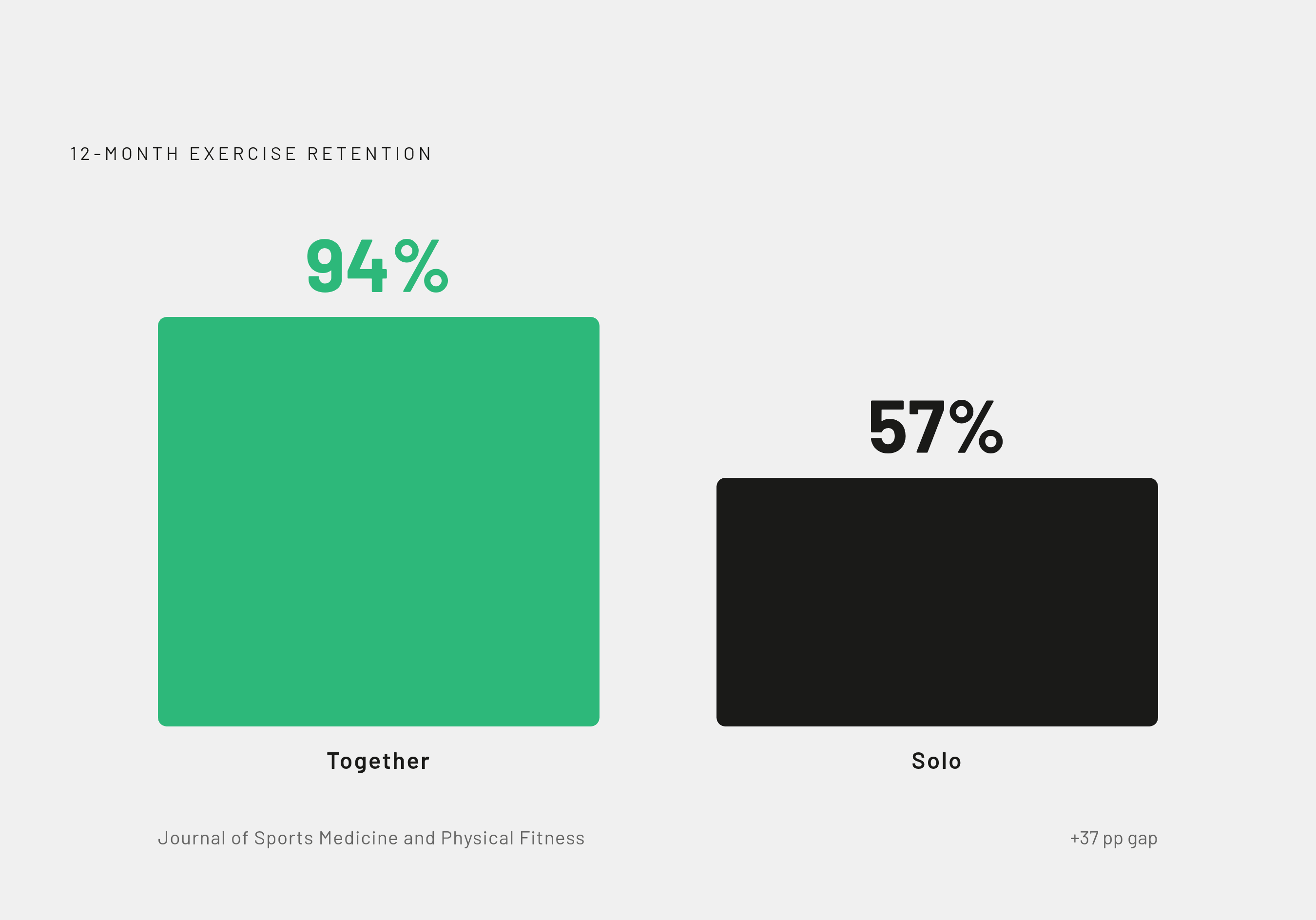
The numbers here aren't subtle. A study published in the Journal of Sports Medicine and Physical Fitness found couples who exercise together hit a 94% retention rate over 12 months. Solo exercisers landed at 57%. That's the difference between a habit and a New Year's resolution.
Sackett-Fox, Gere, and Updegraff tracked 95 adults over 14 days for a 2021 study in the Journal of Social and Personal Relationships. On days people exercised with their partner, mood improved during and after the workout, and relationship satisfaction climbed that same day. Fitness, in other words, functions as a relationship behavior for couples, one that happens to burn calories along the way.
Then there's the Köhler Effect, which sounds like something you'd get diagnosed with but is actually good news. A 2023 meta-analysis in Kinesiology Review, covering 19 studies and 1,912 people, found a real motivation boost from exercising alongside a partner (effect size g = 0.91, for anyone keeping score). The catch: the effect peaks when one partner can outlast the other by about 1.4 times, not more. Push the gap wider than that, and the motivation boost shrinks. So an app pairing a marathoner with someone who just started walking might do more harm than good.
This is the whole ballgame for feature evaluation. The science points toward visibility, mild challenge, and shared momentum, well ahead of leaderboards that expose a 10x gap between partners.
The four features that actually matter for couples tracking shared goals
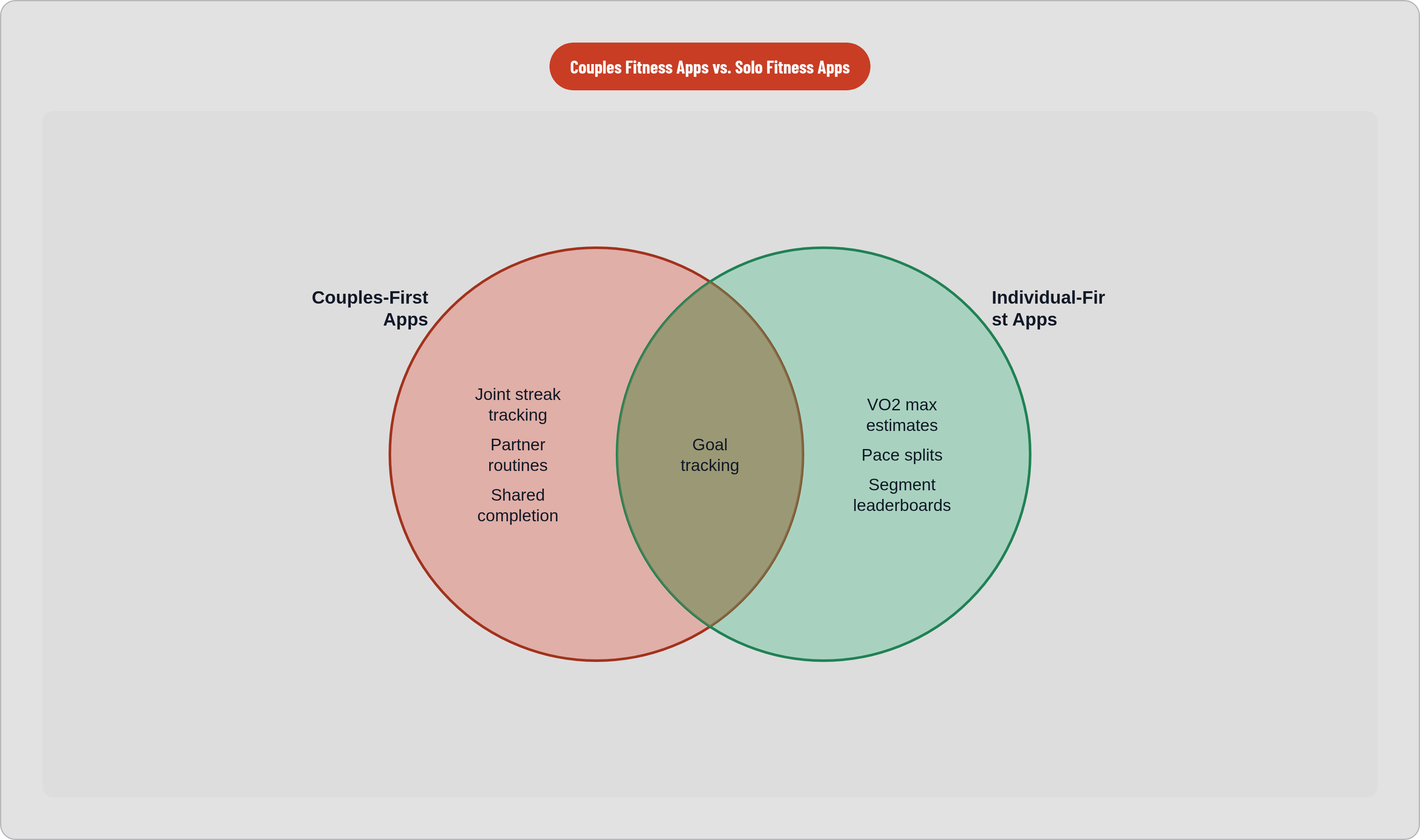
Strip away the marketing copy and four things separate the apps that work for couples from the ones that just have a "couples mode" checkbox.
Shared progress visibility. A joint calendar, a combined completion count, a certificate that says both names on it, something closer to "we can see our streak" than "I can see your step count." Small design choice, big psychological difference.
Encouragement mechanics with low friction. A one-tap reaction, a kudos button, a workout photo. These matter because they create connection without demanding a conversation neither partner has time for at 6 a.m. Done right, it feels like support. Done wrong, it feels like your partner is checking up on you.
Flexibility for partners who exercise separately. Different gyms, different schedules, different sports entirely. The app needs to bridge that gap asynchronously, without forcing both people onto the treadmill at the same hour.
Accommodation of different fitness levels. Individual goals, nested inside a shared container. Given what the Köhler research says about big gaps backfiring, the smart design avoids a head-to-head comparison and celebrates the showing-up part over the raw numbers.
Notice what's missing: individual performance optimization, the pace splits and VO2 max estimates that dominate most fitness apps. That's left off on purpose. It's a fine thing for an app to offer, but it isn't what keeps couples opening the app together.
Apps built specifically for two: FitWithLove and Fitness Pact
FitWithLove, listed on Google Play as Couple Workout, builds the entire app around two people doing exercises together, day by day, with step-by-step partner movements. The shared layer underneath is where it earns its keep: streak tracking, more than 30 achievement badges, completion certificates, and individual personal records logged separately for each partner. Cloud backup and smart reminders keep both people synced without either one having to text "did you do the workout yet?"
It's available in eight languages, including Arabic, Spanish, French, Hindi, and Portuguese, which is a nice detail for multilingual households or couples living between countries. The tradeoff: workout variety is narrower than the big general platforms. This is an app for couples who want structured partner routines, not a tool for tracking two totally separate training plans.
Fitness Pact flips the model. Instead of shared workouts, each partner picks their own routine and frequency goal, then puts something on the line, a small wager or commitment, for following through. It's accountability by way of friendly stakes, and it sidesteps the mismatched-fitness-level problem entirely because nobody has to do the same workout. The connective tissue is the pact itself, not shared workout data.
What both apps get right, and what separates them from everything else on this list, is that the couple is the unit of design, with the individual and any partner feature built around that starting point, which is the same logic behind Sweatmates, a fitness accountability app for couples built around shared tracking and check-ins.
What Strava does well for couples and where it falls short
Strava's social numbers speak for themselves: 180 million registered users in 2025, 14 billion kudos given that year, and users opening the app more than 35 times a month, well ahead of competitors that average 15. That kind of engagement doesn't happen by accident. It's built on the social layer.
For couples, that means following each other's activities, giving kudos, commenting, and competing on segments. The culture already rewards doing things together, reflected in the billions of kudos exchanged across the platform each year. The platform also surged past 1 million clubs in 2025, giving couples a wider community to plug into alongside their one-on-one activity feed.
The catch is the same one that shows up in the Köhler research. Leaderboards and segment times work great for two people who are roughly matched. For couples with a real fitness gap, public comparison can quietly discourage the partner who's behind, even if nobody says a word about it. The platform's continued growth in 2025 leaned further into individual performance rather than shared-habit support.
Pricing sits at $11.99 a month or $79.99 a year per person, with a Family Plan at $139.99 a year that makes more sense for couples already committed to the platform. The best fit here is two people who are both active, similarly matched, and motivated by seeing their activity on a public feed. It's a rougher fit for a couple starting from zero or working across a wide skill gap.
Google Health, Nike Training Club, and MyFitnessPal as supporting tools
Google Health brought expanded leaderboards that let partners track each other's steps and cardio load side by side. That's real shared visibility, the kind you'd otherwise need a screenshot and a text to recreate. That integration can matter for couples who train on different equipment or in different apps. Coaching features on the platform remain individually oriented, aimed at one person's training load rather than the couple as a unit. Best fit: couples already inside the Google or Fitbit hardware world who want a shared leaderboard without downloading something new.
Nike Training Club offers structured workout content that two people with different preferences can work through in the same app. It's not built around a social feed the way some platforms are, but it works well for couples who want real structured content and a shared check-in without any competitive scoreboard hanging over it.
MyFitnessPal earns its spot here for nutrition. Its social and sharing features make meal tracking a potentially joint daily habit, arguably an easier one to keep than syncing workout schedules. Its workout tracking is thin, though, so it works best paired with a dedicated fitness app rather than standing alone.
The pattern across all three: the sharing features exist, but they're layered onto an individual-first design. Couples have to go find the setting and turn it on. It won't happen by default.
How to match an app to how a couple actually exercises
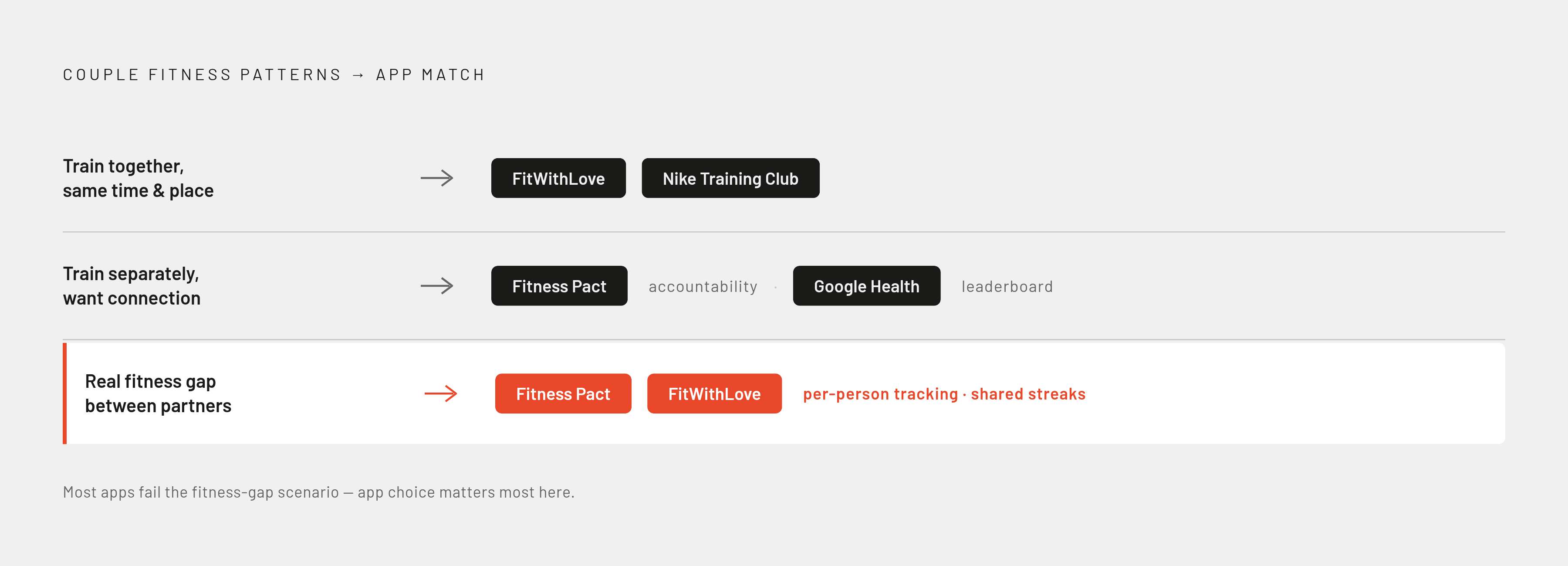
Most couples fall into one of three patterns, and the right app depends on which one describes you.
Partners who train together, same time, same place, want shared workout content and joint completion tracking. FitWithLove and Nike Training Club both fit that pattern well.
Partners who train separately but want to feel connected need asynchronous visibility and low-friction encouragement, kudos, photos, quick reactions, plus individual goal tracking that still rolls up into something shared. Fitness Pact covers the accountability side, the Google Health leaderboard covers daily activity, and a platform with social features works if both partners are roughly matched in ability.
Partners with a real gap in fitness level or goals need separate personal targets inside a shared container, and milestone systems that reward consistency over output. Skip anything that puts performance comparison front and center as the main shared view. Fitness Pact and FitWithLove's per-person tracking with shared streaks both handle this well.
Plenty of couples end up running two apps at once, one for the workout itself, one for accountability or nutrition. That's simply how the pieces fit for a lot of people, not a sign anyone picked wrong. Start with how you actually exercise right now, not the ambitious version you're picturing for next month. The best app is the one you're both still opening a week from now.
What makes shared tracking stick past the first month
Here's the sobering part: average 30-day retention across digital health apps sits around 4%, and 80% of fitness app users quit within three months. That's the base rate every couple is fighting against, regardless of which app they pick.
The couples advantage, the 94% versus 57% split from earlier, only shows up if the app design actually supports joint use. Hand a shared app to a couple where only one person opens it, and it quietly turns back into a solo app with an extra login.
What survives past month one tends to share a few traits. Weekly goals that are simple enough to hit on a bad week, rather than ambitious targets that need perfect conditions. Shared progress that's visible enough to make the streak feel worth protecting. Celebration that rewards showing up, a rough, exhausted workout counts the same as a personal record. And when a goal gets missed, the app treats it as something to note and move past, rather than something to be punished for.
The 94% versus 57% gap holds up because connection, more than optimization, is what actually brings people back to an app. The strongest choice is the one both people are still opening six months from now, and that's almost always the app that makes the shared habit feel worth showing up for, over the one with the most impressive-looking chart.