How Couples Can Set Fitness Goals When One Partner Has an Injury
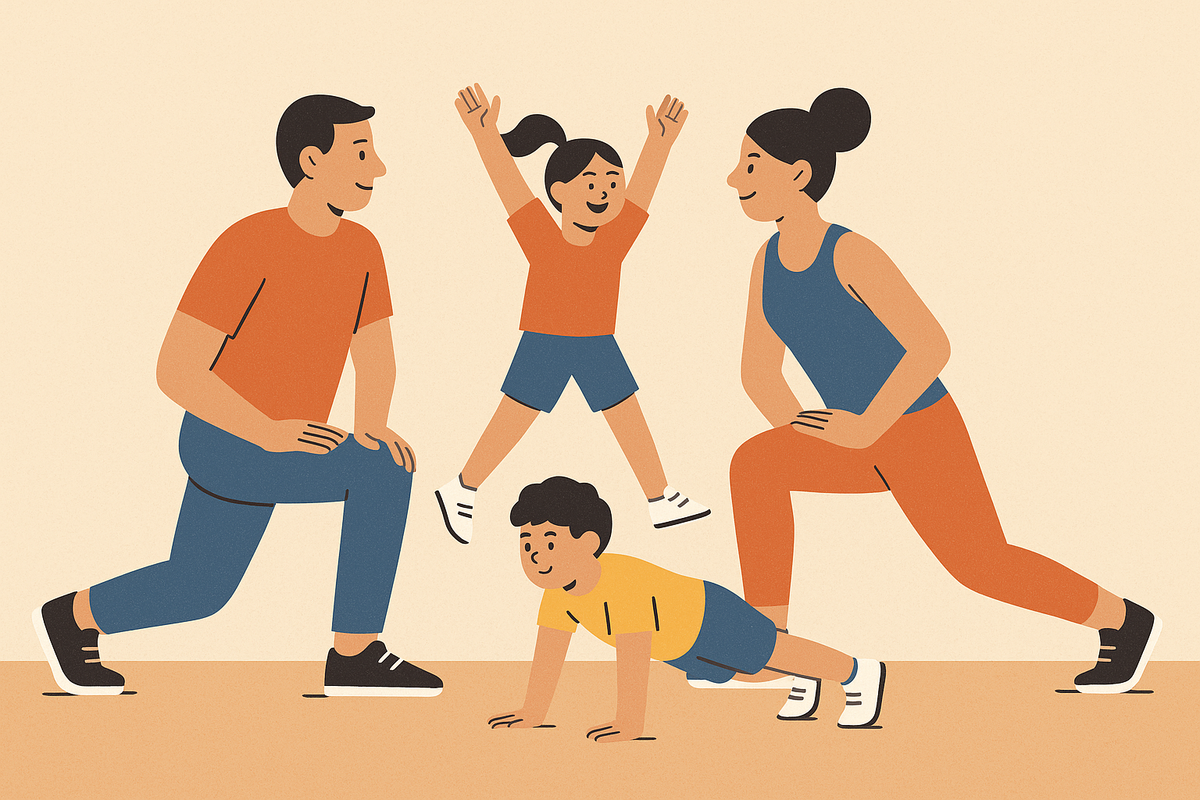
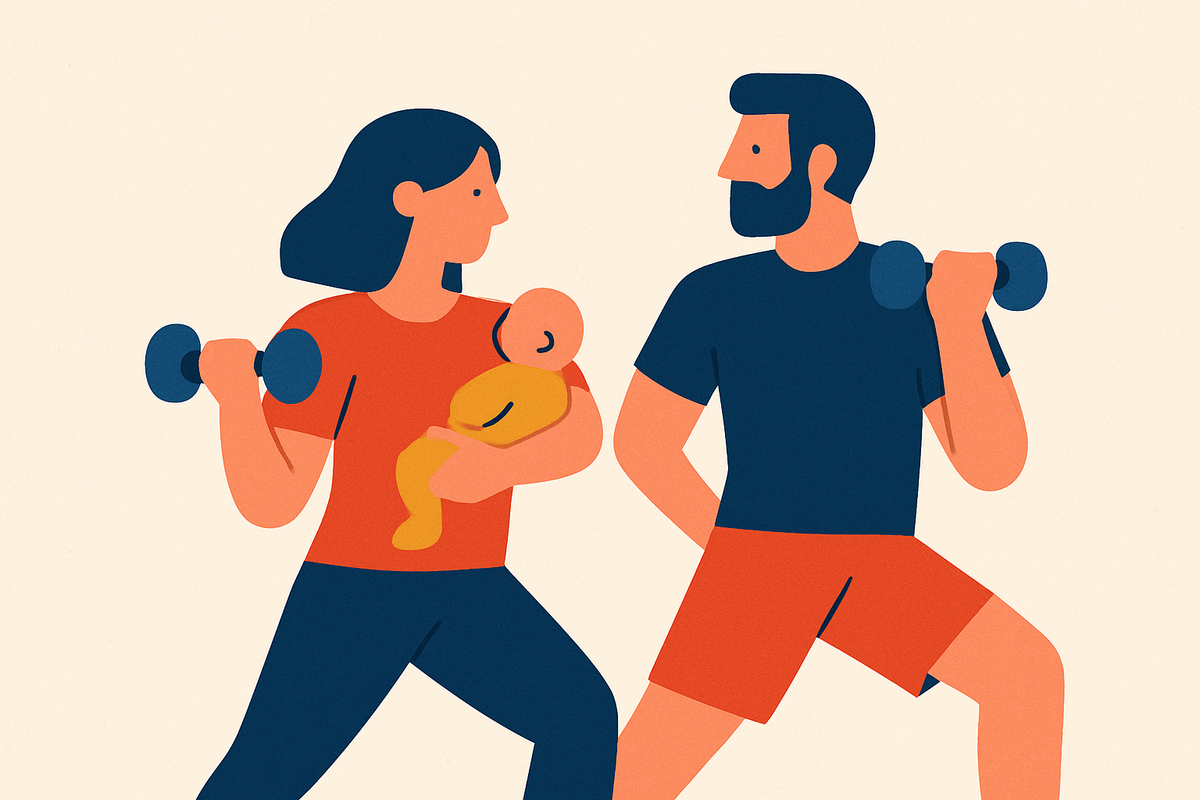
Couples who exercise together stay together—even when one partner can't train as before.
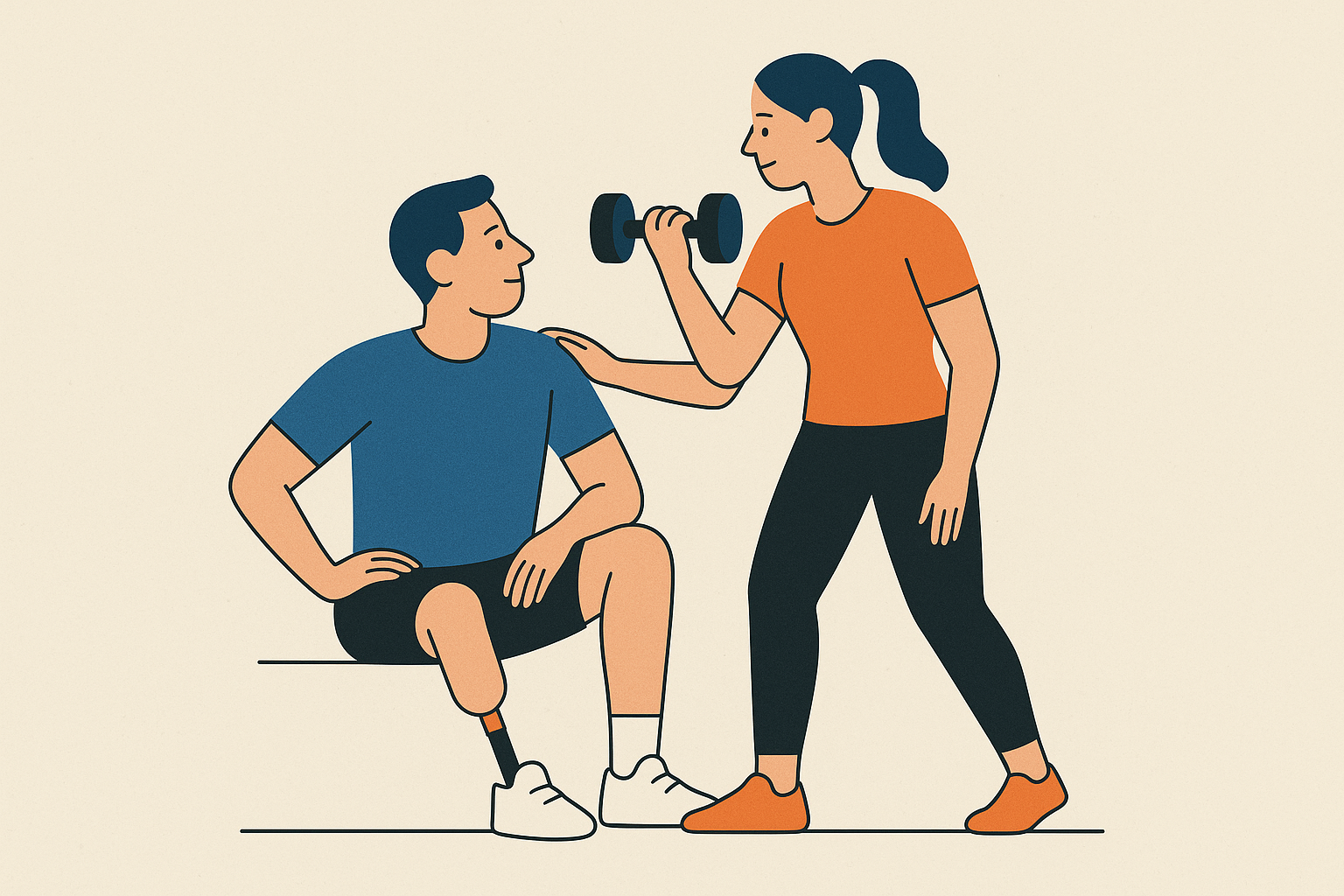
One partner tears a knee ligament, and the shared 6 a.m. workout dies with it, and that's the default response most people fall into. Most couples treat an injury as a full stop on their fitness life together, splitting into two solo tracks until someone's cleared to return. That's the wrong call, and there's a better way to run it. This piece lays out the framework: how to reset goals, keep both people in the game, and stay connected around movement even when one body can't do what it used to.
What the research says about why couples exercising together is worth preserving
A 2026 study in the journal Family Relations followed 1,693 young married couples and found the ones who exercised together reported better communication, sharper conflict resolution, and lower marital stress than the ones who didn't. Walking was the most common shared activity in the data, which says something on its own: you don't need a barbell or a heart rate zone to get the relationship payoff.
The completion numbers make the case even harder to argue with. Separately, one study found that 95% of couples finished a workout program together, compared to 76% of people going it alone. The partnership itself is what drives people to show up on day 43 when day 1 enthusiasm has worn off.
So when an injury hits and the shared routine just stops, both people lose that layer of protection, not just the injured one. And that's the whole argument for adapting instead of pausing. Roughly half of people who exercise already do it without their spouse, and an injury is the moment couples either drift into that group for good or find a way to stay out of it.
What the injured partner is actually going through — and why the non-injured partner needs to understand it
An injury doesn't just take out a knee or a shoulder. It brings sadness, guilt, frustration, fear of getting hurt again, and a real sense of being cut off from other people, and none of that is dramatic. It's the normal, documented response.
For someone whose sense of self is wrapped up in being active, the loss lands harder than it looks from the outside. Exercise is often the main way people manage stress, so losing it doesn't just remove a hobby, it removes the coping tool they'd normally reach for when things get hard. That's a rough trade.
The numbers on rehab adherence back this up. Research from Wang and colleagues in 2025 found that 50 to 70% of patients struggle to stick with rehab, largely because of pain and psychological barriers, not laziness or a lack of willpower. Depression at the one-month mark after an injury predicts how recovery goes overall, and across traumatic injury studies, depression shows up in anywhere from 6% to 42% of patients, anxiety in 4% to 24%, and PTSD in 10% to 30%. Those ranges are wide because injuries and people vary, but the pattern holds: the emotional weight here is real.
What actually helps is self-confidence, optimism, and feeling genuinely supported by the people around you. That last one is where the non-injured partner comes in, and the job isn't cheerleading, it's showing up as real support. What doesn't help: treating the injury like an inconvenience to the couple's plans, setting a recovery timeline like it's a deadline, or plowing ahead with intense solo training in a way that just puts the gap on display.
The first conversation to have before touching any goal
Before anyone talks about goals, there's a conversation that has to happen first, and it's not about fixing the fitness problem. It's about getting on the same page about what each person needs right now.
A few questions worth putting on the table directly:
- What does the injured partner want most from their partner right now: space, company, distraction, or hands-on help?
- What does the non-injured partner need to still feel like a team, instead of training solo while their partner sits it out?
- What does "staying connected around fitness" actually look like to each of them this week, not in three months?
Most pushback in fitness partnerships doesn't come from missing information. It comes from feeling judged, or feeling left behind, and skipping past those feelings to jump straight to planning means the plan won't stick.
This is also the moment to get the medical facts straight. What has a doctor or physical therapist actually said is off-limits, what's fair game, and roughly how long recovery takes? Build the plan around that, not around guesswork or optimism.
One more thing worth saying plainly: this is a conversation between two partners, not an intervention. The goal is curiosity, not a fix-it agenda.
How the injured partner can map what's still possible using a simple three-question framework
Once the conversation happens, the injured partner needs a clear-eyed inventory of what's actually on the table. Three questions do the job:
- What can be kept doing, or even done more of? Unaffected muscle groups, low-impact cardio, flexibility work.
- What can be kept doing with a modification? Can't run because of a knee injury, but swimming's fine. Can't do a barbell back squat, but single-leg work is open. Upper body keeps training while the lower body heals.
- What needs to be stopped, at least for now? Not forever, just named honestly, so the plan doesn't wreck the recovery before it starts.
There's a physical payoff here beyond the emotional one. Keeping the non-injured limb active during recovery is generally considered sound practice, not just for mood but for overall rehabilitation progress.
Skip this step, and the risk is real, since pushing through on an injured area can make the injury worse, stretch out recovery, or cause damage that doesn't heal. So this framework isn't there to hold anyone back. It's there to keep the whole plan from backfiring.
A physical therapist or sports medicine doctor needs to be part of this conversation. The three-question framework is a way to organize thinking, not a substitute for someone who's actually looked at the injury. The end result should be a short, honest list the couple can work from together, not a twelve-page plan nobody reads twice.
Resetting shared goals so both partners have something to work toward
The shift that matters here: stop aiming for identical goals and start aiming for aligned ones. Same workout, same numbers, same finish time, that's out, while shared purpose with individual targets is in.
Couples who keep training well through a mismatch in ability tend to focus on shared purpose and open communication, not on matching each other rep for rep. A few structures that actually hold up during injury:
- Combined metrics. If individual targets no longer line up, build a couple goal that adds both contributions together, like combined weekly active minutes, combined steps, or combined pool laps.
- Parallel goals. Each partner sets their own goal in the same category. The injured partner works on mobility and rehab consistency; the non-injured partner works on something complementary, like flexibility or endurance. They check in on each other's numbers, not compete on them.
- Process goals over outcome goals. Trade "lose ten pounds" or "run five miles" for "show up three times this week." Consistency goals level the field when capacity isn't equal.
Apply the usual SMART goal logic, but apply it to the injury, not to some pre-injury version of what fitness used to look like. A goal has to be realistic given today's limits, not a leftover from six weeks ago.
And the old goals need to be retired out loud. If "workout 30 minutes, six days a week" is still sitting there as the standard, it's just a quiet, constant reminder of what's not happening. Replace it. Weekly goals work better than long-range ones here too, since recovery timelines shift constantly, and shorter cycles let the couple reset without it feeling like a loss every time.
What the non-injured partner does with their own training in the meantime
The non-injured partner doesn't need to scale back to stay connected, but how they run their own training during this stretch matters a lot.
A structure that tends to work: a couple of shared sessions each week, built around what the injured partner can handle, plus independent training the rest of the week where the non-injured partner trains at full capacity. There are two things to avoid on either end. Don't make the solo training invisible, since that just creates distance, and don't make it the main topic of every conversation, since that breeds resentment fast.
The motivation boost that comes from training alongside someone else doesn't vanish just because the session looks different now. A modified walk or a shared rehab session still carries some of that benefit. Sending a photo after a solo run, texting a quick check-in, logging activity somewhere both people can see it, these small habits keep the sense of "we're in this" alive even on days they're not training in the same room.
There's a quieter benefit too. The non-injured partner showing up consistently, even when the conditions aren't ideal, models exactly the behavior they'll want to see from their partner during rehab.
Activities that actually work for both partners when one is injured
Walking tops the list, and for good reason. It was the most common shared activity among the couples in the 2026 study, it naturally invites conversation, and it scales up or down to match whatever pace and distance the injured partner can manage that day.
Swimming and pool-based exercise deserve a serious look too. Water supports up to 90% of body weight, which cuts joint stress way down for someone recovering from an injury. At the same time, water resistance runs 12 to 14 times greater than air, so both partners get a real workout even if one of them is operating well under their usual land-based effort. That combination makes pool time function as both a workout and a lower-stress recovery option. It's one of the few settings where an injured partner can actually push themselves without the risk of making things worse.
Yoga stays low-impact by nature, and a decent instructor will offer modifications without anyone having to ask twice. Both partners can be on the mat at the same time working at very different levels, and it holds up especially well for injuries involving joint pain or limited range of motion.
Pilates leans on core strength, controlled movement, and alignment, which makes it a good fit for recovery. The injured partner often gets real therapeutic value out of it, while the non-injured partner ends up building foundational strength they'd probably skipped over before.
Rehab exercises, the PT routine itself, can become a shared activity rather than a solo chore. Done together at home or at the gym, with the non-injured partner running through the same movements as their own mobility work, it turns something isolating into something the couple does together.
None of these require matching performance. They require both people in the room, moving, paying attention to each other.
How to track progress in a way that keeps both partners motivated
Most fitness tracking is built around numbers the injured partner simply can't hit right now: pace, reps, weight on the bar. Measure against those during recovery, and every day becomes a reminder of what's missing.
So shift what gets measured. A few things worth tracking instead:
- Rehab consistency: did the injured partner do their PT exercises this week?
- Shared session count: how many times did both people show up together?
- The non-injured partner's own consistency goal, tracked in parallel.
Combined metrics, like total couple minutes active or combined steps, give both people a stake in one shared number. A ten-minute walk from the injured partner counts for just as much as a five-mile run from the other. And visibility matters here: a shared log, a photo texted after a session, a quick weekly check-in, all of it keeps the habit social instead of private. A workout photo, honestly, can do more for motivation than another chart ever will.
Celebrate showing up, not performance. A completed PT session deserves the same recognition as a personal record, because right now, consistency is the actual goal. Small stakes help too: hit both individual goals for the week, and the couple picks Saturday's activity together. Low pressure, but it gives both people something to play for.
And when a session gets missed, the response should be a question, not a scorecard. "What got in the way, and what would help next week" beats a performance review every time.
What to do when the gap between partners' fitness levels starts to feel like a problem
A long recovery stretches the gap between partners. The non-injured one keeps getting fitter while the other rebuilds from a much lower baseline, and that gap can quietly turn into frustration, guilt, or resentment on either side.
Name it before it grows teeth. A regular check-in, something as plain as "how's this actually working for both of us," stops small annoyances from piling up into avoidance.
The injured partner's mental state isn't a side issue here, either. Feeling genuinely supported by a partner is one of the strongest, most consistent predictors of a good rehab outcome. That means how the non-injured partner shows up emotionally isn't just being nice. It has real, measurable weight on how recovery actually goes.
Programs like Mayo Clinic's Mates in Motion, which pairs exercise with relationship support, incorporate communication skills directly into their structure. The lesson there is worth borrowing: the fitness goal conversation doubles as practice for supporting each other through everything else life throws at a marriage.
The goal isn't closing the gap. It's making sure neither person feels like they're standing in it alone. Worth reframing the whole stretch as a phase, not a failure: the shared fitness life isn't paused, it's just running on different settings for now, and getting back to fuller shared training later is something to plan toward, not just hope shows up on its own.
Rebuilding toward shared goals as recovery progresses
Recovery doesn't flip like a switch. Capacity comes back slowly, unevenly, sometimes with setbacks that have nothing to do with effort. The goal-resetting the couple's been doing all along doesn't stop once healing starts, it just points in a different direction.
The stop/continue/modify framework still works here, just run it in reverse. What can get added back this month? What still needs a modification? What's still off the table for now? Revisit it every few weeks rather than assuming week one's answers still hold at week twelve.
As capacity grows, bring shared goals back in stages instead of jumping straight to whatever the couple was doing before the injury. The combined-metric approach makes this easy, since the shared number just climbs naturally as one partner's contribution grows alongside the other's. Nobody has to declare a comeback, since it just shows up in the numbers over time.
What the adaptive period built along the way is worth naming, too: a couple that's learned to reset goals together, track progress that actually reflects reality, and stay connected when the plan changes without warning. That's not a downgrade from the pre-injury routine. It's a better foundation than most couples ever get around to building.