Pre-Wedding Workout Plan for Engaged Couples Who Want to Look and Feel Their Best
Couples who train together are 90% more likely to stick with pre-wedding fitness plans.
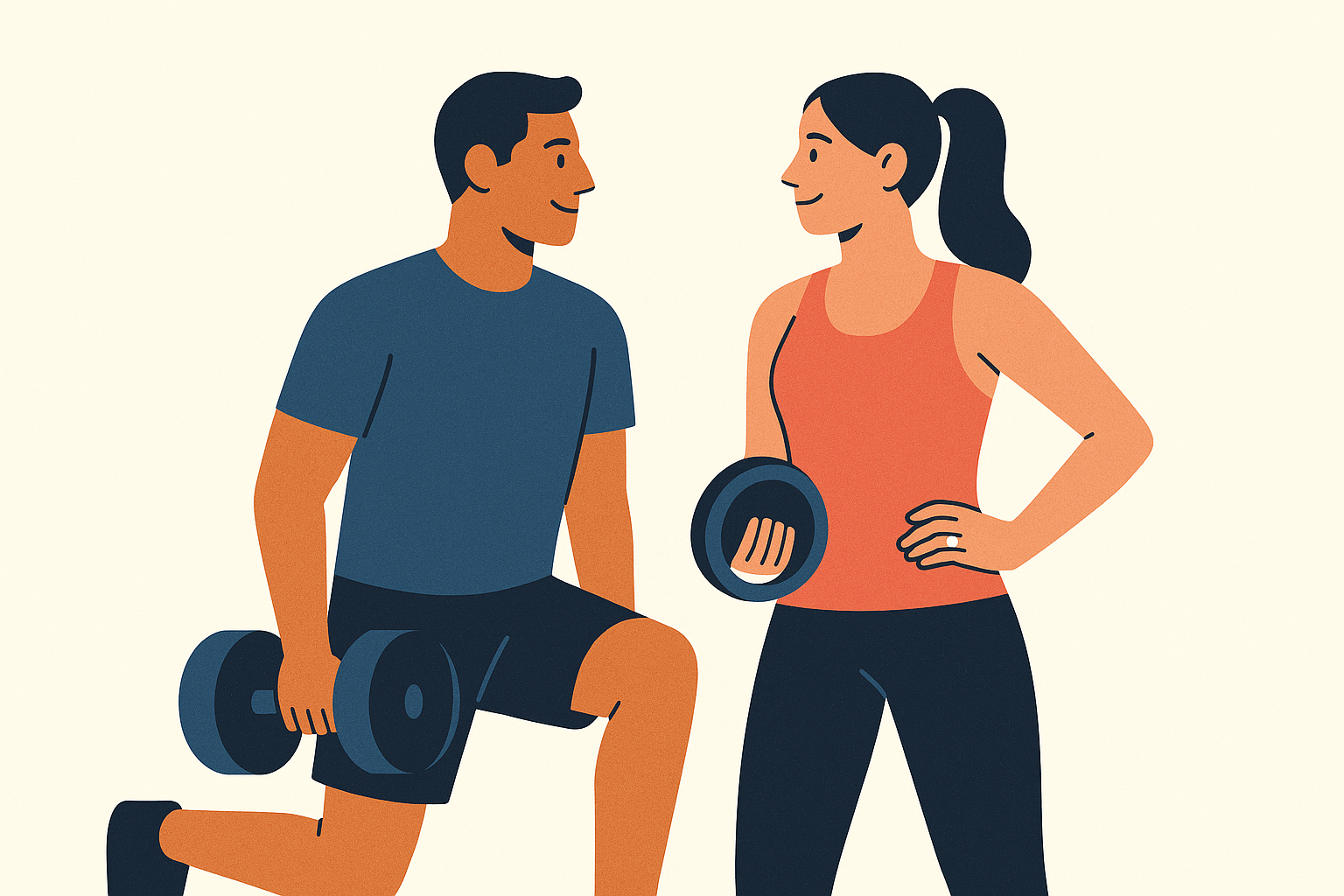
A pre-wedding workout plan works better as one shared routine than two people quietly grinding through separate ones. That's the whole argument of this piece, and the numbers back it up: people are 90% more likely to stick with an exercise program when they've got a workout partner rollingout.com. That's not a small edge. Whether a program survives to the wedding or dies quietly in week three depends on this, given that three-to-six months is the practical sweet spot for most couples to change body composition without extreme dieting.
Dr. David Moore of Henry Ford Hospital puts it simply: working out with a partner makes the habit stick better and makes the whole thing more fun. Which, honestly, tracks. Shared misery (or shared triumph, depending on the day) is just easier to sit with.
Wedding planning already turns two people into a small, slightly overwhelmed task force. They pick a venue together, argue about seating charts together, panic about the budget together. Fitness should fold into that same shared project instead of becoming a private mission each person runs on the side. Consider this a practical, timeline-anchored plan built for two people.
How much time you realistically have
Bridal fitness coach Stephanie Thomas says six months out is the sweet spot. That window allows for gradual fat loss, real muscle tone, and enough flexibility to adjust workouts around dress fittings, all without resorting to crash measures. Three to six months out is the range where most couples land, and it's genuinely enough time to change body composition without starving anyone.
Eight weeks is the floor. The Sculpt Society built its entire bridal program around that eight-week window because it's the minimum time needed to complete a full training cycle, build real strength, and turn workouts into a habit rather than a scramble. Starting later than that just means the goal shifts from transformation to toning and stress management, which is a perfectly reasonable goal to have. It just means the goal shifts from transformation to toning and stress management, which is a perfectly reasonable goal to have.
Whatever the timeline, it rules certain things out. Extreme calorie cutting or a sudden burst of intense training in the final weeks doesn't produce a glow. It produces exhaustion, short tempers, and skin problems, which is the exact opposite of what anyone's going for. During wedding week itself, the move is to dial workouts back and use movement as a stress outlet. Nothing that risks soreness or injury on the actual day.
Couples who line up their fitness timeline with their planning timeline, meaning vendor calls, fittings, and budget decisions, tend to treat the workouts as part of the same project instead of a competing chore fighting for calendar space.
A four-phase structure couples can move through together
This is about setting habits and finding activities both people actually enjoy doing. Functional strength, exploration, low intensity bespoke-bride.com. Phase two, Strength, covers months eight through five bespoke-bride.com. Compound lifts, squats, deadlifts, overhead presses, the stuff that builds a metabolic base. Most of the visible body composition change happens right here.
Phase three, Toning and Silhouette, runs from month four down to month two. Workouts start getting dress-specific or suit-specific. If the target shape is already hit by the first fitting, usually two to three months out, the smart move is to shift into maintenance. Chasing more change after that point just risks costly last-minute alterations. Phase four is Glow and De-Stress, the final eight weeks The Sculpt Society. Cortisol management takes over as the priority, so the focus moves toward mobility work, Pilates, and Zone 2 cardio, which just means steady aerobic effort at 60 to 70% of max heart rate, brisk walking or cycling, nothing punishing The Sculpt Society. High stress causes bloating and breakouts, and this phase exists specifically to head that off The Sculpt Society.
The American College of Sports Medicine put out a Position Stand in March 2026 pulling together 137 systematic reviews across more than 30,000 participants, and its main finding cuts against the instinct to overcomplicate things ACSM Resistance Training Guidelines Update 2026 bespoke-bride.com. Consistency beats complexity. Training all the major muscle groups at least twice a week affects long-term progress more than following some perfectly engineered plan ACSM Resistance Training Guidelines Update 2026 bespoke-bride.com. The CDC's benchmark gives couples a shared weekly target to aim for: 150 minutes of moderate exercise plus at least two strength sessions a week. Simple, unglamorous, and it works.
Structuring workouts when two people have different bodies and goals
Start with shared goals, then let individual focus areas branch off from there. Losing weight, building strength, and just staying active aren't competing agendas. A couple can run the same basic routine while each person leans into different muscle groups within it.
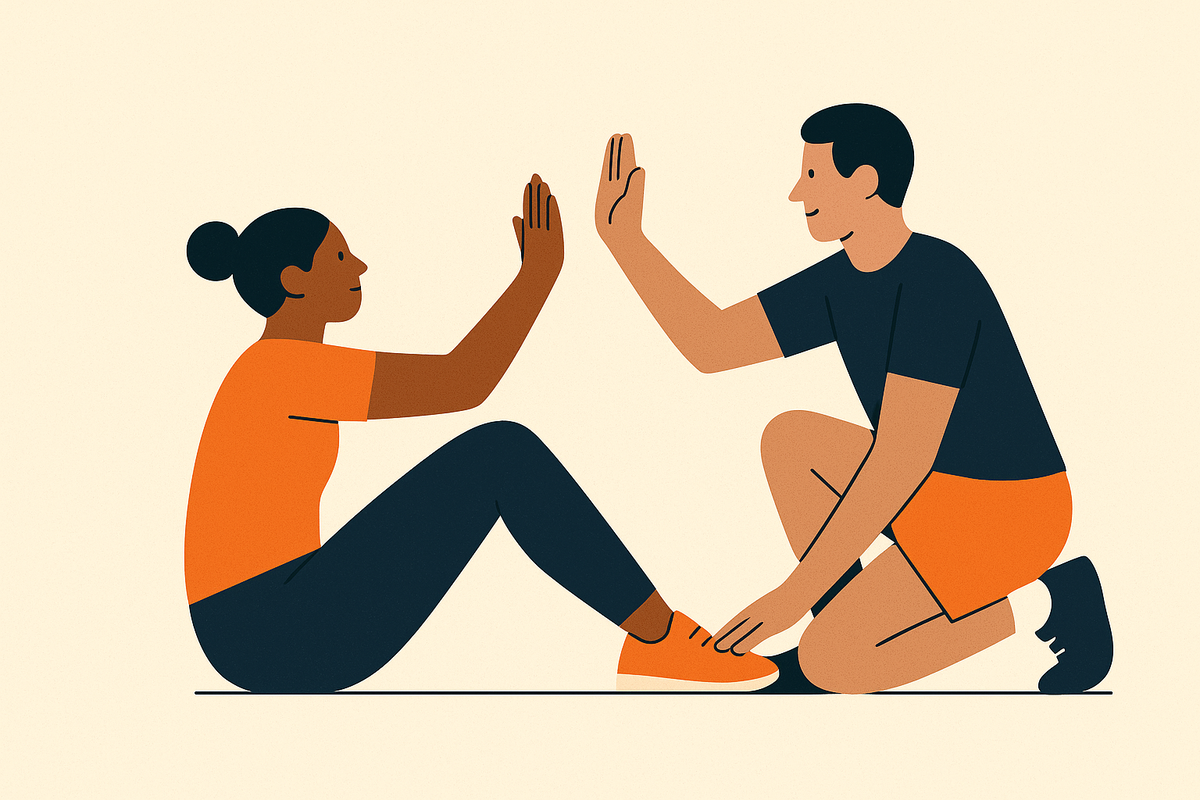
Strength training works as the shared foundation because bodyweight basics scale to any starting point: squats, push-ups, lunges, planks, dumbbell rows. Nobody's left out because they're a beginner. Partners can count each other's reps, spot form, or just needle each other a little to push through the last set, which keeps the session interactive instead of two people quietly doing their own thing in the same room.
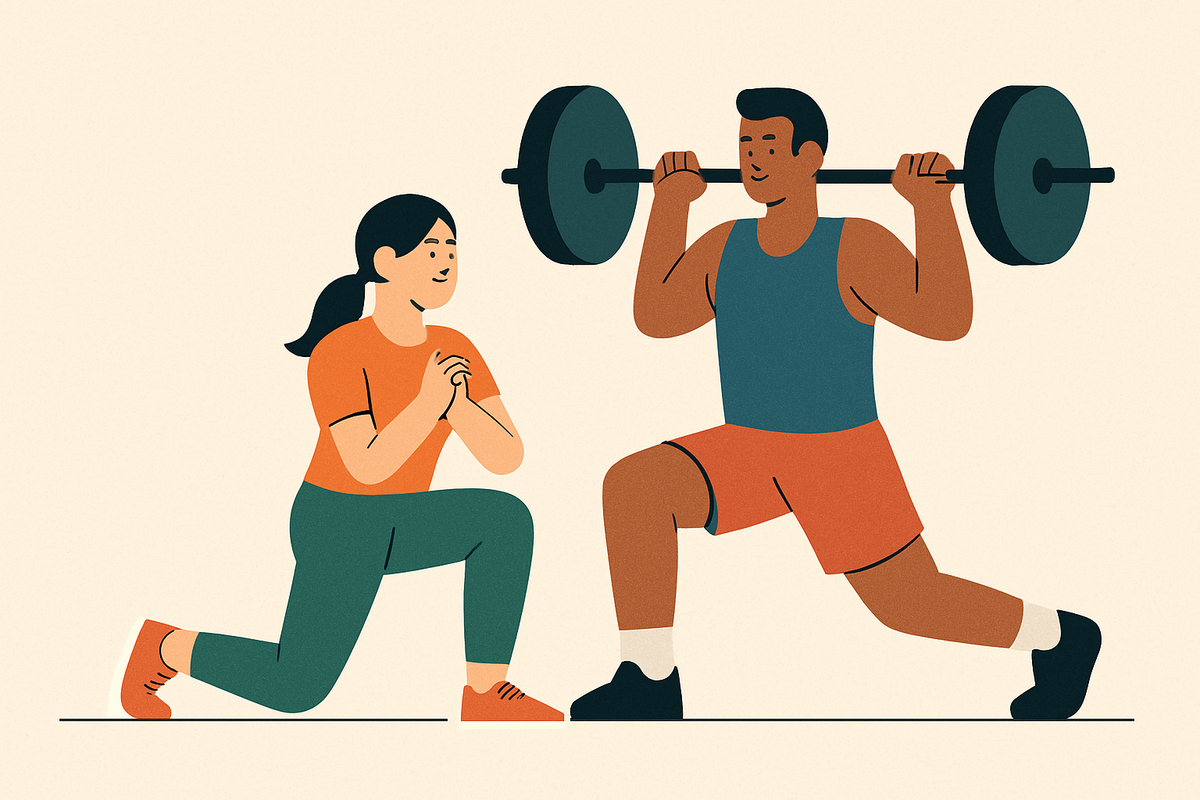
From there, dress-specific and suit-specific work can layer on top of the same session structure. Strapless, halter, and backless dresses call for face pulls, lat pulldowns, tricep dips, and lateral raises, all aimed at the shoulders, triceps, and upper back. Mermaid and fitted silhouettes lean on glute bridges, weighted lunges, planks, and Russian twists for core stability and lower-body definition. Ballgowns and heavier fabrics call for goblet squats, deadbugs, and rows, functional strength that pays off in posture and in carrying a heavy dress around for twelve hours straight bespoke-bride.com. Slim-fit suits point toward push-ups and chest and shoulder work.
Nearly every bridal fitness source recommends the same combination for upper-body work: overhead presses, tricep extensions, and bicep curls. Nutrition is what lets that muscle definition actually show up in a mirror, not the exercises alone. TRX suspension training gets cited repeatedly as a particularly good couples' tool, since it's compact, adaptable to any fitness level, and effective for sculpted arms and a stable core.
On frequency, the ACSM's 2026 guidance treats two strength sessions a week as a reasonable floor for beginners or couples short on time, three as the balanced option for steady progress, and four or more for people already fairly experienced. None of this is a rigid rule; it's a starting point to adjust from. Roughly 60% of U.S. adults do zero muscle-strengthening exercise ACSM Position Stand 2026. So any consistent program, even a modest one, puts a couple well ahead of most people walking around.
Low-impact and at-home options that fit a wedding-planning schedule
By 2026, dual-income couples planning weddings are juggling vendor calls, venue walkthroughs, cake tastings, and full-time jobs, often all in the same week, and per the ACSM's March 2026 Position Stand, synthesizing 137 systematic reviews covering more than 30,000 participants, consistency matters more than complexity (training all major muscle groups at least twice a week matters far more than following a complex or "perfect" training plan) ACSM Resistance Training Guidelines Update 2026 bespoke-bride.com. The workout that actually happens is the one that's already set up in the room when they walk through the door at 7pm, not one requiring a gym membership and a drive.
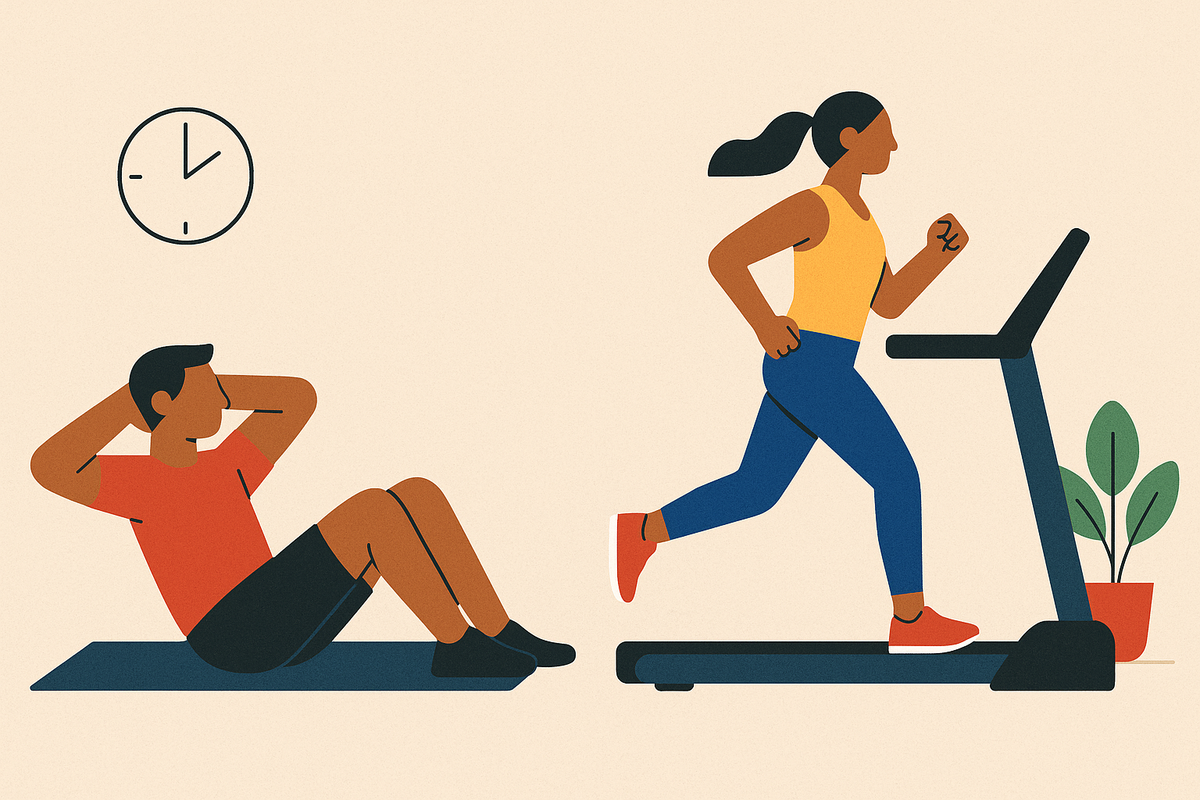
The final 8 weeks shift toward mobility, Pilates, and Zone 2 cardio, steady-state aerobic exercise at 60–70% of maximum heart rate such as brisk walking, cycling, or jogging The Sculpt Society. It's easier on the joints and, more importantly, it lowers injury risk, which is the number one reason fitness plans quietly fall apart. A workout example: 12% incline, 3 miles per hour, 30 minutes on a treadmill bespoke-bride.com. Dr. Constance Chu, a sports medicine physician at Stanford Medicine, points to it as a solid option for people who don't enjoy running or can't run, since it delivers real cardiovascular and mental health benefits without pounding the knees bespoke-bride.com.
Physical therapist Joe Hribick recommends starting slow with incline work, one or two sessions a week at first, building up to three or four as fitness improves, since the glutes and hamstrings fatigue fast on steeper inclines. For couples who genuinely can't carve out a full hour, walking pads set to a 3% incline while answering vendor emails or scrolling wedding research still count ourvows.app. It's movement without needing a dedicated block of time, and it still helps regulate cortisol ourvows.app.
The framing that matters most here: 20 to 30 minutes, four to five times a week, kept up consistently for 8 to 12 weeks, outperforms an extreme plan that gets abandoned after 10 days (duration is less important than showing up) bespoke-bride.com. Duration matters less than simply showing up. And working out at home has a built-in couples advantage, since there's no gym commute and no gap in the schedule where one partner quietly bails while the other keeps going. Even when only 15 minutes is available, a short high-intensity burst still delivers a cortisol management benefit, since the threshold for "good enough" is lower than most couples assume.
How training together changes the relationship, not just the body
Exercise releases oxytocin and endorphins, the same chemicals tied to bonding and attachment. That's not a coincidence for couples training together. Partners tend to become more receptive to each other and more open in conversation during and right after a workout, which is a decent argument for scheduling a session before a hard budget conversation, not after one.
The Sculpt Society leans into this directly, framing partner workouts as bonding time on its own program page, and points to founder Megan Roup and her husband Morgan as an example of a couple who train together as a shared thing. Wedding Signal suggests turning it into an actual game: switching up who plans the workout each week, friendly competitions, a spa day as the prize, progress photos along the way. Small stakes, but they change the tone from obligation to something closer to a running joke between two people.
The partner who nags about not skipping leg day is, generally speaking, the same partner who'll push you to finish that half-written thank-you note list or follow through on a career move. Fitness becomes a low-stakes rehearsal for how the partnership handles accountability more broadly. Partner Fitness Review builds its whole approach around this idea, that accountability works best when it feels supportive instead of controlling. That's really the throughline for everything in this section: encouragement, not surveillance.
Using the workout routine as a stress-management system during planning
Wedding planning ranks among the more stressful stretches in a couple's life together, financial pressure, family opinions nobody asked for, an endless string of small decisions, and a deadline that doesn't move. Left unmanaged, that stress appears physically as breakouts, headaches, appetite swings, disrupted sleep, even hair loss. Ironically, those are exactly the outcomes a fitness plan is supposed to prevent.
Movement works as a kind of processor for stress hormones, working tension out of the body and leaving both partners a little clearer-headed for decisions that actually require calm and agreement (which, during wedding planning, is most of them). Sleep matters just as much as the workouts themselves. Getting 7 to 9 hours matters because cortisol, released under stress and sleep deprivation, contributes directly to pre-wedding bloating and breakouts. No supplement fixes a body that isn't rested.
The workout session itself can double as a scheduled escape hatch from planning, a protected chunk of time where the only job is to move, not decide anything. Yoga and partner stretching serve a different purpose than strength training does, restoring calm and flexibility rather than building muscle. Simple partner poses, forward folds, seated twists, back-to-back breathing, partner boat pose, are easy entry points for couples who haven't trained together before. On the wedding morning itself, a short stretch or light yoga session can take the edge off pre-ceremony nerves and give a small endorphin lift before the photographer starts calling the shots.
Nutrition basics that support the shared plan without becoming another project to manage
Professional trainers tend to cite an 80/20 split: 80% of that wedding glow comes from nutrition and hydration, only 20% from the gym. Which means no workout, however disciplined, cancels out a genuinely poor diet, but it also means nobody needs to be perfect at the gym to see results.
Crash dieting in the final two weeks does the opposite of what people hope. It drains energy, spikes stress, and shows up as dull skin and thinning hair. Dropping under roughly 1,200 calories a day can cause visible effects like hair thinning and dry skin, on top of less visible ones: nutrient deficiencies, a slower metabolism, plain exhaustion. None of that reads well in wedding photos, and none of it feels good standing at the altar either.
The steadier approach is a 90/10 split, whole, nutrient-dense food 90% of the time, with real room left for cake tastings and celebratory dinners rollingout.com. It keeps couples out of the binge-restrict cycle that tends to occur during engagement season rollingout.com. As a shared habit, meal prepping together can double as a low-key date night, planning and cooking side by side instead of one partner quietly managing the other's plate. On the macronutrient side, the priorities are simple: lean protein like chicken, tofu, or fish, plenty of fiber-rich vegetables, whole grains, and keeping processed food and added sugar in check. Hydration is roughly 2.7 to 3.7 liters of total fluid a day, depending on sex and activity level. And there's a financial argument buried in all this too: if the target shape is hit by the first fitting, holding steady afterward avoids the alteration costs and fitting-day stress that come with a fluctuating body.
Tools and apps that help couples stay accountable without overcomplicating things
The best tool is whichever one both people actually keep opening. Complexity is usually what kills a tracking system, not lack of features, so simplicity and a clear view of progress beat a dashboard full of data nobody checks.
A few named programs are worth knowing specifically. The Sculpt Society's Bridal Program runs eight weeks, with beginner and intermediate-advanced tracks and workouts ranging from 5 to 45 minutes. Equipment is optional, light dumbbells, ankle weights, sliders, and it includes wellness chats with founder Megan Roup along with advice from Zola, London Jewelers, Jennifer Behr, and Elizabeth Fillmore. Pricing runs $229.99 a year (under $20 a month) or $24.99 monthly, both with a 7-day free trial, and the program states directly that every workout can be done together as a couple. Stephanie Thomas Fitness offers a bridal schedule built around two upper-body and two lower-body strength sessions a week, plus an optional core day, minimal equipment, and video demos for every move.
For couples training at home, DeerRun, a home fitness brand that showed up in Bespoke Bride coverage in September 2026, makes compact, foldable walking pads and auto-incline treadmills built around the idea of gym-level incline training without a gym membership or a commute. It's aimed squarely at couples short on both time and budget. On the app side, OurVows flagged Peloton IQ in 2026 as a rising option because it adjusts workout intensity based on wearable data like sleep and recovery. Runna offers adaptive running plans too, though it doesn't adjust for daily stress or sleep the way Peloton IQ does, worth knowing for couples whose energy swings with how planning is going that week. Both get cited as a cheaper stand-in for a private trainer, which matters for couples watching the wedding budget.
Partner Fitness Review rounds this out nicely, since its whole approach centers on shared goals, visible progress, friendly wagers, reward systems, and workout photos as motivation, tools built around the relationship rather than an individual's personal dashboard. Whatever couples land on, a shared fitness journal or a single joint app for logging small wins tends to work better than two separate trackers nobody compares notes on. SOURCE PAGES (what the pages behind the outline's links say).
Sources
- Low-Impact Pre-Wedding Workout Routine You Can Do at Home - Bespoke-Bride: Wedding Blog
- Bridal Program - Wedding Workout Plan | The Sculpt Society
- Pre-Wedding Fitness Routines for Couples | Wedding Signal
- The Ultimate 2025-2026 Wedding Fitness Plan: A Holistic Approach to Your Big Day
- How working out together changes couples' communication
- bridalfitnesscoach.com
- How working out together changes couples' communication