Morning Workout Routines for Couples with Different Schedules
Emotional accountability matters more than working out at the same time.
Only about 47% of adults met federal aerobic activity guidelines in 2024, according to the CDC's National Health Interview Survey. And roughly 80% of people who start an exercise program drop out within a few months. In one study of beginner fitness app users, only 18% were still active after six months. Most people quit around the 14-week mark.
The leading reason? Time conflicts.
So before we even get to the couples angle, sit with that. The problem usually isn't motivation. It isn't plan quality. It's logistics. It's not having a structure that holds when life gets messy. And life always gets messy.
Having a partner changes the math — think of it as going from a solo rope bridge to a suspension cable. You sway less.
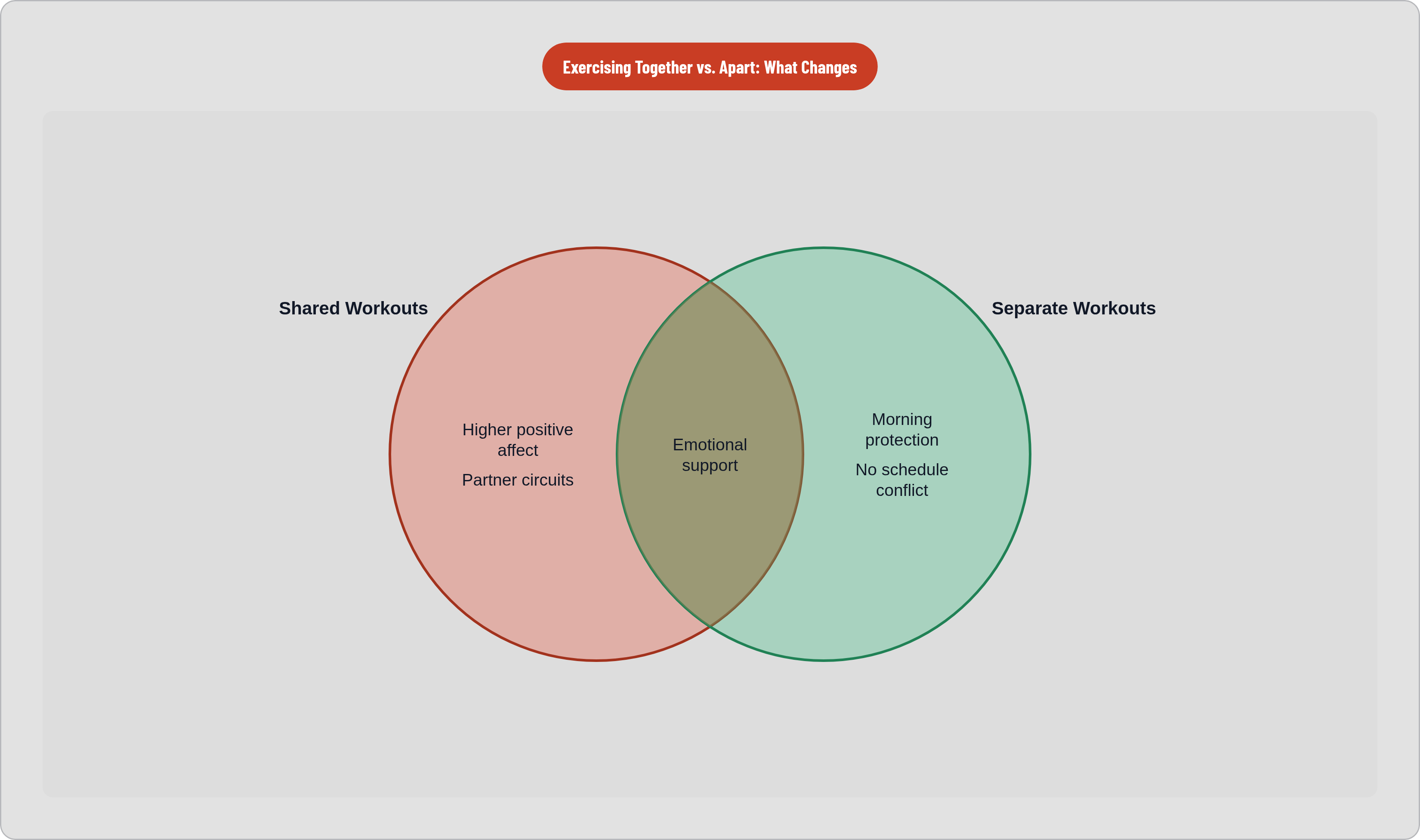
A 14-day diary study published in the Journal of Social and Personal Relationships found that on days people exercised with a romantic partner, they reported higher positive affect during the workout, higher positive affect across the whole day, and greater relationship satisfaction. Separate research found that couples who exercised together showed increased marital satisfaction. Wives in particular experienced fewer negative relational events — fewer arguments, more couple time — when exercise was part of the shared routine.
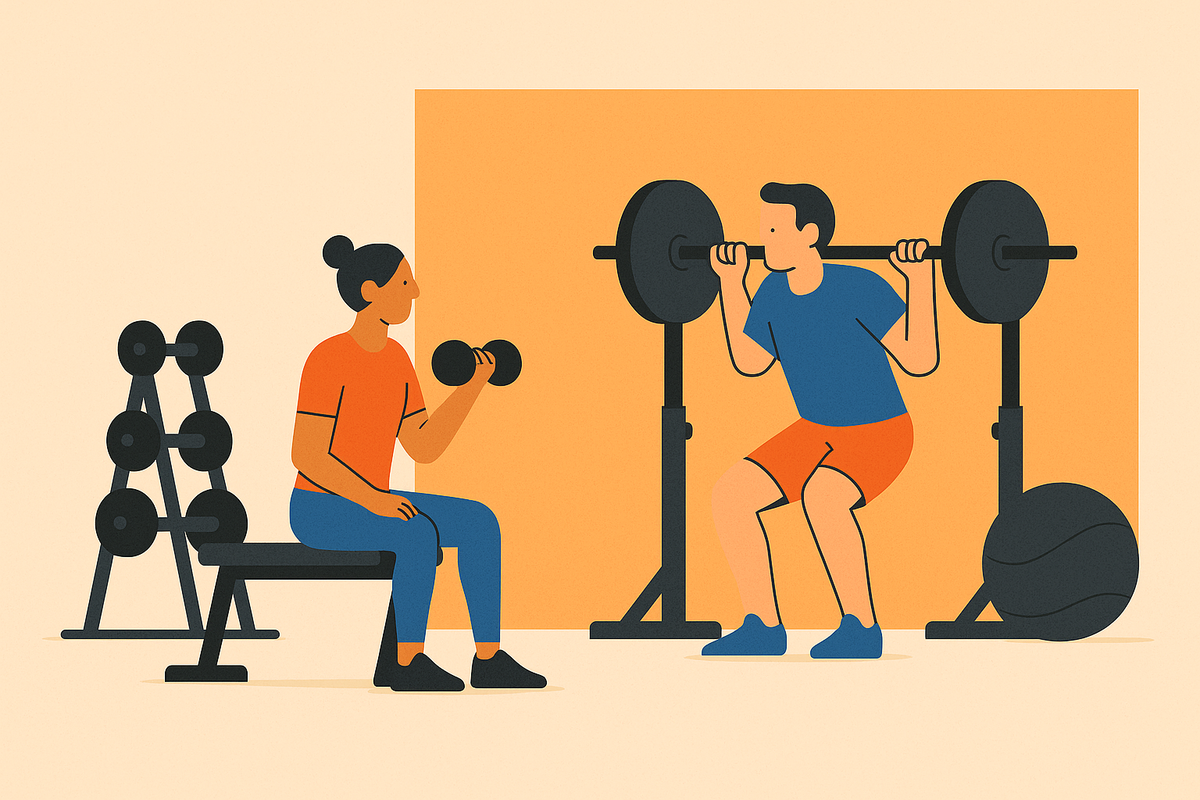
There's also a performance angle. One study found that exercising alongside a more capable partner increased plank hold time by 24%. University of Aberdeen research found that a new exercise companion increased overall exercise volume, and the effect was stronger when that companion was also emotionally supportive.
The through line: the benefit isn't really about being physically side by side. It's the emotional bond and mutual accountability that drive results. Which matters enormously for couples with different schedules, because it means the relational payoff survives even when the workouts happen hours apart. The connection is the active ingredient. Not the proximity.
How chronotype differences make shared morning workouts harder than they look
Chronotype is your natural sleep-wake tendency. Not a preference. Not a habit you can white-knuckle your way out of. Most experts agree you can shift your schedule by an hour or two in either direction, but pushing much further means fighting your own biology, and your biology is very patient and very stubborn.
This shows up in relationships in ways people don't always expect. Couples with matched chronotypes report better sleep quality and greater sexual satisfaction than mismatched couples. That's not a trivial finding. It suggests chronotype mismatch carries real relational costs that go well beyond who hogs the covers.
A 12-week study found that participants who exercised during a time slot matched to their chronotype improved their sleep quality score by 3.4 points. The mismatched group improved by 1.2 points. The study authors called out "one-size-fits-all" approaches to exercise timing directly, noting they fail to account for basic biological variability.
Forcing the night owl to match the early riser's 5:30 a.m. alarm doesn't build solidarity. It builds resentment. You're not bonding over fitness — you're just both tired and annoyed. Why did the early riser win the argument? Because the night owl wasn't awake to object.
The goal isn't one shared alarm. It's shared habits built around separate schedules.
Why mornings are still worth protecting for fitness, even on different clocks
Even when schedules don't line up, both partners benefit from treating their individual morning window as non-negotiable.
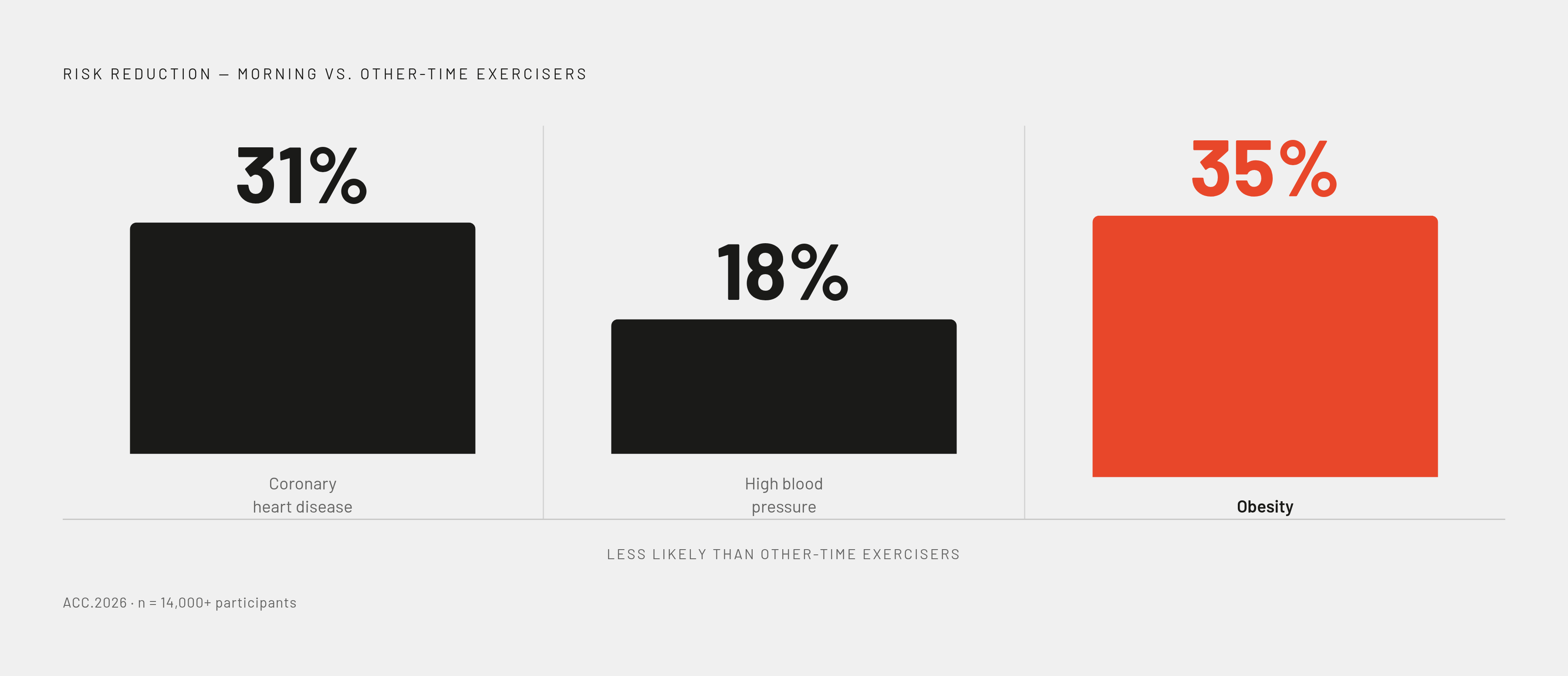
Data tracking more than 14,000 participants, presented at ACC.2026, found that people who exercised regularly in the morning were 31% less likely to have coronary heart disease, 18% less likely to have high blood pressure, and 35% less likely to be obese, compared to those who exercised at other times of day. A 2025 randomized controlled trial published in Scientific Reports found morning exercise was particularly effective for body fat reduction and shifting the sleep-wake cycle in a favorable direction.
There's also a simpler argument that has nothing to do with hormones or circadian biology. Morning workouts face fewer schedule disruptions. No urgent work email at 6 a.m. No last-minute obligation materializing. A 2019 study in the British Journal of Sports Medicine found morning exercise improves attention, visual learning, and decision-making across the rest of the day. You get the session done. You show up sharper for whatever follows.
The argument isn't that morning is the only valid time to exercise. It's that morning is the window most likely to stay protected. For both partners. Even when those windows don't overlap by an hour or two.
The partial-overlap model: what couples can share when full overlap isn't possible
Not every workout needs to be joint. That's the whole point.
The goal is finding a few shared touchpoints, not engineering a synchronized schedule. In practice, that looks like:
A warm-up together before one partner heads out
A short walk when the second partner wraps up
Ten or fifteen minutes of stretching, coffee, and talking through the day
That's genuinely enough to keep a fitness habit feeling like a shared project rather than two isolated routines bumping past each other in the hallway.
Treating two or three sessions per week as joint appointments — even if the actual workouts differ in timing or content — creates an anchor without demanding daily coordination. Forgiving structures are the ones that survive real life. Rigid ones just generate guilt when they break.
When schedules do briefly align, partner circuits built around alternating work and rest are easy to scale. Both partners do the same movement, each at their own intensity. Nobody waits. Nobody holds back. Nobody quietly seethes about the pace.
Agreeing on weekly goals before the week starts helps the separate sessions feel like parallel progress toward something. Not disconnection.
Small connection rituals that make separate routines feel shared
A photo texted to your partner right after finishing a workout carries more relational weight than you'd expect. It's a small, low-effort signal that says "I showed up today." Easy to dismiss. Surprisingly hard to stop once you've started.
Friendly wagers tied to weekly session counts — not performance metrics — keep both partners engaged without adding pressure. Competing on who hits three sessions this week is sustainable. Competing on pace or weight lifted gets old fast and starts feeling like a comparison neither person signed up for.
A few other things that actually work:
A shared playlist, updated each week by whoever worked out that morning
A joint log — whiteboard, shared note, whatever app both partners will realistically open — where completed sessions get marked
A standing five-minute debrief after each workout, even by text
A monthly reward, a meal or an activity, unlocked when both partners hit their session-count goal for the month
The research identifies emotional support as the actual driver of increased exercise frequency. Not physical presence. Intentional acknowledgment. Noticing that the other person showed up and saying so, out loud or in a message or with a mildly competitive text about who's winning the week.
Short workout formats that fit real morning windows
Twenty minutes of HIIT is enough to meaningfully improve fitness and support fat loss. Bodyweight only. No equipment. Works in a living room at 6 a.m. or a bedroom at 7:30 a.m.
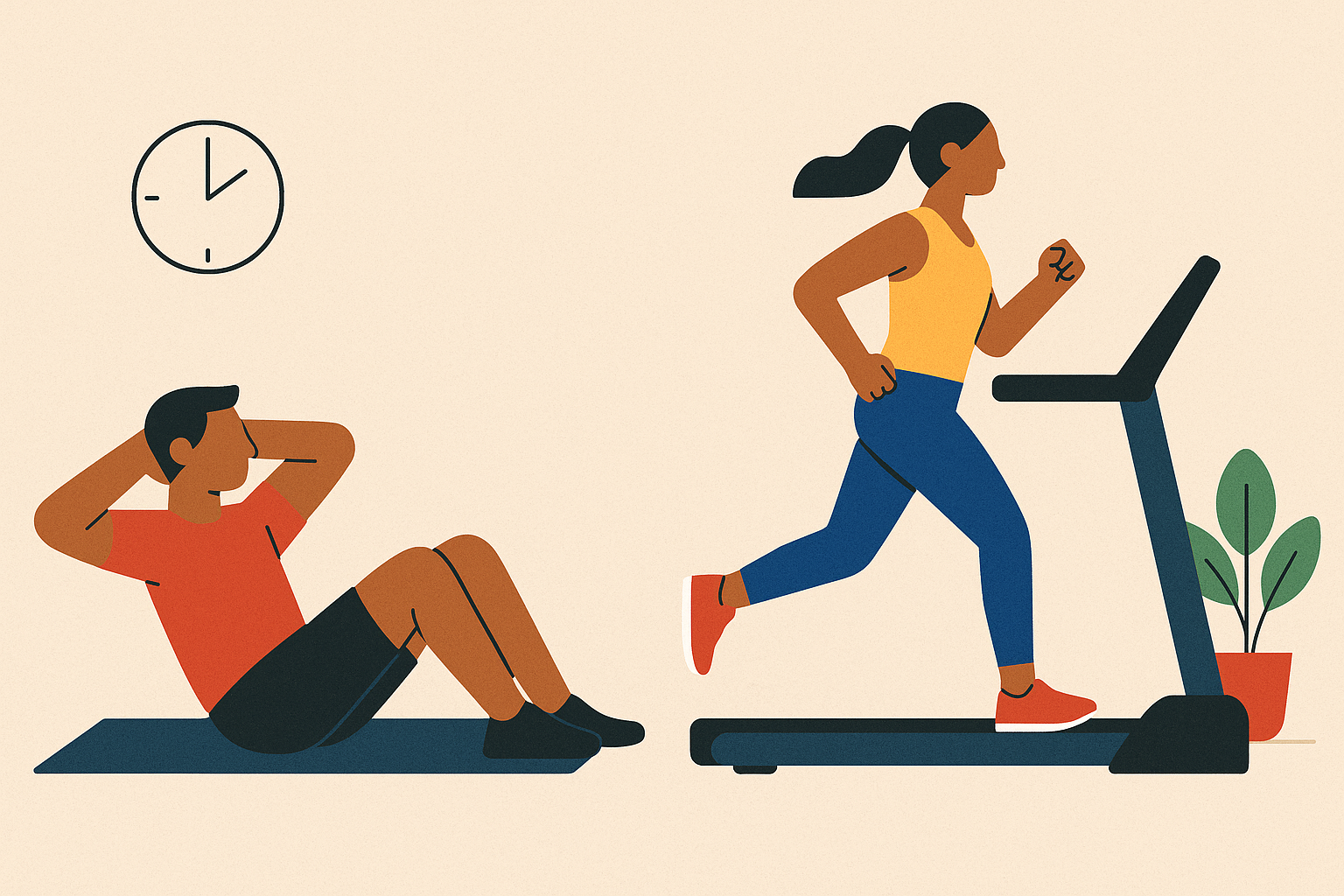
HIIT fits the different-schedule situation particularly well because one partner can finish before the other starts, and both using the same routine gives them a shared reference point even when the sessions don't overlap at all. "Done" means the same thing to both of them.
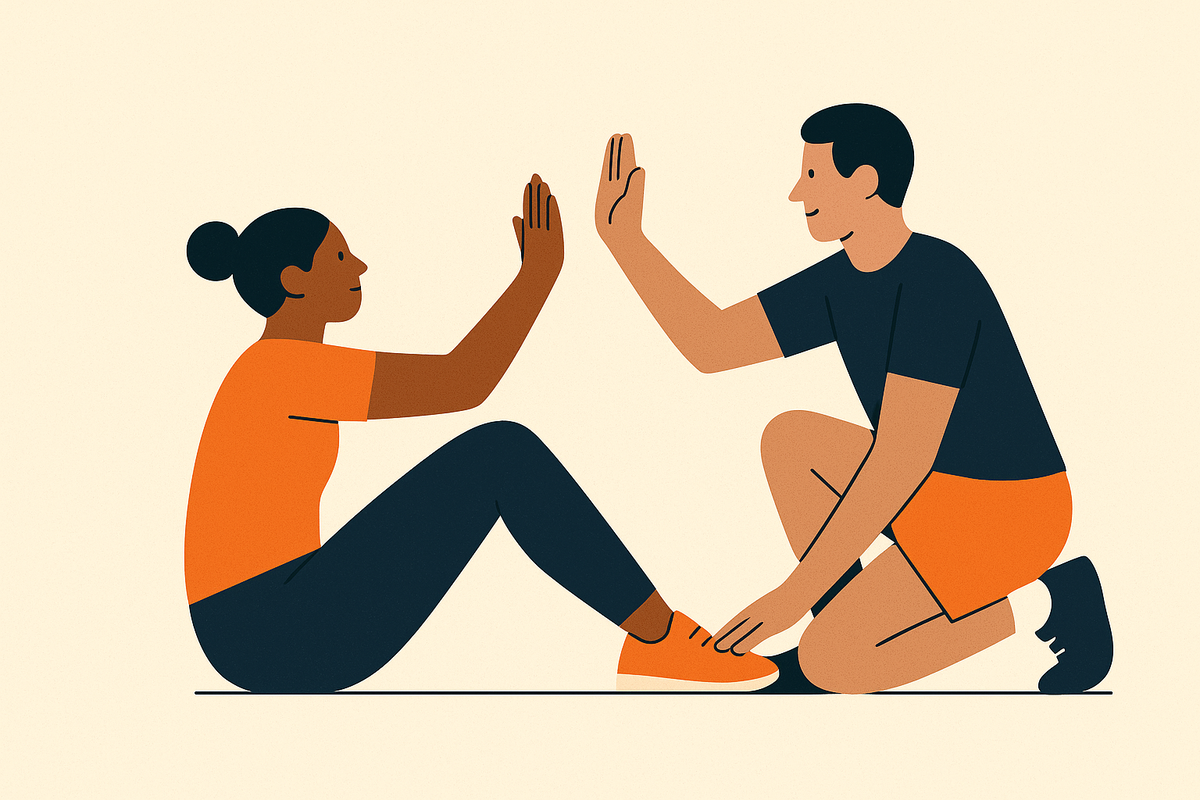
When schedules do align briefly, bodyweight partner circuits are the easiest entry point. Facing push-ups with a high-five at the top. Medicine ball passes. Partner squats. Scalable by fitness level, no gym required, and genuinely more fun than doing the same movements alone.
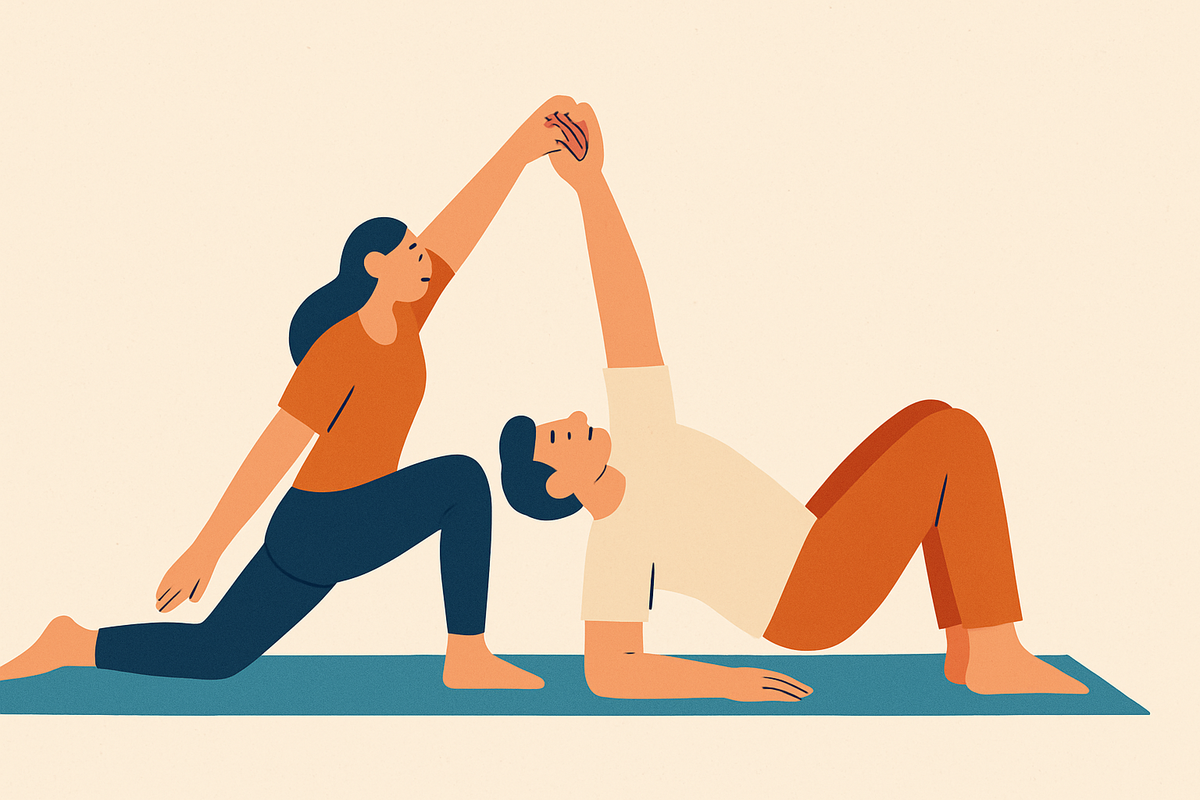
For couples who share even ten minutes of morning overlap, yoga or mobility work is the lowest-barrier option. It sets a calm, connective tone without requiring matched fitness levels or any equipment.
One practical note on recovery: leaving enough time between high-intensity sessions prevents burnout, especially early in a new routine. The best workout is the one both partners actually keep coming back to. Not the one that felt impressive in week one and disappeared by week three.
When the schedules shift: keeping the habit alive through changes
Training consistency in the first four weeks is the strongest predictor of long-term adherence. So protecting those early weeks matters more than optimizing the workout itself. Get the habit established. Refine everything else later.
When someone misses a session, the useful question is "what made it hard this week?" Not "did I fail?" One of those questions leads somewhere. The other mostly generates guilt and avoidance, which are both terrible training partners.
Schedules change. Travel happens. Seasonal work demands show up without asking. The couples who keep their routines alive through disruption have a minimum fallback in place. A 10-minute walk counts. It keeps the habit alive until the fuller version is available again. That's not settling. That's actually how habits survive long enough to matter.
Re-entry after a disrupted stretch is easier when the accountability structure stayed intact. A partner who checked in during the off weeks is often the thing that pulls someone back in. The research is clear that emotional support from someone paying attention is exactly what drives sustained exercise frequency over time, which is the problem Sweatmates, a fitness accountability app for couples built around shared workout tracking, photo check-ins, and weekly goals, was designed to address. Which is, when you think about it, a pretty good argument for staying together in general.