Partner-Based Training Methods That Keep Engaged Couples Accountable Through Wedding Prep
Couples who train together stay accountable when wedding planning steals the time to show up.
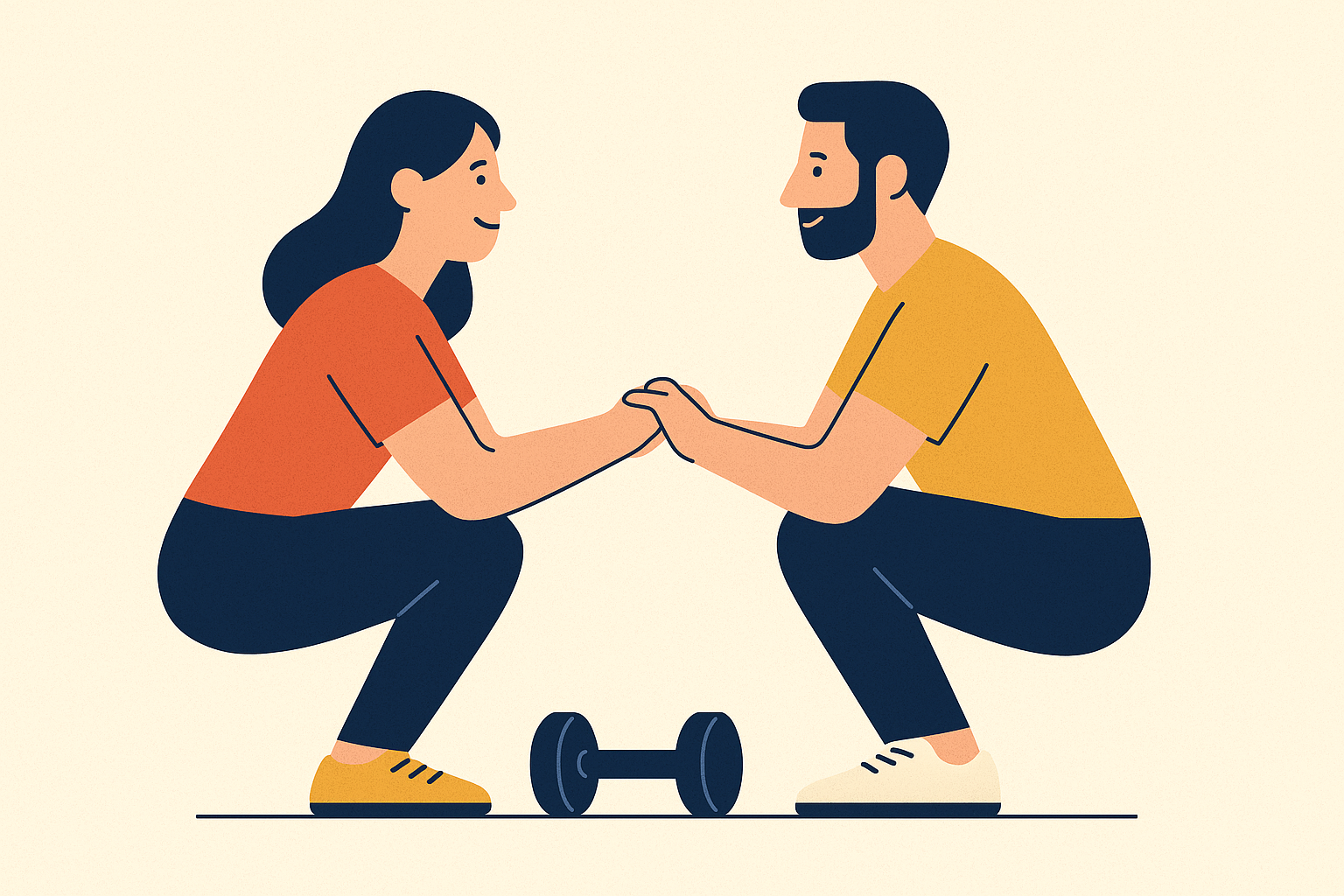
Wedding prep is the hardest stretch to stay consistent with fitness because it compresses venue visits, fittings, vendor calls, and family logistics into the same months engaged couples were supposed to spend getting stronger. The good news: couples already own the single best tool for staying consistent anyway, which is each other. This piece covers what that tool looks like in practice, with a phased plan, a weekly structure, and the specific partner methods that keep two people showing up when the calendar says they shouldn't have time.
Why wedding prep is the hardest season to stay consistent with fitness
Picture a couple six months out. At the engagement party, they made all the right noises about getting in shape together. Now it's Tuesday night, there's a seating chart standoff in progress, a tasting appointment at 7am tomorrow, and the gym bag hasn't moved from the closet in two weeks. Nobody planned to quit. The schedule just filled in around the workout until there was nothing left to fill.
The schedule crowding out the workout is one problem. There's a physiological one layered on top of it. Planning a wedding raises stress, and elevated cortisol doesn't just make people feel wired and tired: it undermines recovery and disrupts sleep, draining the reserves a person needs to show up for a workout. Motivation runs highest the week of the engagement and lowest during the month the florist, the caterer, and the in-laws are all emailing at once. So couples often find themselves further from their goals at the four-month mark than they were on day one.
Planning becomes something close to a second job, leaving neither the time nor the energy for cooking well or training consistently, and the goal of getting in shape quietly slides to the bottom of the list. Hiring a trainer and getting a solid program solves the programming. It does nothing for showing up consistently. A couple can own the best plan in the world and still miss three sessions in a row the week the venue cancels on them. What a couple needs is a reason to show up on the days the workout is the last thing either partner wants to do.
What engaged couples already have that solo exercisers don't
Solo exercisers have to manufacture accountability out of thin air, apps, streaks, public commitments to strangers on the internet. Engaged couples don't have to manufacture anything. They already have a person who will notice, immediately and personally, if a workout gets skipped.
That's a structural advantage, not a sentimental one. Quitting a solo plan costs nothing socially. Nobody's watching, nobody's disappointed, the only party to the broken promise is the person who made it. Quitting a plan made jointly with a partner means breaking a commitment to somebody who is in the room, who knows the plan exists, and who will ask about it at dinner. Couples who train together tend to stick with their workouts more consistently than those going it alone, and setting mutual goals is part of why: both people have skin in the same game.
The payoff isn't limited to the workout itself. Exercising together has been linked to better mood during the session, better mood for the rest of the day, and higher relationship satisfaction overall, three outcomes that matter more, not less, during a stretch when planning stress is running high. An engagement also hands couples something solo exercisers never get for free: a deadline. The wedding date is fixed, public, and non-negotiable, which gives a shared training plan a built-in sense of urgency that an ordinary personal resolution never manages to hold onto for long.
Emotional Support as a Consistency Driver
Not every form of partner involvement earns its keep. Syncing calendars, carpooling to the same gym, booking the same class time, all of that is coordination, and coordination is not what keeps people showing up. What keeps people showing up is a partner who notices the effort and says something about it.
That distinction has teeth. A couple can build a perfectly synced shared calendar and still fall apart on consistency if nobody ever says "good job" or "that was a hard week and you still made it." The scaffolding exists without the structure that actually holds the thing up. Encouragement, empathy, and genuine celebration of progress do the heavy lifting, not logistics.
There's a useful corollary here: the workout doesn't have to be shared for the emotional support to work. A couple training at different times, in different gyms, on completely different schedules can still deliver the kind of recognition that drives consistency, because the accountability lives in the conversation, not the shared square footage. Movement works best framed as stress relief and something to look forward to rather than another item on the to-do list, and partners can reinforce that framing for each other just by how they talk about it. A partner who says "you showed up even on the hardest planning day this week" is doing more for that person's consistency than a partner who texts a reminder about the 6pm class. One is logistics. The other is the thing that actually works.
Accountability tools built specifically for couples can reinforce this without turning it into a chore. Sweatmates, a shared fitness app centered on photo check-ins and weekly goal-setting, makes each partner's effort visible and acknowledged in real time, turning the natural advantage of being an engaged couple into a structured feedback loop.
Setting shared goals that are simple enough to survive the planning season
Complicated, appearance-only goals collapse the moment planning stress spikes because they have nothing to hold on to when motivation dips. Goals built around how both partners want to feel, energized, strong, clear-headed, hold up far better under the same pressure.
External, appearance-based goals alone usually aren't enough to sustain effort through months of planning chaos. Goals tied to values last longer: feeling strong and confident, having the stamina to actually dance at the reception, staying grounded through the whole process. Before any program starts, couples are better off talking openly about what each of them actually wants. One partner might be chasing weight loss, the other stamina, the other just wants to feel confident in photos. Naming those priorities out loud up front prevents the misalignment that otherwise builds quietly until one partner feels like the only one trying.
SMART goals (specific, measurable, achievable, relevant, time-bound) give a shared target a shape both people can actually track without an app, a spreadsheet, or a shared drive full of macros. "Two strength sessions per week for the next four weeks" is something both partners can confirm with each other over dinner, no tracking software required. If a goal feels overwhelming once it's broken down to the weekly or daily level, that's the signal it's not realistic yet for a season already full of vendor calls and seating charts. Shrink it until it fits.
Phasing the program across the engagement timeline so training intensity matches planning intensity
A training program that ignores the wedding countdown will eventually run straight into it. The fix is to phase intensity so it tracks the planning calendar instead of fighting it, rising when there's room and tapering when there isn't.
Start with enough runway. Both FITPASS and Fitness Inside Out point to three to six months before the wedding as the right window to begin a structured program, long enough for gradual, sustainable change instead of a last-minute scramble that burns couples out before the honeymoon even starts.
The middle stretch, roughly four months out to two months out, is where the most meaningful changes in strength and body composition actually happen, provided the effort stays consistent. Strength training and conditioning should lead during this phase, with cardio serving as stress relief in a supporting role.
The final phase, the last eight weeks and especially the final week, is about maintenance and readiness: posture, mobility, upper-body definition for the dress or the suit, and keeping cortisol in check instead of spiking it with last-minute panic sessions. Fitness Inside Out says the final week calls for active recovery and mobility work, not extra sessions squeezed in out of nerves. A program reverse-engineered from the wedding date, peaking before that last week and tapering down from there, gets couples to the ceremony feeling good. Fitness Inside Out's bridal program frames the final week exactly that way: not a chance to cram in more work, but a stretch built for arriving strong, rested, and photo-ready.
Partner-based training methods that keep couples accountable
The best partner methods build accountability directly into the structure of the workout rather than bolting it on afterward as an extra app or a reminder nobody reads. A few specific approaches do this well.
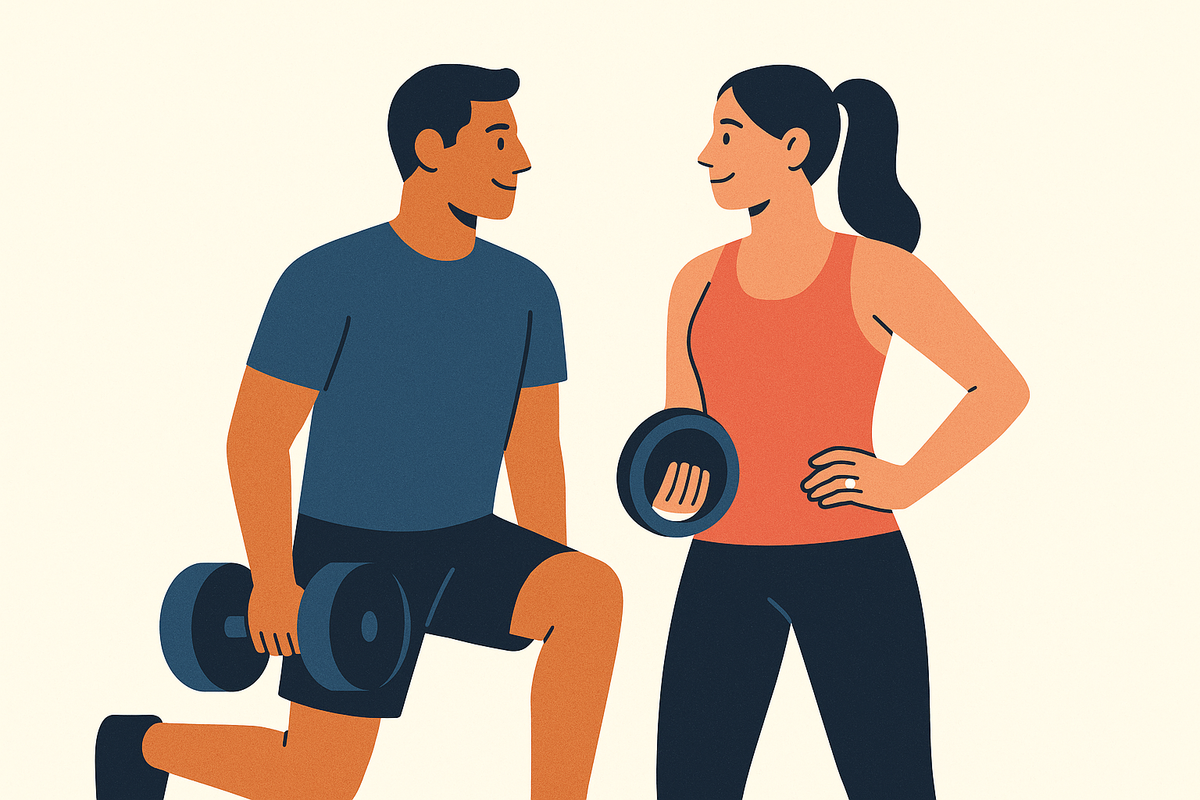
Couples sessions with a shared trainer turn the workout into a built-in accountability appointment and a piece of quality time at once. Type A Training frames these sessions as exactly that, a shared ritual dropped into the middle of planning chaos, one trainer, one session, both partners working side by side. A shared trainer also fixes fitness mismatches by scaling each exercise to each partner's level, so neither person has to slow down or push past their limit to stay in the same room. Fitness Inside Out and Type A Training both offer mobile, in-home training, which removes the single biggest logistical obstacle couples face: the commute to and from a gym. A trainer who shows up at the house lets the session fit inside the existing day, before work, between planning calls, or in whatever evening slot consistently survives the week's chaos.
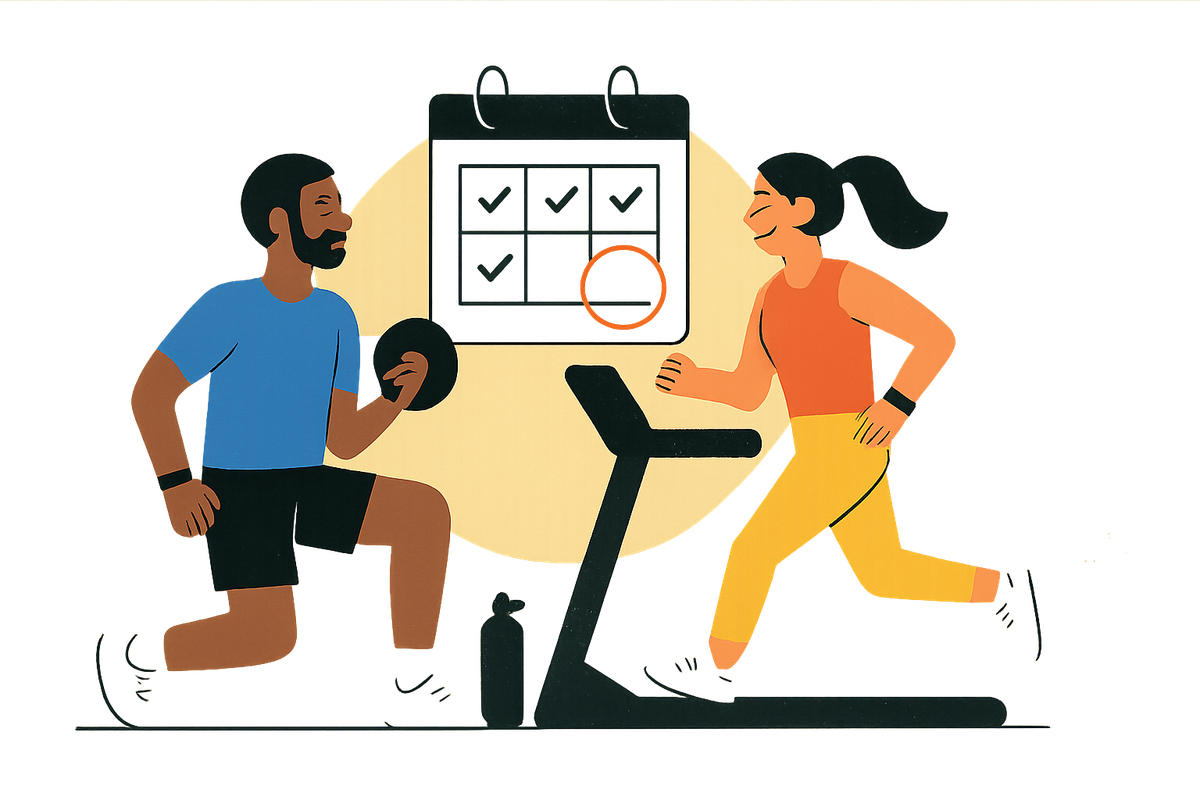
Structured weekly commitments with built-in check-ins work because a fixed session both partners are expected at functions like an appointment neither one wants to be the one to cancel. A sample week from trainwell lays this out well: rest, full-body strength, active recovery through yoga, cardio through dance or cycling or HIIT, rest, a fun shared activity like hiking or bowling or rock climbing, then rest or more active recovery. The model folds enjoyment and recovery in alongside the actual training, rather than treating rest as something to feel guilty about. Spreading movement across the week fits a planning schedule better than trying to block off one long workout nobody has time for, since total weekly minutes drive results more than the length of any single session.
Shared accountability can also extend past the couple itself. Bridal Body Fitness® structures this at the group level: each member of the bridal party purchases the program, and the bride emails a request to hello@stephaniethomasfitness.com with everyone's names to build an exclusive accountability group around her. That widens the same partner dynamic to a whole social circle, which solves a real problem: partner accountability can wobble if one person's schedule goes sideways for a week. When the network is bigger than just the couple, one bad week doesn't take the whole thing down. Couples can borrow this idea on a smaller scale by pulling in another couple or a sibling, so a rough patch for one partner doesn't stall both of them.
Small rewards tied to shared milestones keep the whole structure feeling like encouragement. A completed weekend hike or a full month of consistent sessions deserves a small reward, dinner at a restaurant they've been saving for, a favorite date activity, which adds some playfulness without turning the plan into a competition. Celebrating the fact that someone showed up, regardless of how the session actually went, reinforces the habit itself, which matters most in the weeks planning stress makes every workout feel average at best.
Photo-based check-ins round this out as the lowest-friction form of accountability available. A post-workout photo sent to a partner or a small group is visible proof of effort without any logging, scoring, or dashboard behind it; it's a gesture, not a metric. Photo check-ins and lightweight progress recaps, rather than complicated shared calendars, are what actually keep partners noticing and celebrating each other's effort. Platforms built around that idea, Sweatmates among them, center on acknowledgment over coordination, helping couples stay connected on effort even when they're training at different times or in different gyms. Regular progress photos also give couples something more honest than the scale, a visual record of change that doesn't get thrown off by the water weight and stress fluctuations that come standard with wedding planning.
Apps designed specifically around partner accountability reduce the overhead further by letting each partner set one personal weekly goal plus a shared team goal. Sweatmates takes this approach, which keeps both people clear on what actually matters that week without adding another layer of planning on top of a season that already has plenty. The method doesn't need to be complicated to work. It needs to make the next session the easiest thing on the calendar to say yes to.