The Engaged Couple's 12-Week Training Schedule Built Around a Wedding Date
Periodization splits 12 weeks into sustainable phases that build strength without burnout.
A wedding date gives couples a rare shared deadline, and a 12-week training schedule built around it works best when it treats consistency and mutual accountability as the real goal. The wedding fitness world has actually caught up to this idea. Where the trend used to be "shred for the wedding," the 2025 and 2026 conversation has shifted toward wellness over weight, with the target being feeling strong and energized on the day, not chasing a particular look leanffmi.com goldsgym.com. Twelve weeks isn't some arbitrary crash-diet window either. Experts point to at least 12 to 16 weeks out as the sweet spot for gradual, sustainable progress that doesn't turn into a last-minute scramble. So if the invitations are out and the countdown just hit 12 weeks, that is not a late start. That's the beginning of a window built specifically for lasting change, and what follows is a week-by-week plan built around feeling strong, dancing all night, and actually enjoying the day. There's also a motivational mechanism underneath all of this: fixed deadlines are recognized as contextual factors that systematically increase effort and motivation as the date approaches, and research has consistently found that people escalate activity the closer they get to the event.
Why most pre-wedding fitness plans fail
Week one is all-out, intense sessions and strict meal prep, the kind of plan that looks great on paper. By week three, exhaustion sets in, workouts get skipped, and frustration takes over. At that point the plan has become one more source of wedding stress instead of the relief it was supposed to be. Part of the problem is timing. Most bridal programs ask for maximum intensity at the exact moment couples are juggling vendor calls, dress fittings, and their actual jobs.
The research backs up why this backfires. The American College of Sports Medicine's 2026 resistance training guidelines note that sustainable results come far more from showing up consistently to any kind of resistance training than from occasional brutal sessions leanffmi.com. The National Academy of Sports Medicine found that skimping on recovery and piling on training volume just raises fatigue, tanks adherence, and increases injury risk over time leanffmi.com. For couples specifically, if one partner burns out, the other loses their accountability partner, and the whole shared system can collapse at once. What actually works is gentler progression, recovery that's scheduled rather than an afterthought, and a plan that fits into real life instead of demanding real life reorganize around it.
Periodization structures the 12 weeks into three building phases
Periodization just means planning out volume, intensity, and exercise choices across time so progress builds instead of stalling out or tipping into overtraining. Periodized training produces 20 to 40% greater strength and muscle gains compared to non-periodized programs over 6 to 12 months leanffmi.com.
Each phase depends on the one before it. Skipping ahead to Phase 2 without putting in the Phase 1 groundwork just means building on sand. There's a useful checkpoint baked into most wedding timelines already: aim to hit your target shape by the first dress or suit fitting, then hold steady so the garment still fits on the actual day. Recovery isn't a nice-to-have bolted onto this structure, either. Muscles actually get stronger during rest, so planned rest days and the occasional lighter "deload" week are part of the engineering. Nutrition follows the same logic. Research published in the Journal of Human Performance and Nutrition found that synchronizing nutrition with training phases can enhance performance outcomes leanffmi.com goldsgym.com. The three-phase structure for this plan is as follows. Phase 3 (Weeks 9–12): Peak and Maintain (challenge strength and endurance, stabilize results so garments fit perfectly without last-minute alteration). Some commercial bridal programs run on a shorter horizon, such as an eight-week low-impact format built around sculpting the upper body, legs, booty, and abs with optional dance cardio and built-in rest days for stress management, but the underlying phase logic still applies to any countdown length https://thesculptsociety.com/pages/bridal-program.
Phase 1, Weeks 1–4: building the movement foundation without burning out
Each full-body session runs 25 to 30 minutes, and the focus stays on movement quality rather than piling on more sets goldsgym.com Harvard Health. The lighter days are for walking, stretching, or mobility work, active recovery rather than a second training load stacked on top. Cardio-wise, two to three sessions of 30 minutes of moderate activity per week is the baseline, layered alongside the introductory strength work Harvard Health.
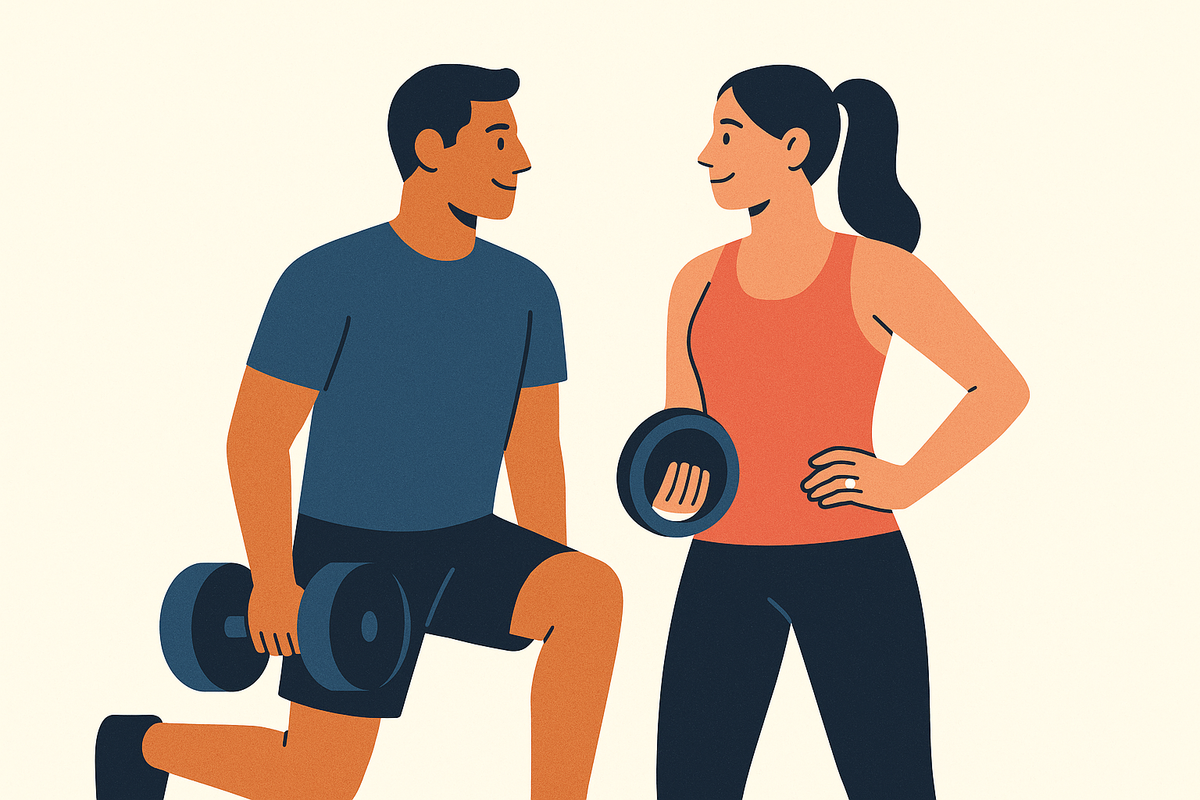
These deliver the most value per minute, hitting upper body, lower body, and core all at once, which matters when time is tight. Posture work also starts here: goblet squats, deadbugs for core stability, and rows for the upper back. Good posture is one of the biggest factors in how a ballgown actually hangs and how someone looks across a room of photographs. The mindset for this phase is straightforward too. Nobody's chasing heavy weights yet, the whole point is clean reps and consistent form, and that discipline is exactly what makes Phases 2 and 3 possible later leanffmi.com. For couples, this phase tends to be the easiest place to train together, since the lower intensity makes it simple to move at a shared pace and build the habit of just showing up. The structure calls for three full-body workouts on non-consecutive days, with two lighter activity days between sessions, per Gold's Gym's workout plan leanffmi.com. Nutrition alignment for Phase 1 calls for a slight caloric surplus of 200–300 calories and moderate protein at 1.6–1.8g/kg bodyweight, per fitbudd.com, fueling adaptation, not restriction leanffmi.com Harvard Health.
Phase 2, Weeks 5–8: increasing the challenge while protecting consistency
Weeks 5 through 8 is where the dial turns up, but carefully. Frequency climbs too, with four to five workouts a week mixing cardio and strength. Around the halfway point, at roughly three months out, behind schedule means stepping up to four or five sessions a week, on track means simply continuing the build.
Some of the focus areas split by what each partner is prepping for. For brides, arms are consistently the top request, according to New York City trainer Sue Fleming. Depending on the dress design, posterior chain work like face pulls, lat pulldowns, tricep dips, and lateral raises builds the shoulder definition and tall posture that read well under 360-degree photography. For grooms, muscle protein synthesis regenerates every 48 to 72 hours, so hitting a muscle group just once a week isn't frequent enough for real toning or growth chillisauce.com. A push/pull split handles this well: one push day built around strength, a second push day built around higher-rep hypertrophy work, a legs-and-core day, and a rest day, repeating that four-day cycle. Cardio keeps running in the background too, daily step counts and moderate cardio supporting the structured sessions, which matters for stress resilience during what's usually the busiest stretch of wedding planning Harvard Health. Couples' schedules might also start to diverge a little in this phase, with different intensities and different focus areas, and that's fine, as long as the shared accountability structure stays intact even when the workouts themselves don't match. The periodization shift moves rep ranges to 10–12 to elicit further strength gains while maintaining the movement patterns already learned, per mensfitness.co.uk. Each muscle group should be trained 2–3 times per week for optimal adaptation, per fitbudd.com. The nutrition shift calls for a moderate caloric surplus of 300–500 calories and high protein at 1.8–2.2g/kg, per fitbudd.com, fueling the increased training load Harvard Health.
Phase 3, Weeks 9–12: finishing strong without changing what's working
The final stretch isn't about reinventing anything. The real goal by Week 9 is maintenance: the body has already adapted, and the job now is protecting those adaptations so everything fits on the day. That fitting-room discipline matters here more than ever. Once the target shape is hit at that first fitting, holding steady avoids the extra cost and hassle of last-minute alterations.
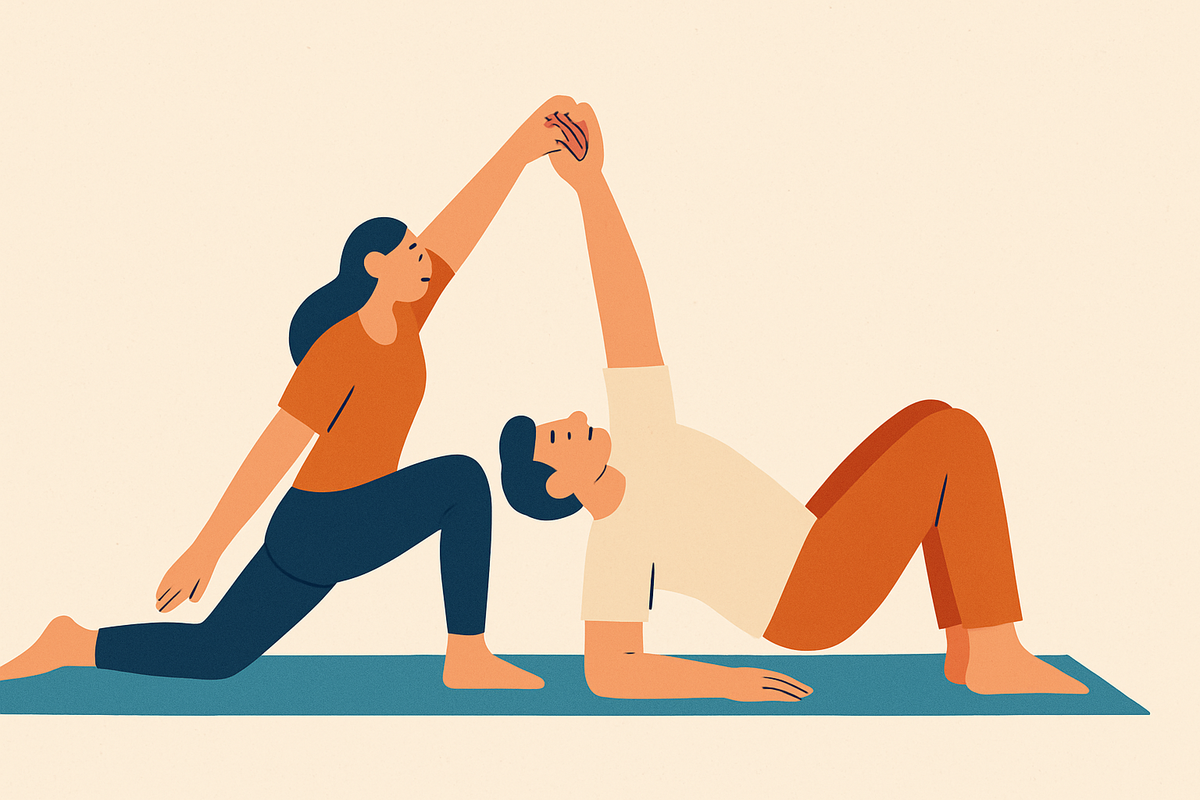
This phase is also the time to bring in Pilates or yoga if it's not already part of the routine. The flexibility and mental grounding pay off in the final weeks, and there's a very literal payoff too: nobody wants sore joints cutting a night of dancing short. Skipping it defeats the purpose, since that's when the body actually banks the recovery it needs. During the wedding week itself, intensity drops further: light cardio or yoga, extra attention to sleep and recovery, and relaxation taking priority over any workout. Nutrition mirrors that same calm: maintenance-level calories, protein staying high, maybe some carb cycling around whatever training is still happening, but no restriction and no surplus, just steadiness. For couples, these final weeks carry more emotional weight than any other stretch of the plan, so keeping workouts short, familiar, and shared reinforces that this is something being done together.
Why training together works better than parallel solo programs
There's actual research behind why couples training together beats each partner running their own separate program. A Brigham Young University study found that working out together showed stronger associations with marital outcomes than individual exercise did, strong enough that researchers suggested it could be worked into marriage education and couples therapy. Even more useful for anyone intimidated by the idea of "couples fitness": the number one way couples exercised together in that study was simply walking, which suggests nobody needs an expensive gym membership or a rack of dumbbells to get the relationship benefit. Partners who train together also tend to stick with the routine longer, since built-in accountability makes it easier to push through the days motivation alone wouldn't cut it. There's a physical layer to this too: couples moving in sync experience a kind of physiological rapport, heart rates rising and falling together, which builds trust below the level of conscious effort, and the shared endorphin release afterward reinforces the closeness on top of it.
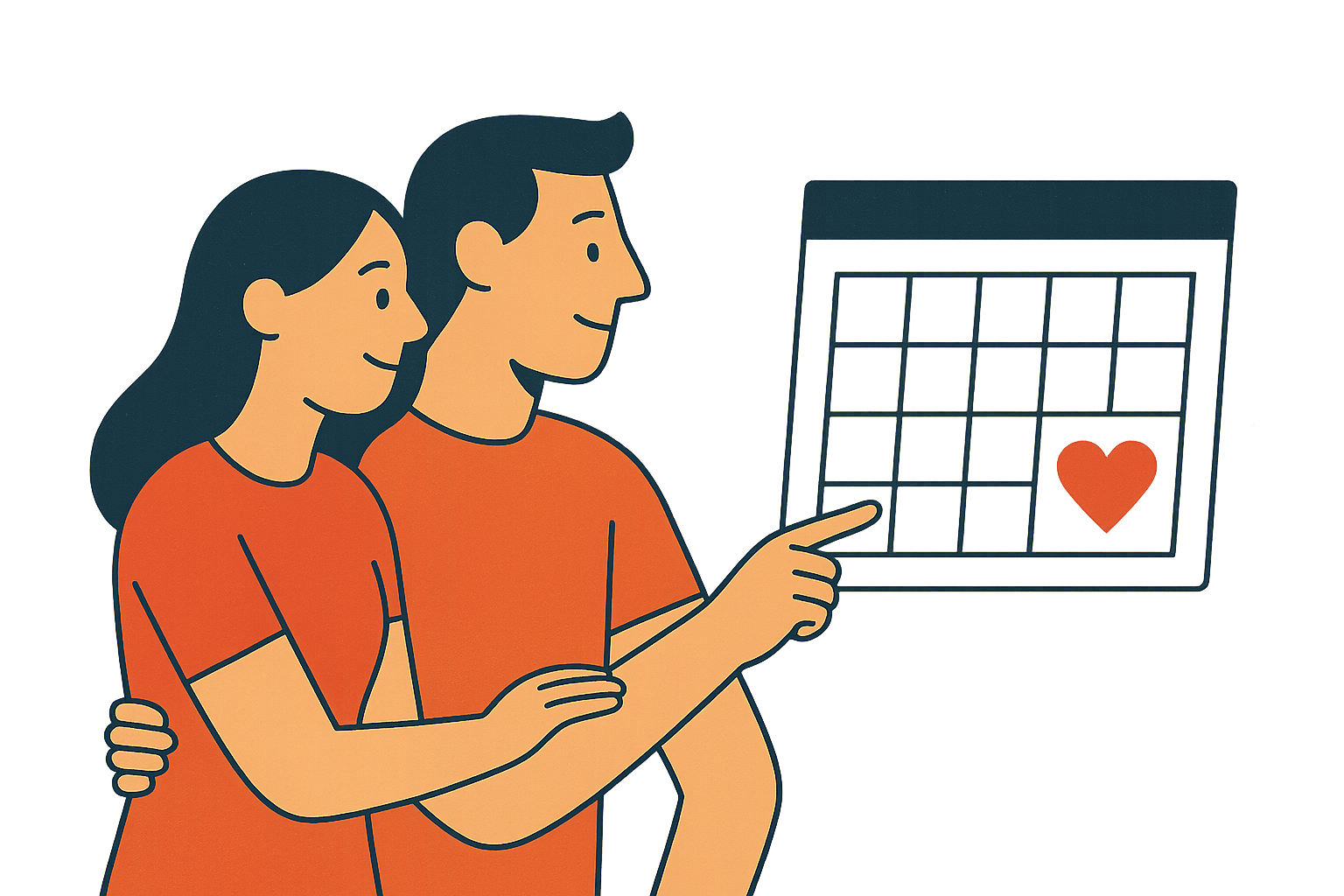
That's part of what's driving the rise of "Couple's Challenges" heading into 2026, things like weekend hikes or a shared Pilates class, used less as a fitness hack and more as a stress-reduction strategy during wedding planning leanffmi.com. None of this requires identical workouts, either. A couple can train separately when schedules demand it and still keep the shared goals, the check-ins, and the celebration intact; connection comes from the shared commitment. A workout photo sent to a partner after a session, a friendly bet over who finishes all their Phase 2 workouts in a week, a shared calendar both people can actually see: small tools, but they're the ones that turn good intentions into an actual habit.
Setting goals, tracking progress, and keeping accountability supportive
Before the first workout even happens, it's worth both partners sitting down and talking about how they want to feel on the wedding day, not how they want to look. Simplicity wins on the tracking side too. Committing to "four sessions this week" is a lot more actionable than trying to track macros, splits, and heart-rate zones all at once.
Track how many sessions got completed against how many were planned, energy and mood after workouts and on rest days, functional markers like whether a plank holds longer or stairs feel easier, and how the dress or suit feels at each fitting. Daily weight swings, calorie-by-calorie logging, obsessive performance metrics: all of that mostly just adds anxiety during a period that already has plenty. There's real data behind why some outside structure helps, too. The American Council on Exercise found in 2019 that people working with qualified instructors showed 68% higher adherence over six months compared to those training on their own, which says something simple: accountability, whether from a coach or a partner, actually works leanffmi.com.
For couples specifically, a few low-effort tools do most of the heavy lifting: a friendly wager across a phase, such as whoever completes more Phase 2 sessions picks the honeymoon restaurant, and a five-minute weekly check-in covering what felt good, what was hard, and what needs adjusting. And when a session gets missed, and it will, treat it as information, not failure. One skipped workout doesn't sink a plan. What sinks a plan is the shame spiral that follows a missed session and talks someone into quitting. Showing up during a rough week, even if it's just a 20-minute walk together, deserves credit leanffmi.com. Consistency is the actual metric here, not perfection leanffmi.com.
Nutrition alongside the three phases: fueling the plan without turning food into stress
Research published in the Journal of Human Performance and Nutrition supports periodizing nutrition to match the training phase rather than holding it constant throughout. Mastering fundamental movements, building work capacity, and prioritizing form over load are the focus of Phase 1. Phase 2 asks for more of both, since training volume and frequency go up together. Phase 3 pulls back to maintenance, protein staying high while calories settle into stability rather than a push in either direction.
None of this needs to turn into an obsessive tracking exercise. The same principle that runs through the whole 12 weeks applies here too: food is fuel for a plan, and the goal is walking into the wedding day feeling strong and steady. As one wellness-focused framing of wedding prep puts it, the day is one of the most special moments of a couple's life, and it's not just about how they look but how they feel, with the deeper goal being to nurture body and mind toward genuine confidence rather than a particular size.