30-Day Fitness Challenges Designed for Two People
Thirty days builds momentum with a partner, not the habit itself—here's what actually sticks.
Let's be honest about what 30 days actually is.
The popular belief that a month "builds a habit" is only partially true. A UCL study tracking 96 participants found the median time for a behavior to become truly automatic was 66 days. Range was 18 to 254 days. Thirty days lands roughly at the halfway point for the average person.
That's not a reason to skip the challenge. It's a reason to know what you're actually paying for.
Here's what the halfway point is genuinely good for:
- Getting past the window where quitting is easiest
- Proving to yourself (and your partner) that the routine fits your life
- Building enough shared momentum that stopping feels like the weird choice
A large-scale fitness app study tracking over half a million adult users found that training consistency in the first 28 days was the strongest predictor of sticking with it long-term. The early window matters more than any other window. The same study found only about 18% of beginners were still going at six months, with most people dropping off around the 14-week mark. That's one month after your 30-day challenge ends.
So the challenge's job isn't just getting you to day 30. It's leaving you and your partner with enough shared identity that day 31 doesn't feel like a cliff edge — because a habit half-built is like a bridge that stops in the middle of the river: impressive to start, useless if you never reach the other side.
One more thing worth knowing before you start: missing a single day doesn't measurably hurt habit formation. Missing two or more days in a row does. The practical rule is simple. Never miss twice. If one of you skips, the other's job is to make the next day easy to return to.
The Structural Choices That Make a Two-Person Challenge Hold Together
Here's the real tension in any paired challenge. Two people almost never start at exactly the same fitness level. One of you is probably stronger, or more flexible, or just more used to moving every day. Design the challenge too rigidly, and one partner drags while the other holds back. Nobody wins that version.
The fix is a ramp structure. Start at roughly 50% of target effort for the first ten days. Build to 75% through day 20. Only reach full effort in the final stretch. This gives the less-conditioned partner time to grow into the work, and it stops the more-conditioned partner from going too hard in week one and losing interest by week three.
For what it's worth: people who complete 30-day challenges almost never start at maximum effort. People who quit almost always did.
A few other things the structure needs:
- Progressive overload. The challenge has to increase in some way each week. More reps, longer duration, shorter rest. Without escalation, the sessions start to feel like maintenance, not progress.
- Session length. Twenty to thirty minutes is the practical ceiling for a daily shared commitment. Short enough to fit real life. Long enough to do something real.
- Frequency. Three to four joint sessions per week, with room for individual movement on off days. Keeps you connected without making every workout a group project.
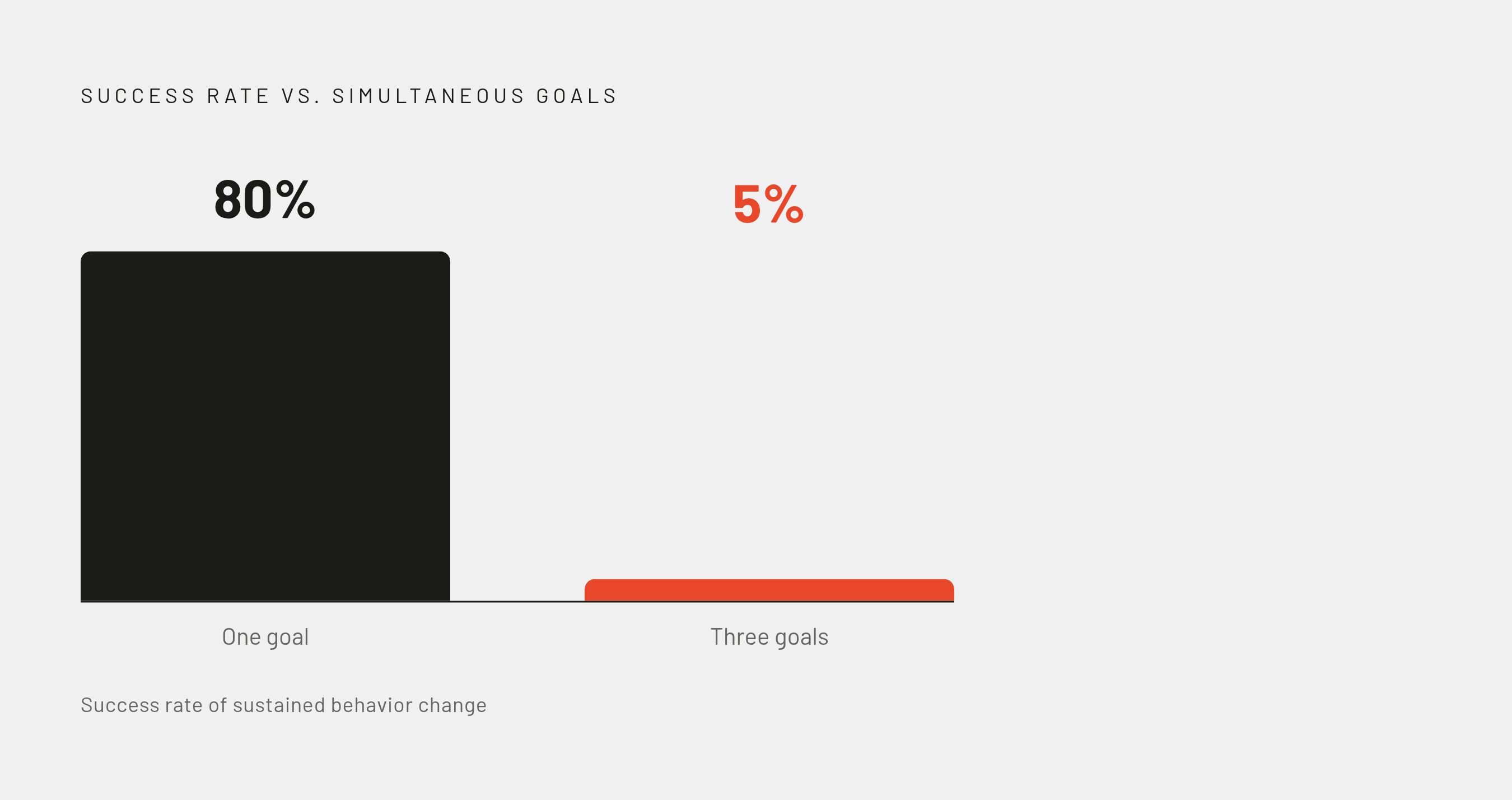
- One goal. Focusing on one behavior change at a time produces an 80% success rate. Trying to change three things at once drops that to around 5%. Pick one target. Keep it specific.
- Full-body routines early. Full-body and split routines produce similar results when weekly volume is equal. For pairs, full-body keeps you doing the same movements at the same time. That synchrony matters more for the partnership than it does for your physiology.
- Shared tracking. A meta-analysis of over 130 studies found that tracking progress meaningfully increased goal achievement. For two people, a shared log is also visible proof of what you've built. Don't skip this part.
A 30-Day Strength and Movement Challenge for Two, No Equipment Needed
This one works for any pair. Couples, friends, siblings, coworkers who decided to do something weird together. No gym, no equipment. Just each other and enough floor space to move around in.
The four-week arc:
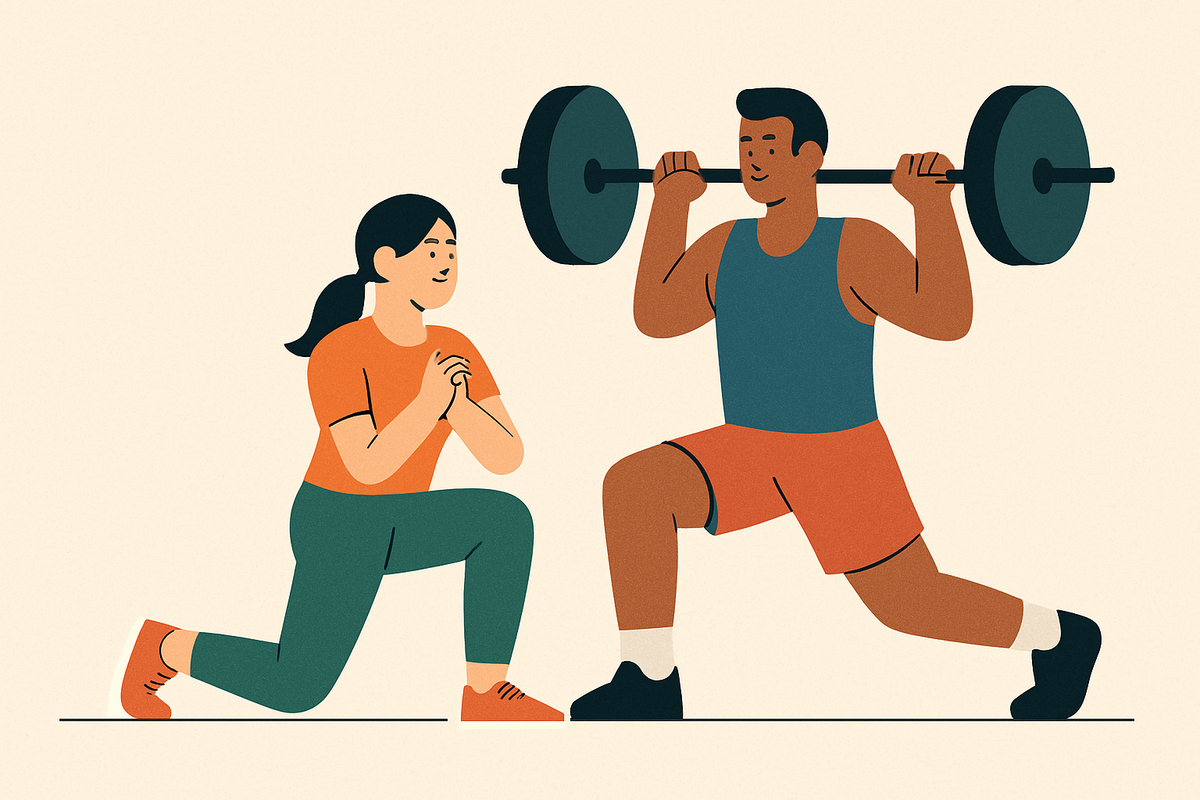
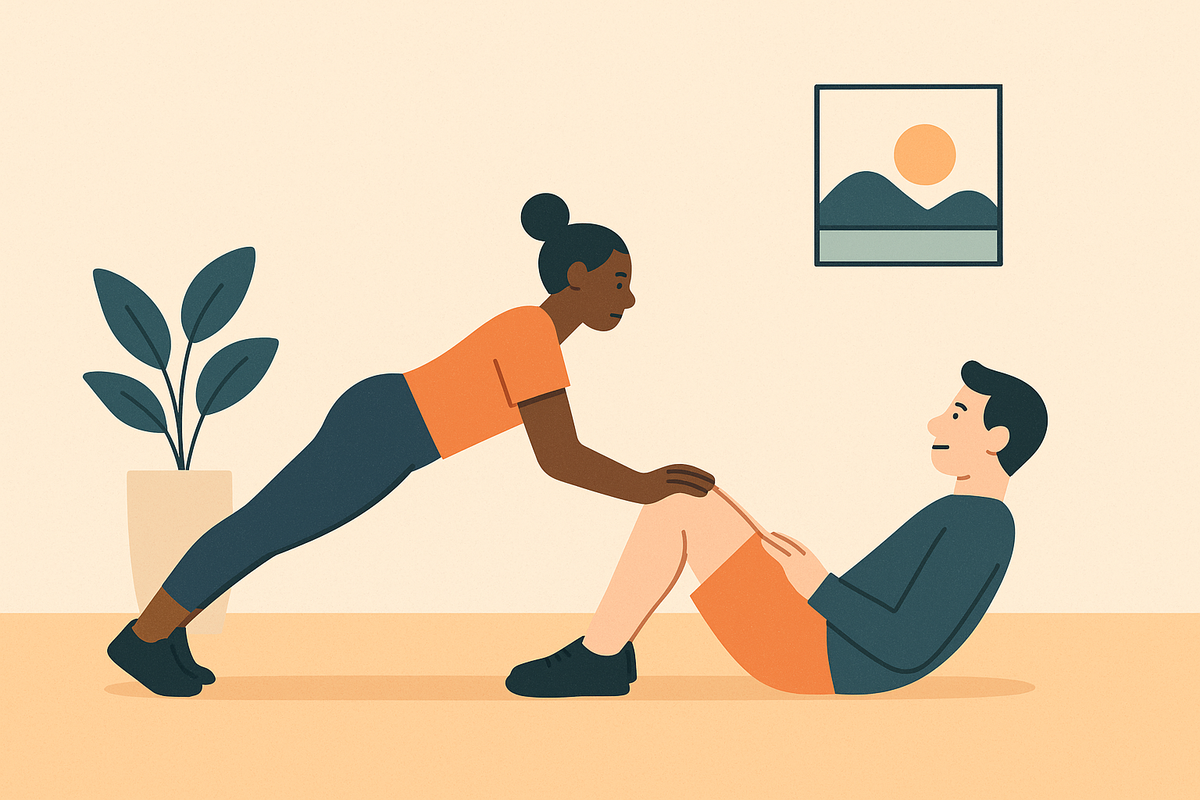
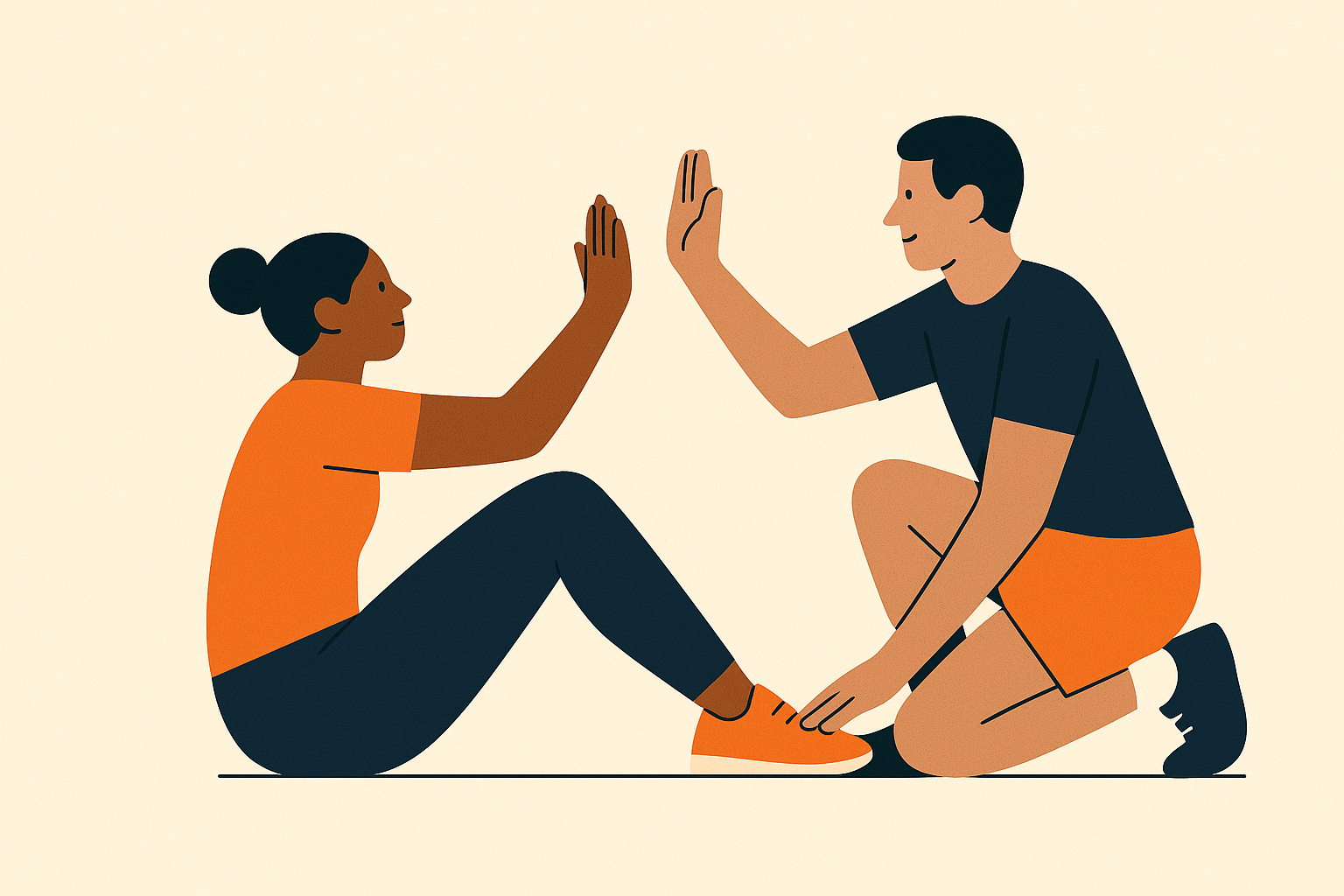
Week 1 (Foundation). Establish form and get comfortable moving together. Partner squats holding hands for shared balance. Partner plank high-fives for core stability. Mirrored bodyweight movements done at the same time. The goal isn't intensity. It's coordination. You're learning how to train next to each other without it being awkward.
Week 2 (Volume). Increase reps and introduce variety. Partner push-ups with alternating high-fives. Synchronized squat-jump challenges. Crunch-and-climb core pairs. You're building volume, not just repeating week one with more enthusiasm.
Week 3 (Endurance). Sessions get slightly longer, rest gets shorter. Introduce intervals where one partner works while the other does active recovery. This is where it starts to feel like actual training rather than a fun experiment.
Week 4 (Integration). Pull movements from earlier weeks into circuits. Add a timed or rep-based shared target that both partners must hit collectively. You finish together, or you don't finish.
The thing worth noticing about these exercises: they're inherently visible to each other. High-fives, synchronized reps, facing positions. Nobody has to formally "check in" because you're literally looking at each other the whole time. The accountability is built into the movements.
Daily commitment: 20 to 30 minutes, five days a week, two flexible days.
What counts on rest days: A short walk. Some stretching. A photo of the week's progress. Off days aren't for more exercise. They're for keeping the shared identity alive.
Tracking: A printed grid or a shared app where both partners mark completed sessions. The visible record of showing up is its own reward, even when it feels small.
A 30-Day Challenge Built Around Cardio and Friendly Competition
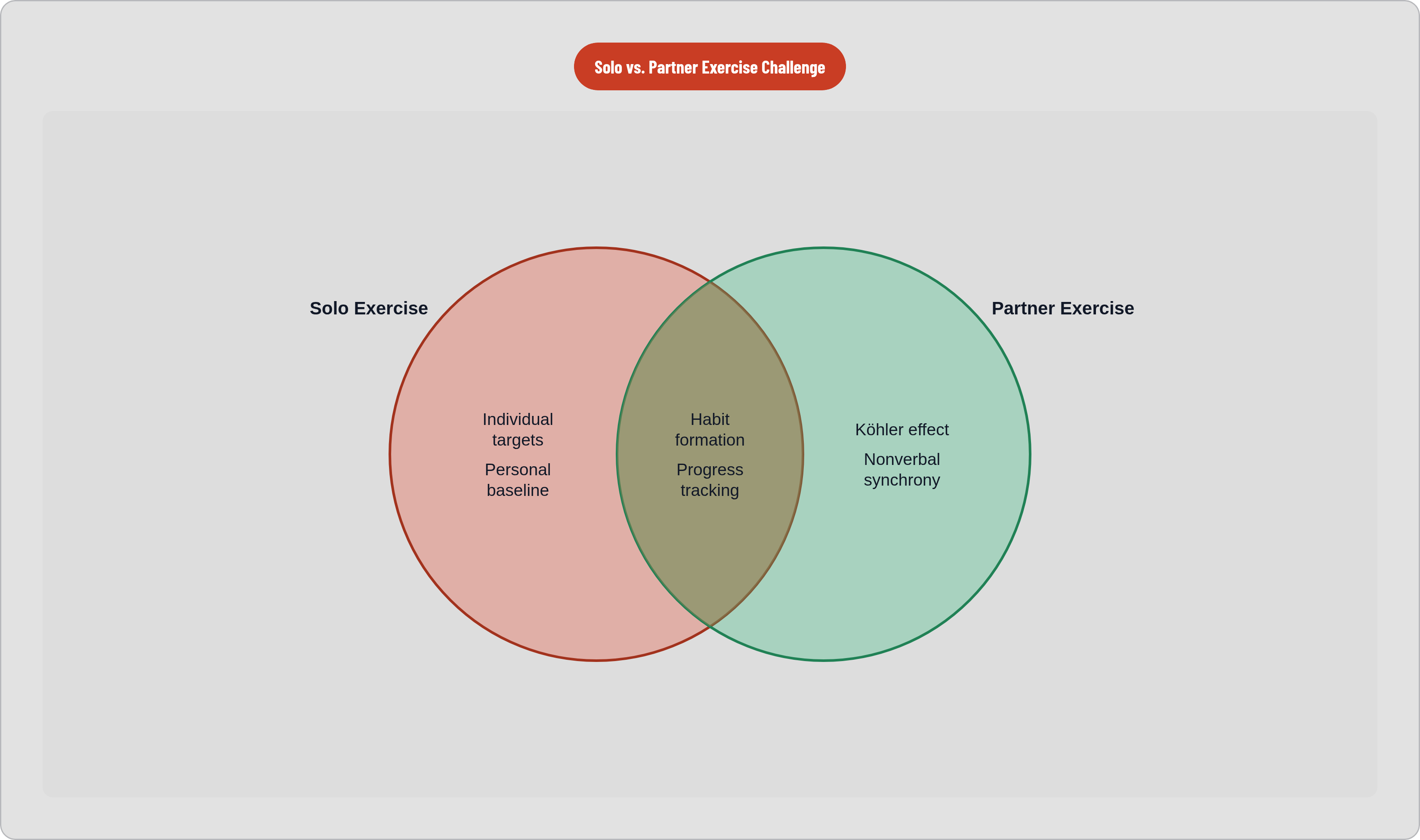
There's a finding in exercise science called the Köhler effect, and it's genuinely useful here. In partnered effort-based tasks, the less capable partner works harder than they would alone. The presence of a more capable partner raises their floor. A meta-analysis of 19 studies found this motivation-gain effect was statistically significant across the board.
What that actually means for you: a fitness mismatch between partners isn't a problem to solve. It's a structural advantage, as long as both people feel like their contribution matters. Think of it like a relay race — the team only wins if every leg gets run, no matter how different the runners are.
The structure:
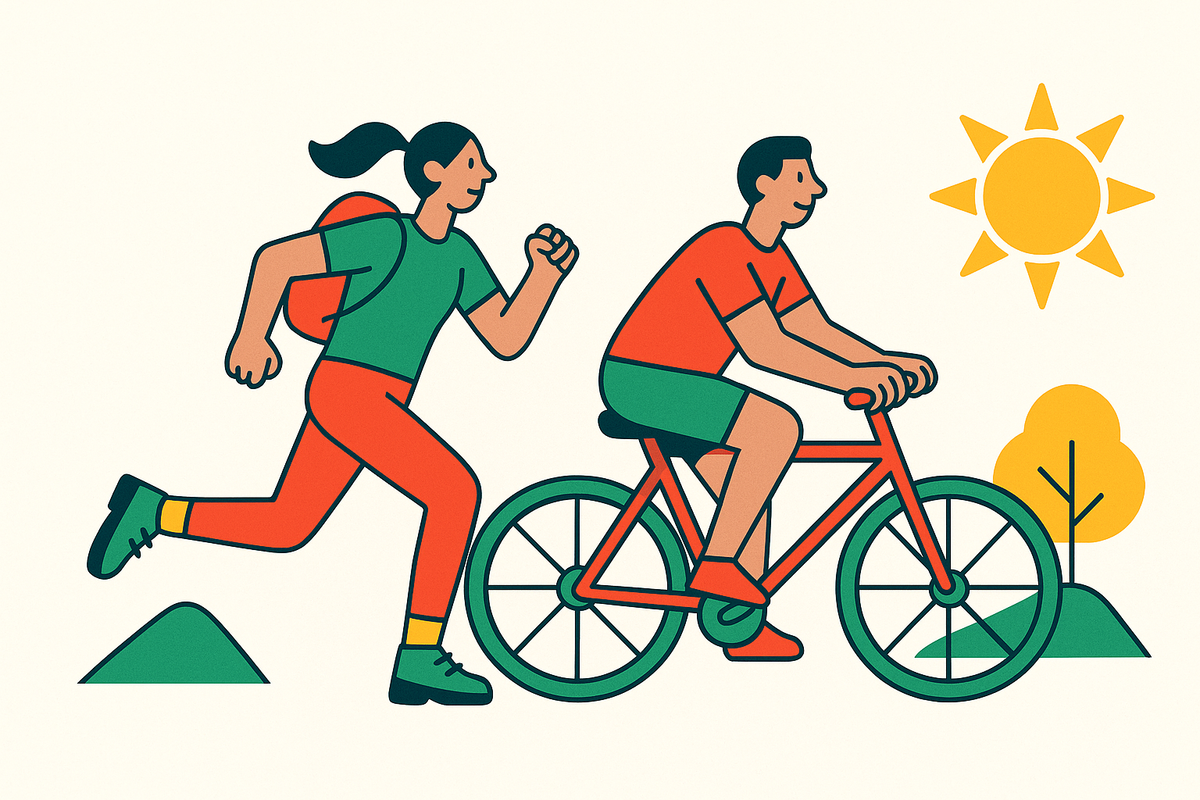
This is a 30-day cumulative mileage or step challenge where both partners contribute toward a shared team total.
- Weeks 1 and 2: each partner sets an individual daily target based on their own current fitness. You combine the numbers and log them together.
- Weeks 3 and 4: introduce friendly side bets. Who hits their personal target more days this week? Who logs the most consistent stretch? Small, low-stakes rewards, agreed on in advance.
The wager element matters more than it sounds. Pre-agreeing on a simple reward (a nice dinner, a guiltless rest day, something small you both want) converts an abstract target into something concrete and a little fun. It keeps competition warm rather than pressured.
One more thing: pairs who worked out together exercised more than solo participants, and the benefit increased when partners were emotionally supportive alongside the competition. Competition and encouragement are not opposites. The best cardio challenge holds both at once.
The guardrail: keep the competition each partner against their own baseline, not against each other's absolute numbers. The goal is for both people to beat their personal bests. Not to build a ranking system. That dynamic breaks fast and it's not pretty when it does.
A 30-Day Flexibility and Recovery Challenge for Pairs Who Want Low-Pressure Consistency
Not every pair wants to compete, grind, or sweat their way through a month. Some people just want a consistent shared routine without the performance pressure. This one's for them.
It's also for partners returning from a break. People managing different energy levels. Anyone whose idea of a good time does not include synchronized squat jumps.
And for the record: this is not the easy option. Research in Health Psychology Review found beginners who start with high-intensity training have three times the dropout rate of those who begin at moderate intensity and build gradually. A lower-pressure challenge isn't a lesser challenge. It's often just smarter.
The structure:
Daily 20-minute sessions of partner-assisted stretching, yoga flows, or mobility work.
- Week 1: basic paired stretching. One partner provides gentle resistance or counterbalance while the other holds a stretch. Simple. Repeatable. Something you'll actually do after a long day instead of watching TV with guilt.
- Week 2: add a short breathing or mindfulness component at the start of each session. This builds the ritual alongside the physical habit, which matters a lot for actually continuing past day 30.
- Week 3: add one set of a simple bodyweight movement at the end. Squats, push-ups, whatever. Small escalation, no pressure, just a signal that the challenge is growing with you rather than staying flat.
- Week 4: both partners choose one movement from earlier weeks that felt meaningful and commit to continuing it past day 30. The challenge explicitly designs its own continuation. That part is intentional.
A 2020 study found couples who exercised together logged an average of 20 more minutes of weekly activity than solo exercisers. Even low-intensity shared movement adds up over a month.
The accountability mechanism here is presence, not performance. Each session gets logged with a photo or a single word describing how it felt. No metrics. No comparison. Just proof that you both showed up.
How to Set Up the Challenge So It Survives the First Two Weeks
The setup conversation matters as much as the challenge itself. Both partners need to agree on three things before day one: one goal, one challenge format, and one definition of what "done" looks like for each session. Ambiguity is the enemy of shared accountability. If the daily target is fuzzy, the decision to skip becomes frictionless.
On scheduling: treat joint sessions like actual appointments. Pick specific days and times in week one. Review and adjust in week two if real life has already made that impossible. Three to four joint sessions per week leaves room for the unexpected without breaking the chain.
On the never-miss-twice rule: if one partner misses a day, the other's job is to make day two easy to return to. Not to enforce anything. Not to guilt anyone. Just show up and lower the barrier. A text that says "I'm doing the session at 7, you in?" is more useful than silence and a look.
On visible progress: a shared photo log, a wall calendar with check marks, a simple shared note. Format matters less than the fact that both people can see what they've built. A workout photo sent between the two of you can carry more weight than any fitness app graph, tools like Sweatmates, a fitness accountability app for couples built around shared workout tracking and photo check-ins between partners, are designed around exactly that idea. It's evidence of showing up, not just data about it.
On mismatched days: when one partner is traveling, sick, or running on empty, a shortened version of the day's challenge (10 minutes, one movement) preserves the streak without demanding something unreasonable. The challenge should flex. Not break.
On the weekly check-in: a brief end-of-week conversation works better than daily performance review. What felt good. What was hard. What to adjust. Keep it reflective, not a debrief.
On day 31: decide together what one element of the challenge continues. Not a new program. Not a harder goal. Just the one habit that felt most natural to keep. That's it.
What Couples Who Train Together Actually Report Gaining
Here's where it gets a little less predictable.
Couples reported higher relationship satisfaction and felt more supported by their partners on the actual days they exercised together. Not weeks into a program. The days of the workouts themselves.
Lab studies have found that after a shared physical challenge, couples reported feeling more in love and more bonded. The mechanism appears to be nonverbal synchrony. Moving together. Matching each other's rhythm. It's not the shared goal or the conversation that does it. It's the physical coordination. The simple fact of being in the same room, doing the same thing, at the same time.
That's why the design choices in these challenges aren't arbitrary. Synchronized movements, mirrored reps, exercises requiring actual coordination aren't just more interesting than running on adjacent treadmills in silence. They're reinforcing the pair's sense of connection at a level that's hard to get anywhere else.
And the effect extends beyond fitness. Couples who built more joint health routines across sleep, eating, and exercise had stronger health concordance and better outcomes over time. Shared fitness isn't a standalone benefit. It's part of a larger pattern of shared life.
None of this requires a perfect 30 days. It requires enough shared days to build something recognizable. A routine both people associate with each other. Something you look back at in six months and can point to and say: that's where it started.
Most couples don't have a lot of those moments. A month of showing up together is a surprisingly good way to make one.