How to Find a Fitness Accountability Partner Online
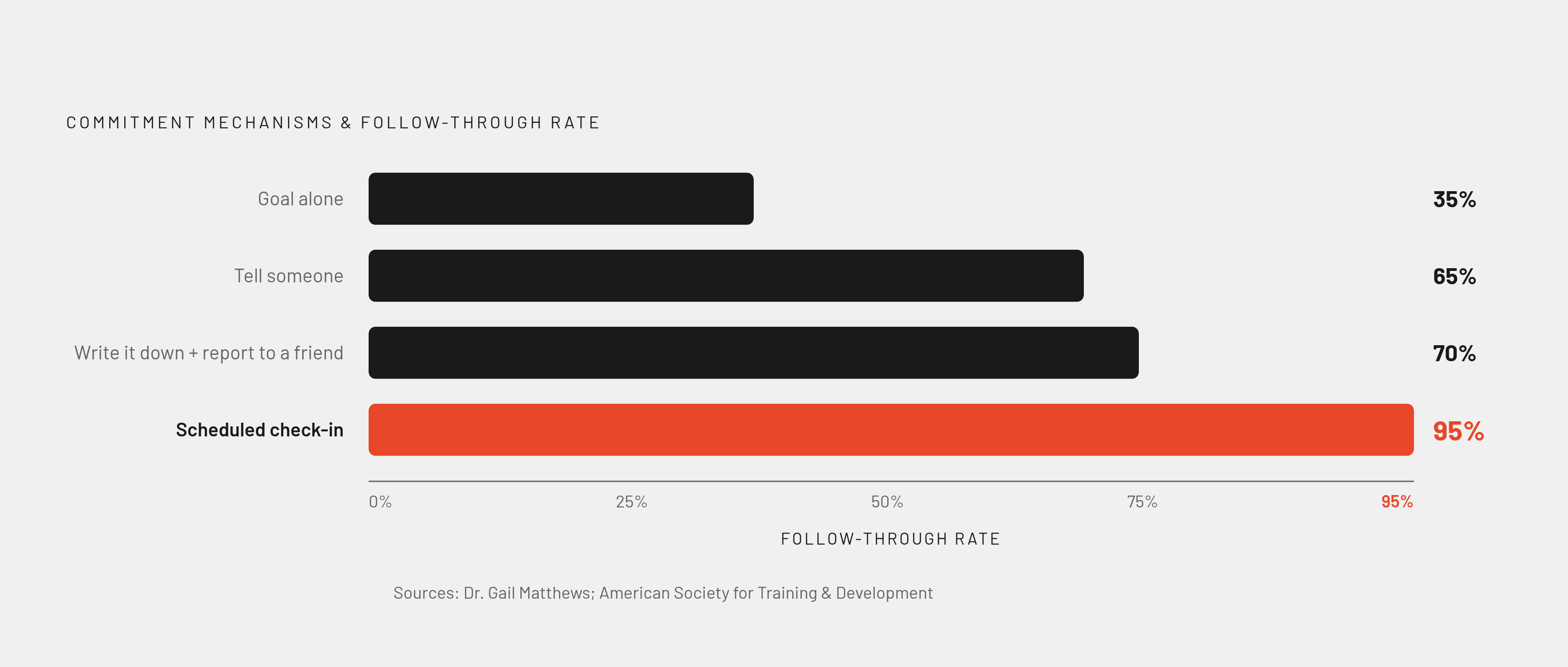
Research shows scheduled check-ins with another person boost follow-through from 35% to 95%.
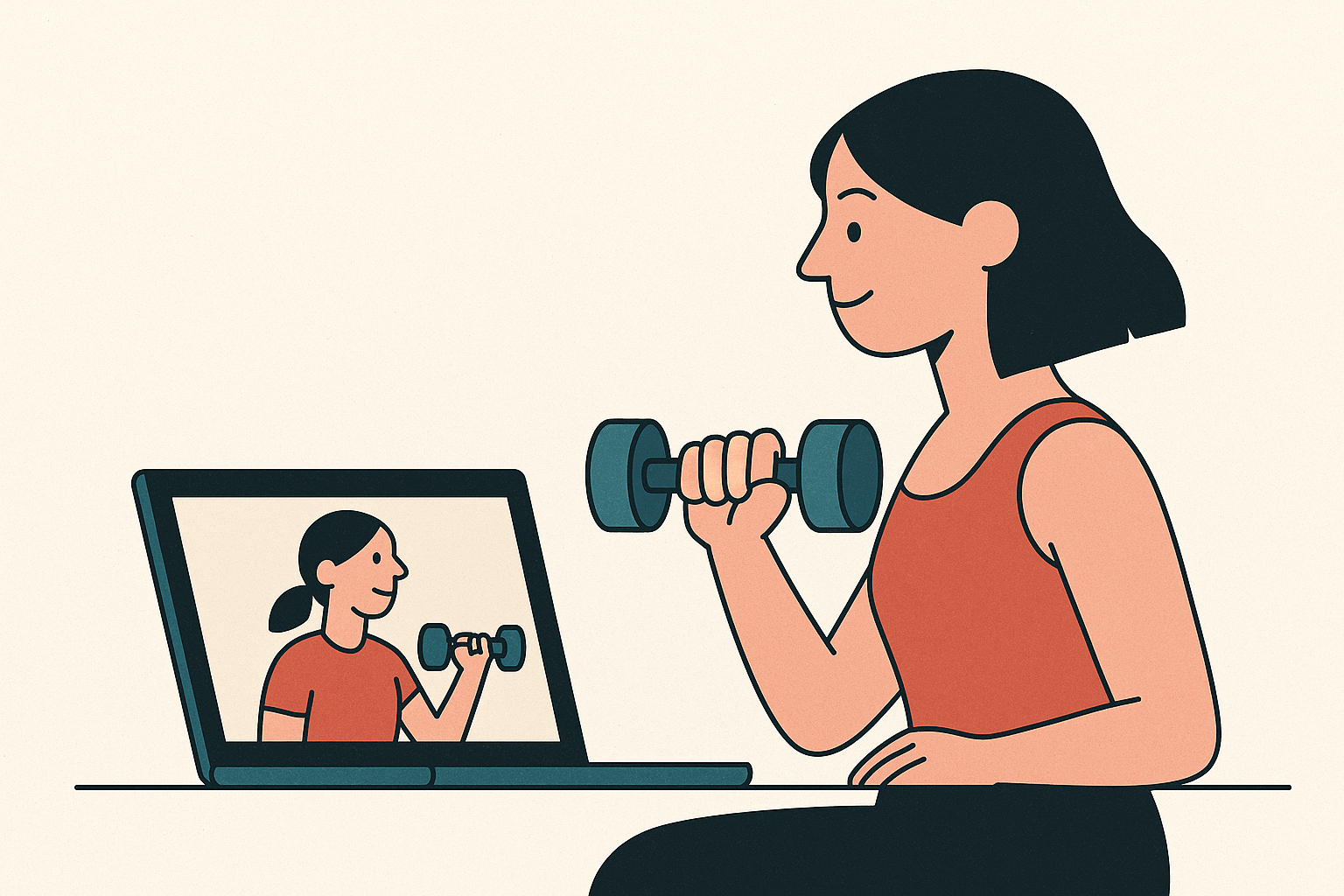
Motivation flakes out, but commitment to another human being tends to hold up a lot better, and that's basically the whole argument for getting yourself a fitness accountability partner. Even the research on this isn't subtle.
Dr. Gail Matthews at Dominican University ran a study with 267 people. Some just thought about their goals, while others wrote them down and sent weekly progress reports to a friend. The reporting group hit 70% of their goals, while the thinkers hit 35%. That's not a small edge, that's a coin flip against a near lock, and the only thing that changed was whether somebody else was watching.
The American Society for Training and Development found a similar staircase. A goal alone gets you decent odds, but telling someone else about it pushes follow-through to 65%. Add an actual scheduled check-in, a real appointment on the calendar, and it climbs to 95%. These are self-report numbers, not lab trials, so I wouldn't carve them in stone, but a pattern that consistent is hard to shrug off.
There's a name for a piece of this: the Köhler Effect. A 2023 meta-analysis in Kinesiology Review pulled together 19 studies and just under 2,000 people to measure it, and the motivation bump from exercising next to someone else was large and real (g=0.91, for anyone who likes their claims with a number attached). It got bigger depending on who the partner was, too, and someone slightly more capable than you produced the biggest gain. Hang onto that, since it matters later.
Solo grinding does work for some people. Research across several studies has found that people were more self-motivated than they'd predicted going in. So accountability partners aren't a cure-all, and plenty of people genuinely don't need one. But most of us find that showing up alone, day after day, is just hard, and a real partner cuts down on the friction. This is about finding that partner online: where to look, and what to actually build once you find them.
What a fitness accountability partner actually is, and what they are not
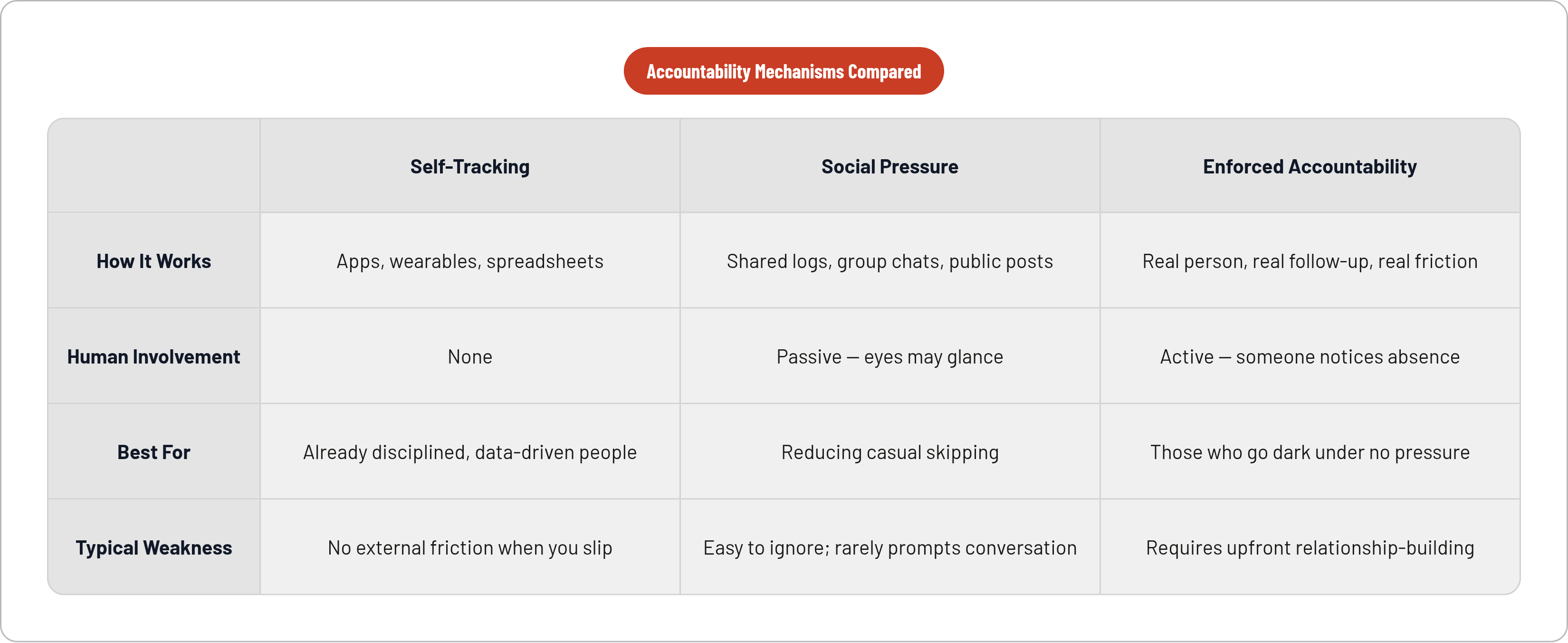
A workout buddy shows up to the gym with you, while an accountability partner notices when you didn't show up anywhere, on a day you weren't even training together. That's the whole difference, and it's the one people miss when they go online hunting for "someone to work out with."
You're looking for someone who clocks your silence, with company as a nice bonus at most.
Three mechanisms do the actual work here, and they're not interchangeable:
- Self-tracking (apps, wearables, spreadsheets): great if you're already disciplined and like staring at numbers, though no human is involved anywhere in the loop.
- Social pressure (group chats, public posts, shared logs): a soft nudge from knowing someone might glance at your log, which cuts down on skipping just because eyes are, passively, on you.
- Enforced accountability: an actual person, actual follow-up, actual friction when you go dark, none of which depends on you feeling motivated on any given Tuesday.
The best partnerships blend all three without curdling into surveillance. Figure out which one you're missing before you pick a platform. Somebody who already tracks every rep obsessively doesn't need another app cluttering their phone, while somebody who tracks everything and still skips leg day needs a person who'll actually ask why.
Where to look: social fitness apps that build accountability into the product
Some platforms hand you a built-in social layer so you're not hunting for a named partner cold, which is useful, but don't mistake it for the finish line.
Sweatmates, a shared fitness tracking app for partners, takes a different angle, centering the accountability on one specific person: whoever you're in a relationship with. Hevy is mainly a strength log: routines, progression charts, rest timers. The social piece sits on top like a training diary your friends happen to read over your shoulder. Nobody's texting you asking where you were, so the accountability here stays soft. Lifters who just want peers glancing at their numbers, without any formal check-in ritual, tend to like it fine.
Stridekick solves a genuinely annoying problem: it syncs Fitbit, Apple Watch, and Garmin so a mixed group can run the same step challenge without everyone owning the same brand of wrist gadget. It's built for movement generally, not structured training, which makes it a natural fit for coworkers who've decided 10,000 steps beats sitting through another status meeting.
The catch across this whole category: the social layer stays passive. You watch someone's activity feed light up, maybe tap a thumbs-up, and you rarely actually talk. Fine as a first step, but rarely enough on its own.
Where to look: apps and platforms built specifically around human check-ins
If the last section was the appetizer, this is the entrée, built around real conversation instead of an ambient feed of other people's workouts.
Supporti pairs you with a new accountability partner every week. It's one of the few tools built specifically around daily human check-ins rather than logged workouts, and the low commitment per cycle makes it a decent way to test what check-in style actually clicks before you commit to anyone longer term.
Coach.me mixes goal tracking with a marketplace of habit coaches. The public groups are free, a cheap way to find people chasing similar goals, and certified coaches are there if you want to pay for something more structured.
Focusmate seems like an odd pick since it's built for work sessions, not workouts. You state a goal, keep your camera on, and work in parallel with a stranger doing the same thing. Translate that to fitness: a pre-workout commitment call, a post-workout check-in, and you've built the same visibility mechanism the Köhler Effect research points to, just running through a webcam instead of a gym floor.
StickK takes the opposite approach: put money on the line and lose it if you don't follow through. Works well if you're wired to hate losing something more than you crave praise for gaining it. If encouragement rolls right off you but the thought of losing forty bucks gets your shoes on, that's your platform.
One fitness community built around this model runs over 50,000 members deep, with buddy-matching channels, level-based groups, and daily check-ins baked in. That structure solves the awkward cold-start problem, where you want a partner but have zero shared history to build from.
One thing worth flagging plainly: research has found leaderboards and gamification features can lift app engagement by up to 30%. That's a real number with a real effect, but a badge isn't a relationship. Gamification is seasoning here, not the meal.
Where to look: Reddit, Facebook groups, and communities built around shared goals
Reddit runs a whole ecosystem on this, and the size gaps between communities actually matter. As of October 2025: r/GetMotivatedBuddies sits around 10,000 members and exists specifically for 1:1 pairing across fitness, work, and study. r/theXeffect has crossed 100,000 and runs on streaks, with daily or weekly "X-chart" habit marking. r/GetDisciplined tops a million, which buys you volume but also a lot of noise. r/DecidingToBeBetter leans on habit journals and periodic accountability threads, and r/NonZeroDay runs on one forgiving rule: do at least something, every day, and say so.
Nobody tells you this part, but specificity decides everything on Reddit. "Looking for a workout buddy" gets buried under a hundred identical posts and dies quietly. "Morning runner, 6 AM PST, training for a 5K, want daily check-ins" gets replies, because it reads like the opening line of an actual conversation instead of a form letter nobody bothered to fill out properly.
Brand-based Facebook groups built around a specific workout community hand you shared context for free, since everyone already cares about the same thing. Discord servers built around fitness and habit-building tend to run hotter and faster than Facebook groups, especially with younger crowds, since it's real-time chat instead of scrolling a feed once a day and forgetting about it.
All of this is free and easy to find, but what you get is a name and a shared interest. You still have to build the actual thing.
Why 67% of online accountability partnerships collapse in the first two weeks
Sixty-seven percent of online accountability partnerships fall apart before hitting two weeks, and Reddit-sourced pairings collapse especially fast, mostly because Reddit is built to serve content to you, not to sustain an ongoing relationship between two strangers who met in a comment thread.
Unspoken expectations do most of the damage here, more than the platform itself ever does.
One person expects a text every day, while the other assumed a weekly check-in was plenty. One wants a cheerleader, while the other gives blunt, no-fluff assessments and figures that's helpful. Neither one ever said out loud what "going quiet" would actually look like, so when life gets in the way, as it always does eventually, the whole thing dissolves and nobody quite notices the moment it happened.
Skipping that conversation feels efficient at the time, but it isn't. It's the accountability-partner version of skipping a warm-up: fine for one rep, and then something pulls. The platform you pick matters far less than the five-minute conversation you have before your first real check-in.
What to establish with a new partner before the first real check-in
Start with goal alignment. What is each of you actually building, and on what timeline? Don't assume matching fitness levels means matching goals. Someone training for a race and someone just trying to build the habit of showing up need very different support, even if they can lift the exact same weight.
Pick the check-in format on purpose, not by default. Daily text, weekly video call, a shared log in an app, whatever it is. There's no universally right answer here, since the right format is whichever one both of you are still doing in week six, not just week one.
Talk through what "accountability" means to each of you, specifically. Some people want encouragement, while others want an honest, occasionally blunt read on how it's going. Some want a partner who checks in unprompted; others find that same move controlling instead of supportive. This maps straight back to the social-pressure-versus-enforced-accountability split from earlier, so name it out loud instead of guessing.
Agree upfront on what happens when someone goes quiet. Does the other person reach out? How long is a reasonable gap before it's worth flagging? A missed goal should trigger reflection, not shame, and the partnership itself needs to be the place where that conversation happens, not the thing everyone quietly tiptoes around.
Keep the tracking simple, since one clear weekly metric beats an elaborate dashboard nobody opens after day three. And if it fits, add a small, friendly wager or shared reward, not as punishment, but as a way to make the goal feel real and give you both a reason to actually celebrate hitting it.
What makes a partner a good match — and when a fitness gap is actually an advantage
Similar commitment level matters way more than similar fitness level. A mismatch in how seriously each of you takes the habit will wreck things faster than a mismatch in how much either of you can bench.
Communication style has to line up too. Pair someone who wants blunt, no-nonsense check-ins with someone who needs gentle encouragement, and you've built friction into the foundation before either of you has done a single rep together. Complementary strengths, though, are genuinely useful: someone strong on consistency paired with someone strong on intensity, or a nutrition-focused person paired with a training-focused one, and value flows both directions.
Here's the counterintuitive part. A Köhler Effect study with 58 people found that those paired up exercised for an average of 21.89 minutes, against 10.6 minutes solo. That's nearly double, and the driver was a partner slightly more capable than the participant, not an equally matched one. Kansas State University research found something similar: exercising next to a fitter partner boosted intensity and duration by up to 200%.
A partner slightly ahead of you, then, can be the best setup you could ask for, as long as the gap doesn't tip into discouragement. There's a real difference between "I want to keep up with her" and "I'll never catch up, why bother," and only you know which side of that line you're standing on.
Watch for actual red flags: a gap so wide it breeds shame instead of drive, a partner who's inconsistent themselves, or check-ins that feel like monitoring dressed up as support. Here's what makes online partnerships work at all, though: you don't need to share a gym, a time zone, or even a sport. One person lifts at 6 AM, the other runs at dusk, and the accountability lives in the connection, not the shared sweat. If the early messages already feel like an obligation instead of a real exchange, trust that and don't build anything bigger on top of it.
How to keep the partnership working past the first month
The first two weeks are the worst dropout window, full stop, and getting through them takes structure, since willpower is exactly the thing that failed you before and won't save you now either.
Shared visibility beats shared workouts. A photo of a finished session, a two-line check-in text, a workout logged in a shared app: small repeated acts of showing up for each other, and they add up over time. Acknowledge the showing up itself, even on the days performance was nothing special. Celebrating consistency, not just results, is what keeps the whole thing alive.
Recalibrate on a schedule. Goals shift, schedules change, and life keeps interrupting whether you asked it to or not. A short monthly reset of expectations heads off the slow, quiet drift that kills most partnerships without any single dramatic moment. The partnerships that last treat re-alignment as ordinary maintenance, not a warning sign something broke.
When your partner goes quiet, reach out once, without piling on pressure. Leave room for an honest conversation about whether the structure you built still fits both your lives right now. A missed goal should prompt reflection, not shame, and that rule holds just as well when the partnership itself hits a rough stretch.
The platform helps, the streak badge helps, and the money on the line helps too. But the felt sense that a real person is actually paying attention to your effort, and actually invested in whether you keep going, matters more than any of them combined. That's the piece worth protecting, whatever tool or app or subreddit you use to build it.