Two-Person Weekly Workout Schedule Templates
Pick your split based on available training days before choosing any exercises.
Every template here sits on the same foundation, and it is simpler than most programs make it sound. The WHO Physical Activity Guidelines set the floor at 150 to 300 minutes of moderate-intensity activity per week, or 75 to 150 minutes of vigorous activity, plus two days of muscle-strengthening work. That is the minimum. These templates clear that bar without demanding perfection from either partner.
For strength training, beginners landing around 8 to 12 total working sets per major muscle group per week is a productive, sustainable range. Spread that across two or three sessions and quality stays high. Nobody burns out in week four because their knees gave out and their schedule fell apart simultaneously.
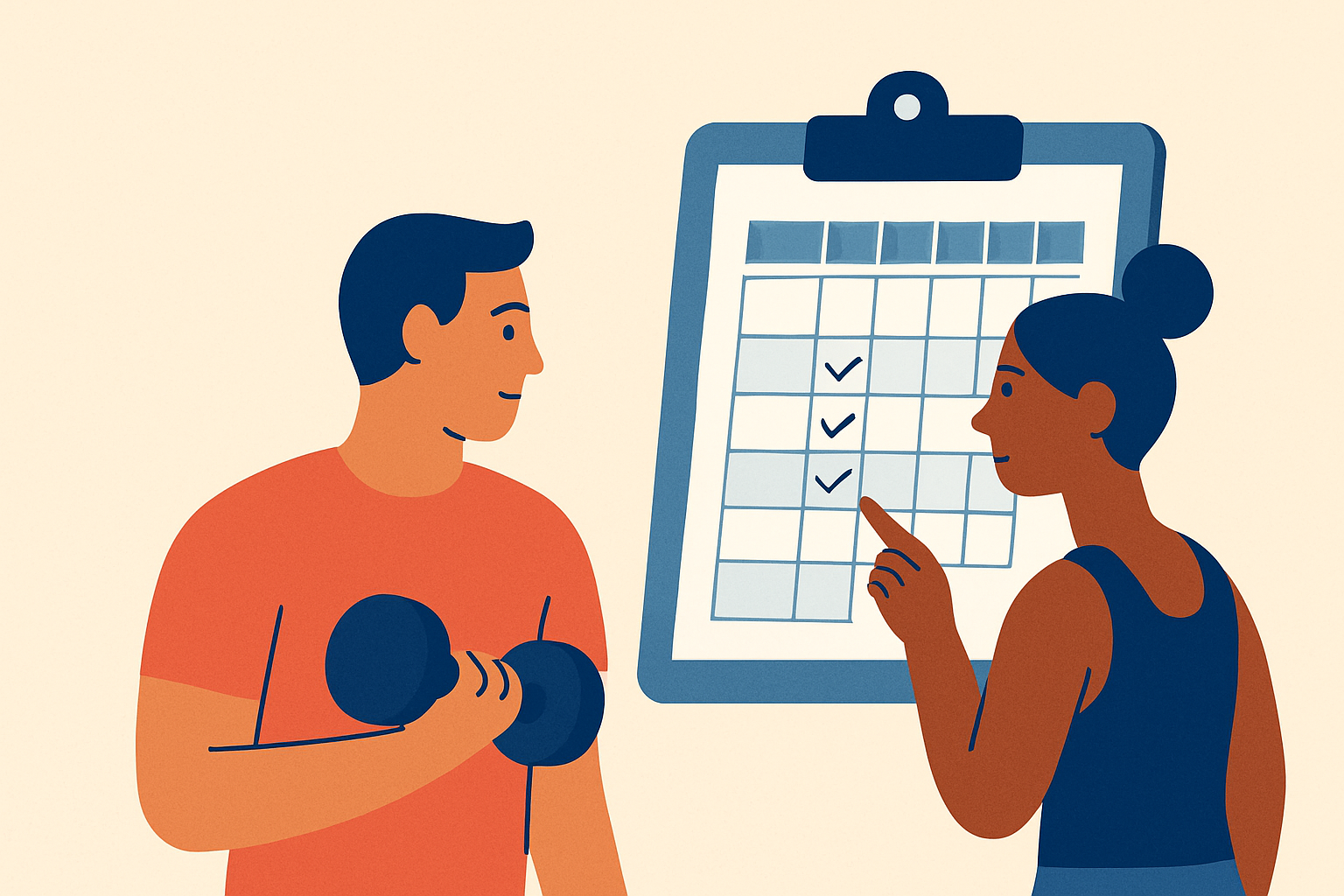
A complete template needs to track more than exercise names:
- Which days are training days and which are rest
- Session type (cardio, strength, or both)
- Sets, reps, and load for each partner
- Rest intervals
- Space for modifications, because both partners will need them eventually
Session length doesn't need to intimidate anyone. Twenty to thirty minutes is realistic and effective for most pairs. Seven exercises at three sets of twelve reps gives you a complete session that fits inside that window without anyone rearranging their entire evening around it.
The template is not the goal. It is what makes showing up feel possible on a Tuesday when both of you are tired and dinner still needs to happen.
How the Number of Available Training Days Determines Which Split Fits a Pair
Most people skip this decision and jump straight to exercises. That is backwards. The split is the most important structural call you make before anything else, and it has a clear answer once you know how many days you actually have.
Research on split types consistently finds no meaningful difference in muscle growth between different split structures when weekly training volume is equal. What matters is total hard sets per muscle group across the week. The label on your program is irrelevant. The right split is the one that fits your life, not the one that sounds most serious.
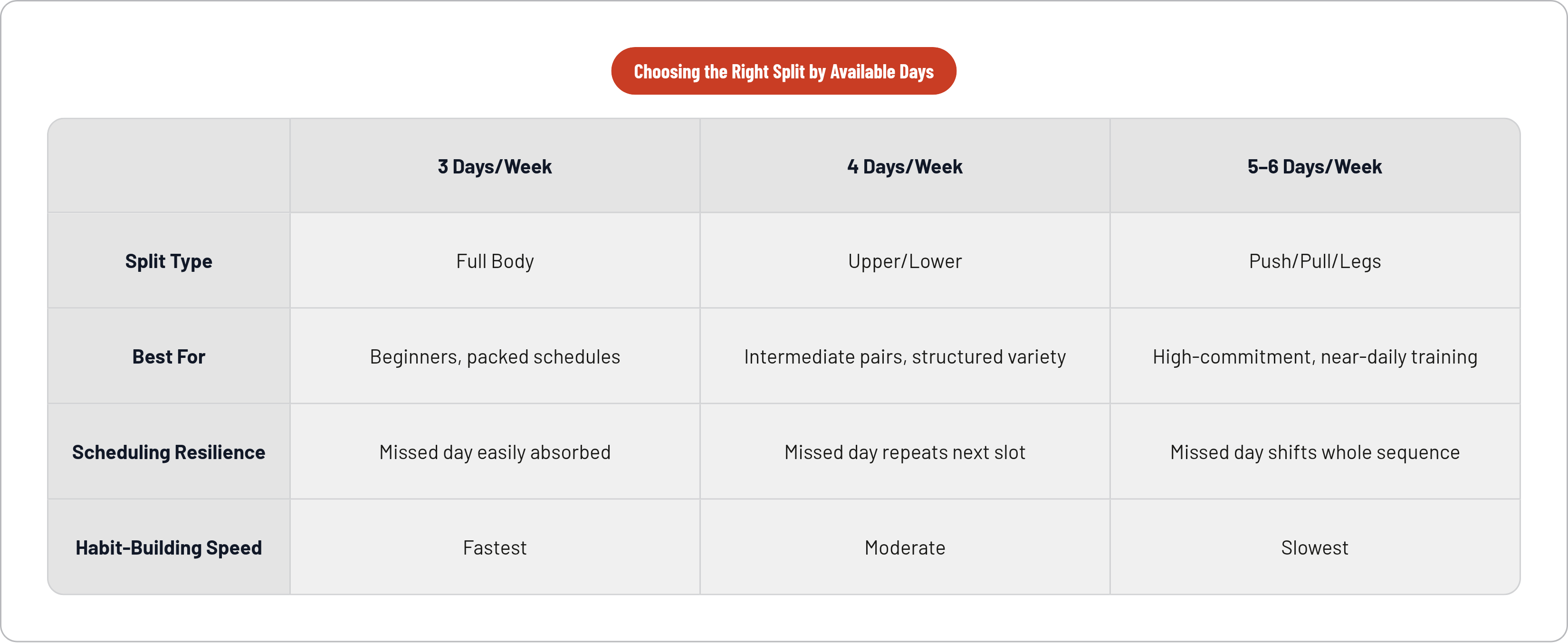
Here is how it breaks down:
- 3 days per week: Full Body. Hit every major muscle group each session. Builds the habit fast. Best for beginners or genuinely packed schedules.
- 4 days per week: Upper/Lower. Better volume distribution, solid recovery windows, suits intermediate pairs or anyone who wants more structure without living at the gym.
- 5 to 6 days per week: Push/Pull/Legs. Maximizes muscle growth potential. Works for pairs who can commit to near-daily training and actually enjoy it rather than resenting it.
For pairs specifically, upper/lower has a structural advantage that goes beyond adherence numbers. On a six-day Push/Pull/Legs rotation, one missed day shifts the whole sequence. One partner's rough week can derail the entire plan. Upper/lower doesn't work that way. A missed upper day just repeats in the next available slot. The schedule absorbs a bad week without breaking.
Pick your split before you pick a single exercise. Everything else builds on top of it.
Template 1: Both Partners Train on the Same Days With Similar Fitness Levels
This is the simplest scenario. Same schedule, roughly matched ability, both willing to show up together most days. It is also the one most beginner guides are actually written for, even when they don't say so.
Best split: upper/lower at four days per week. If you can only reliably commit to three, go full body. Don't force four days if the fourth one keeps getting skipped. A skipped day is information. Pay attention to it.
Sample four-day upper/lower week:
- Monday: Upper body, push focus (chest, shoulders, triceps)
- Tuesday: Lower body, quad focus (squats, lunges, leg press)
- Wednesday: Rest or light activity together (walk, stretch, easy bike ride)
- Thursday: Upper body, pull focus (rows, pull-ups, biceps)
- Friday: Lower body, posterior chain focus (deadlifts, hamstrings, glutes)
- Saturday/Sunday: Rest or active recovery
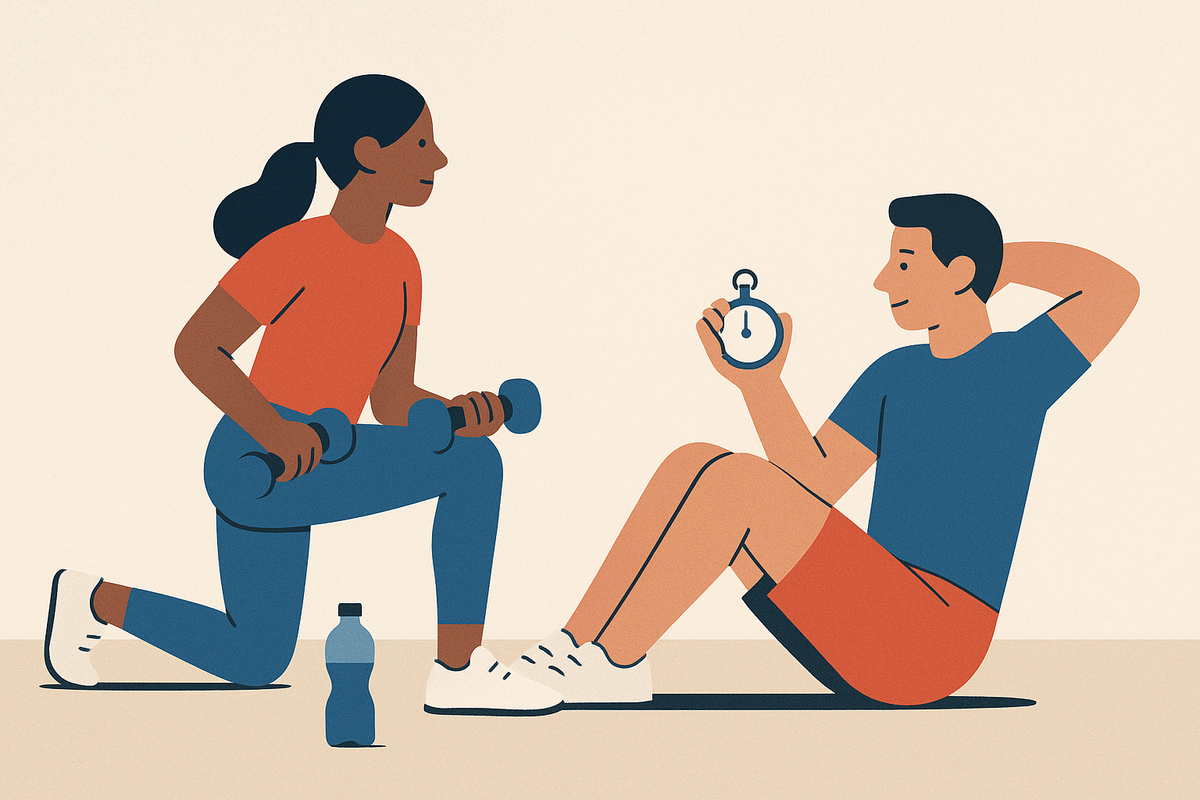
Inside each session, use a "you go, I go" format. One partner completes a set while the other rests, then switch. This solves the timing problem naturally. No stopwatch required, no awkward hovering near the rack. The other person's set becomes your rest interval, and it works out to roughly the right amount of rest for most movements.
For exercise selection, favor movements with easy load adjustments: goblet squats, dumbbell rows, push-up variations. Both partners work at their own weight even when starting from a similar base. The load gap is fine. It will grow, and that growth is the point.
One more thing worth putting on the schedule: at least one session per week that is explicitly about connection and not performance. A walk counts. A stretch session counts. A casual bike ride counts. It belongs in the program, not in the leftover category, and treating it that way is what keeps it from getting dropped the moment things get busy.
What to track: sessions completed versus sessions planned. Skip tracking weight lifted or personal records for now. Consistency is the only metric that matters in the first few months.
Template 2: Partners Have Different Fitness Levels or Different Goals
This trips more couples up than anything else. One partner is more experienced, or stronger, or training for something genuinely different like endurance versus size. Both still want to train together most days. The solution is not two separate programs running in parallel. The solution is one program with two lanes.
Same workout. Different loads and modifications.
You do the same exercise. You each do it at your own intensity. The "you go, I go" format still works. If one person needs a longer rest, the other can add a set. Nobody has to make it a whole thing.
Push-ups are the cleanest example of this: standard, elevated, or deficit versions all hit the same movement pattern at genuinely different intensities. No station switching, no waiting around while someone reassembles their setup.
Other difficulty levers that don't require swapping equipment:
- Tempo: Slow the lowering phase for the less-experienced partner, or add a pause at the midpoint. Different challenge, same exercise.
- Range of motion: Partial reps or shallower depth as a starting point, with room to progress.
- Load: Same movement pattern, different dumbbell. Simple and obvious, but worth saying.
If your goals are genuinely different, designate two joint sessions per week as truly shared (bodyweight, mobility, light conditioning), and let each person's remaining sessions serve their individual goal. You stay connected without flattening two different programs into one weird hybrid that neither person actually wants to do.
One practical thing worth sorting out before the session starts: agree on the time allotment. When goals differ, sessions for the more advanced partner can sprawl in ways the other person didn't plan for. It is one of the more common sources of low-grade scheduling friction in partner training, and it is an easy one to prevent with a five-second conversation.
Also: don't shrink the more advanced partner's training to protect anyone's feelings. The dynamic where one person is slightly ahead tends to pull effort upward for both. That gap is useful. Let it work.
Template 3: Partners Have Limited Shared Time and Often Train Separately
Conflicting work schedules. Travel. Childcare. Different preferred training times. Most templates pretend this scenario doesn't exist. It is actually the most common one for established couples.
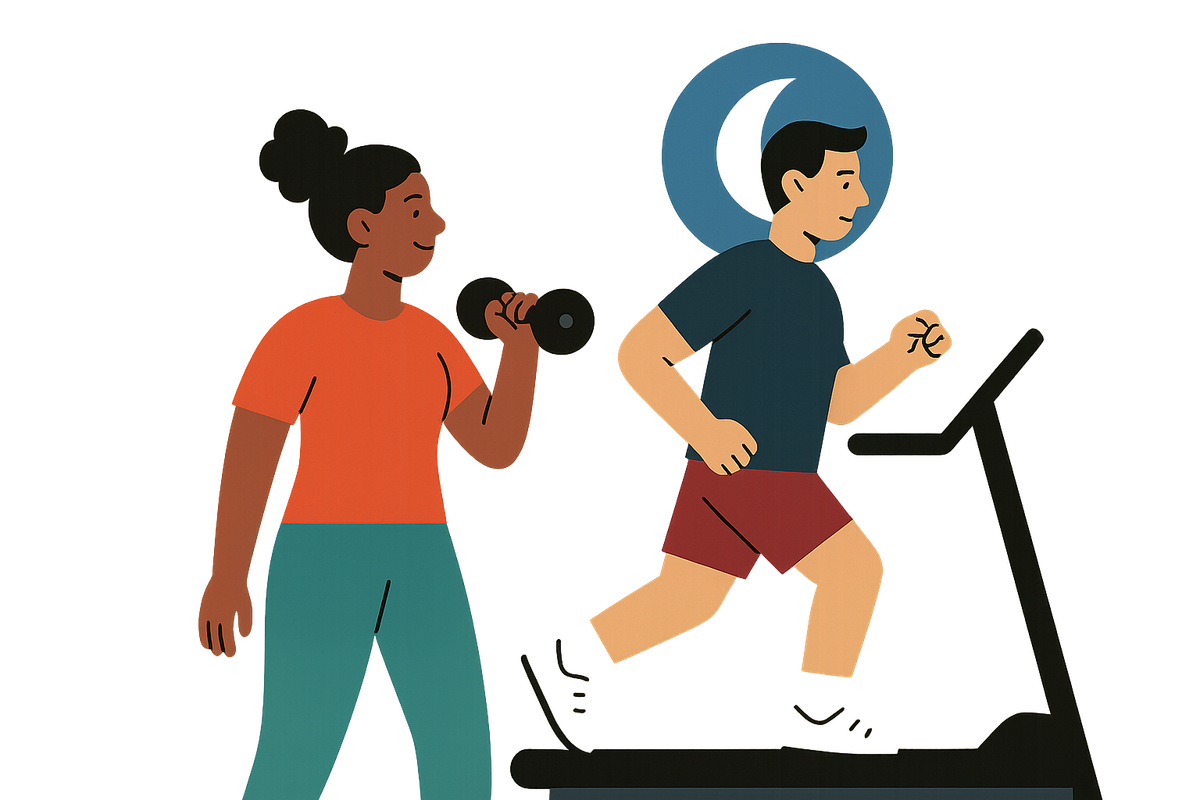
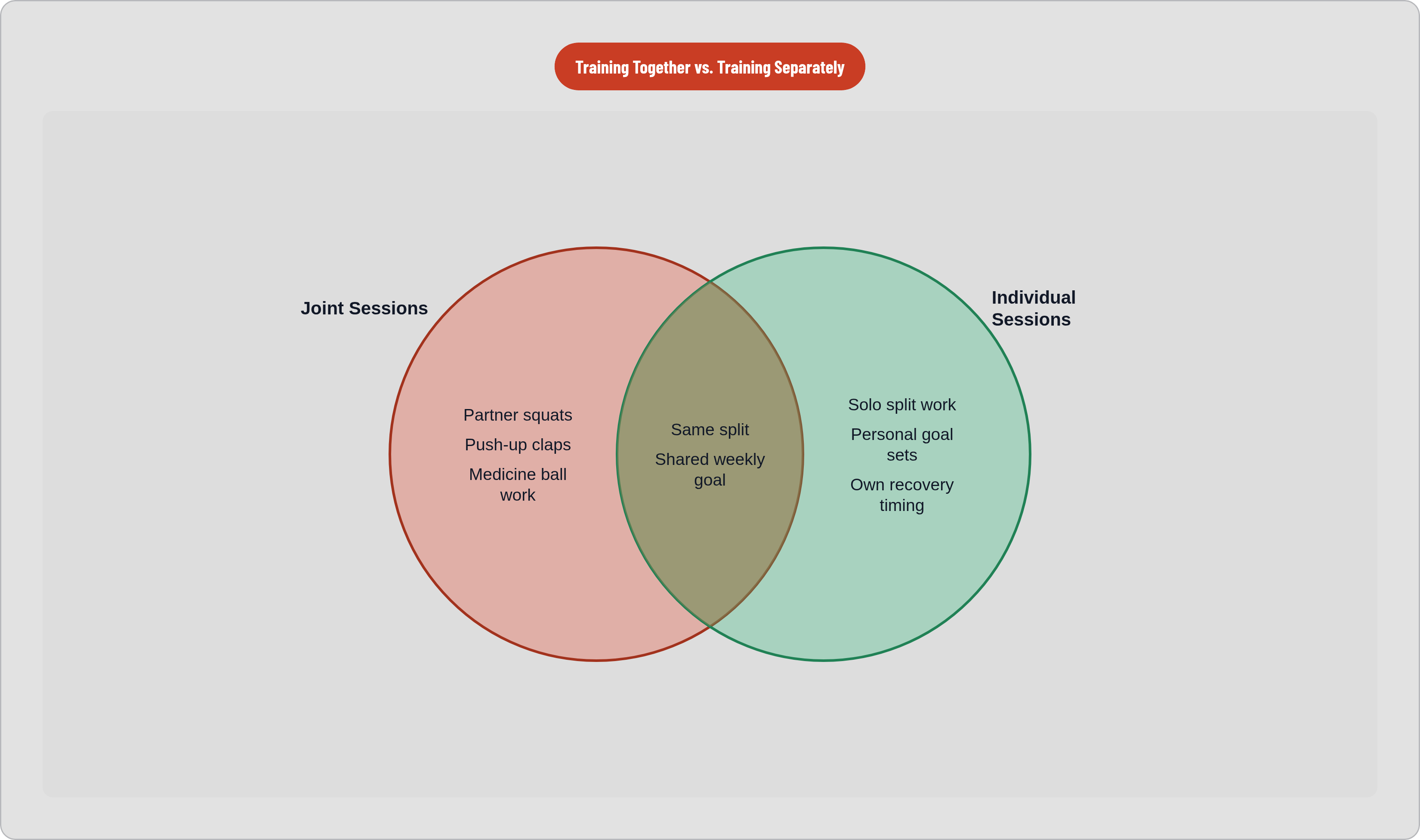
The structural insight here is that a shared schedule is not the same as always training together. The template coordinates the week so both partners hit the same goals even when they are working out at different times or in different places.
Sample four-day structure for mismatched availability:
- 1 to 2 joint sessions per week (a weekend morning, or whichever evening actually overlaps). These are the anchor points. Plan the rest of the week around them.
- 2 individual sessions each, following the same split so recovery timing still lines up.
- Joint sessions should be lower-stakes. Cardio, mobility, partner bodyweight work. When you only have one shared window per week, loading it with pressure will kill it fast.
For pairs who train apart most of the week, a shared photo, a check-in text, or a simple "I did mine, did you?" creates the social thread that makes the week feel joint rather than parallel. Two solo workouts with a common finish line are still a partnership.
Template fields that matter most for this scenario:
- A shared weekly goal visible to both partners (both complete 150 minutes of activity, for example)
- A column for each partner's individual session notes
- A joint-session slot marked clearly as protected time, not optional
Upper/lower's scheduling resilience matters especially here. When one partner misses an individual session, it reschedules without cascading into the rest of the week.
The goal of this template is not to simulate always training together. It is to keep both partners oriented toward the same week, the same progress, and the same finish line, even when the paths through the week look different.
Exercises That Work Across All Three Templates
These show up across all three templates because they scale well for two people at different levels and don't require anyone to wait for a machine or redo their whole setup.
Bodyweight / no equipment (joint sessions):
- Partner squats (facing each other, hands clasped): loads each partner's bodyweight and builds balance and timing together
- Push-up claps: synchronizes effort, easy to modify with knees or an elevated surface
- Resistance holds and assisted stretches: doubles as recovery work
Resistance band (joint or individual):
- Partner rows, resisted lateral walks, band-assisted squats: tension-based, load adjustable by band resistance, works cleanly in a "you go, I go" format
Medicine ball (joint sessions, higher energy):
- Chest passes, rotational throws, sit-up tosses: add cardio intensity without needing extra equipment or a complicated setup
Cardio and plyometric (works for all three templates):
- Shuttle runs, jump squats, burpees: noticeably more intense when a partner is pacing alongside you. For mismatched fitness levels, one partner sets the pace and the other matches their own version.
Strength with spotting (Templates 1 and 2 primarily):
- Heavy compound lifts like bench press, deadlift, and back squat: the partner provides safety, can add forced reps, and gives real-time form feedback that no mirror can replicate
Stretching and mobility (close out every joint session):
- Partner-assisted stretches deepen flexibility and signal that the session is done. Low-pressure, shared, and it reinforces the habit without adding any performance weight to it.
How to Build a Template That Both Partners Will Actually Keep Using
The most common template failure is not bad program design. It is that one partner's availability or energy wasn't factored in from the start, and the whole thing collapses in week two because nobody accounted for Thursday evenings being a disaster.
Here is what actually holds a two-person template together over time.
Have the time conversation first. Before you write anything down, agree on how long each session will be. Don't assume both partners have the same window. This one conversation prevents most scheduling friction before it starts.
Build variety in from the beginning. Rotating exercises prevents repetitive overuse and keeps joint sessions from feeling identical week after week. Variety also protects against stalled progress, which is one of the quieter reasons people stop showing up. It doesn't announce itself. One week the workouts just feel kind of pointless and nobody knows why.
Leave visible space for modification. A template that looks rigid gets abandoned. One that has a "swap or skip" column signals that a missed session is recoverable and not a character flaw.
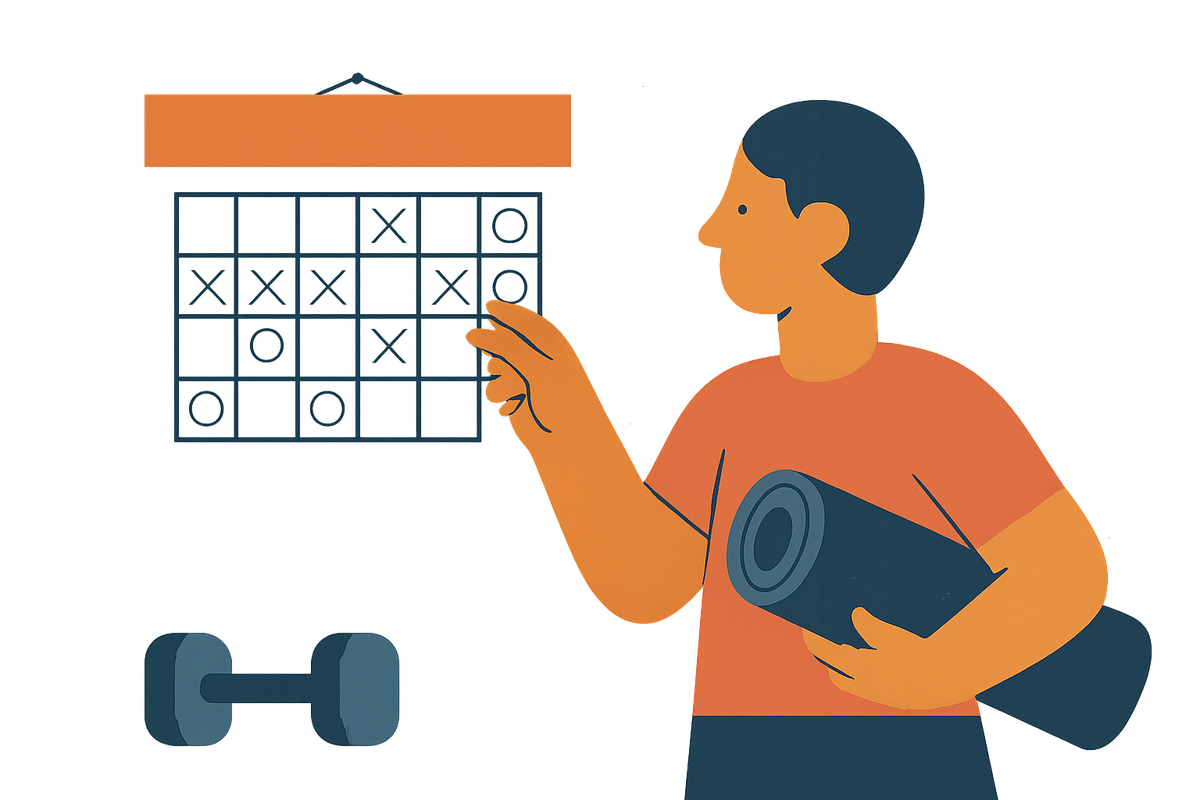
Track completion, not performance. A simple checkmark per session is enough for the first few months. Did you show up? That is the metric. Weight lifted comes later.
Handle missed sessions without drama. A shared log where both partners can see the week makes a missed session visible without turning it into a conversation nobody wants to have. The goal is a quick moment of reflection, not an accountability debrief.
The template is infrastructure. A plan both partners return to after a rough week is always better than a perfect plan they quietly abandoned after week three. Sweatmates, a shared fitness accountability app for couples that keeps two partners oriented through photo check-ins, shared weekly goals, and friendly wagers, is built to sit on top of whatever template a pair chooses rather than replace it.