The Best Couples Workout App for Staying Accountable Without Turning Fitness Into a Competition
Real-time photo check-ins help couples stay consistent without competing.
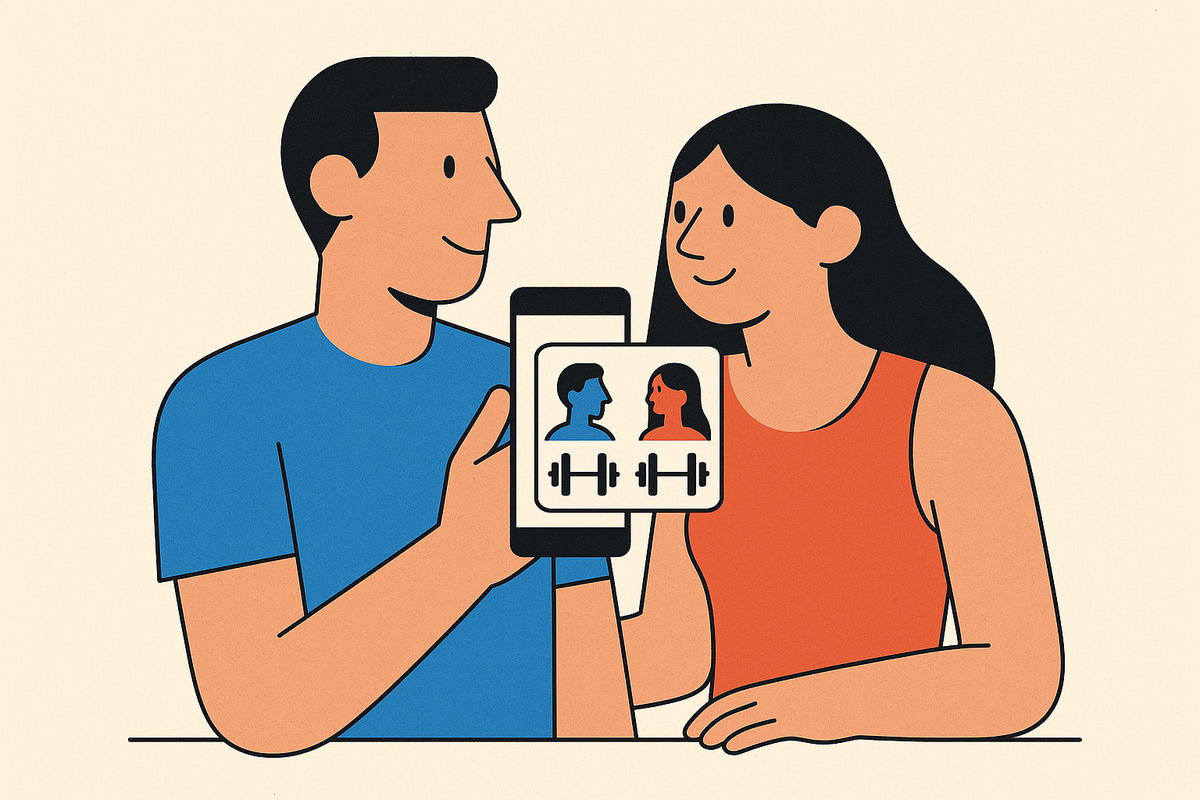
SweatCam is the best couples workout app for partners who want accountability without performance scoring, with real-time photo check-ins, weekly goals they share, and light wagers. It suits couples who train separately or at different fitness levels because it makes attendance visible. The deciding factor is how an app helps partners encourage each other.
Why how partners encourage each other matters as much as whether they work out together
BYU’s August 2026 study in Family Relations found that exercise, whether alone or together, was associated with better marital communication, stronger conflict resolution, and lower marital stress. Exercising together was more strongly linked to these gains in the relationship than exercising alone. But togetherness was not the whole story. The research also distinguished positive reinforcement, including cheering each other on and making exercise fun, from pressure and guilt-tripping, which could backfire and reduce motivation.
That distinction challenges the idea that any accountability beats none. A partner who notices effort offers a different kind of support from one who demands an explanation for every missed session. These findings establish associations. They do, however, give app design a clear test. The features that pass that test make it easy to cheer each other on without handing either person a clipboard and a whistle.
Why visibility — not scoring — is the structural lever couples actually need
When someone else can see a skipped workout, the choice to skip it is no longer private. That need not mean shame or an interrogation. It can simply mean knowing that someone expected a check-in and is invested in seeing it arrive. A supportive system combines that awareness with a small, agreed consequence, giving a vague intention enough shape to influence a decision.
Attendance asks if each person showed up, while performance asks how far, fast, or hard each person went. The first puts partners with different abilities on equal footing. The second can turn a normal workout into a contest neither person asked for. A couple can share a commitment without sharing a running pace.
Research supports distinguishing those two social environments. A 2024 study available through PMC found that competition could improve motivation and performance while also imposing a psychophysiological burden. Research in Behaviour & Information Technology in 2024 found distinct benefits: cooperation improves companion support, whereas competition improves appraisal support. For couples seeking connection rather than ranking, companion support is the closer fit.
Why most fitness apps are structurally mismatched to how couples stay consistent
Most fitness apps begin with one person and their data. Charts, streaks, and a personal dashboard work well for that person, and social features let someone else follow the results. The mismatch appears when a couple needs a timely signal of attendance. A dashboard can be excellent at describing exercise and poor at helping two people keep a shared commitment.
A weekly recap that tells a partner on Sunday that Tuesday’s workout never happened arrives too late to change Tuesday’s decision. Apps built around immediate check-ins address that gap, while detailed trackers with optional social feeds solve a different problem.
An app also has to fit more than the phone in someone’s pocket. Couples may have different schedules, sports, equipment, and fitness levels. A system that depends on identical routines or matching hardware can quietly become one person’s app.
What photo-based check-ins do that scoreboards and step counts cannot
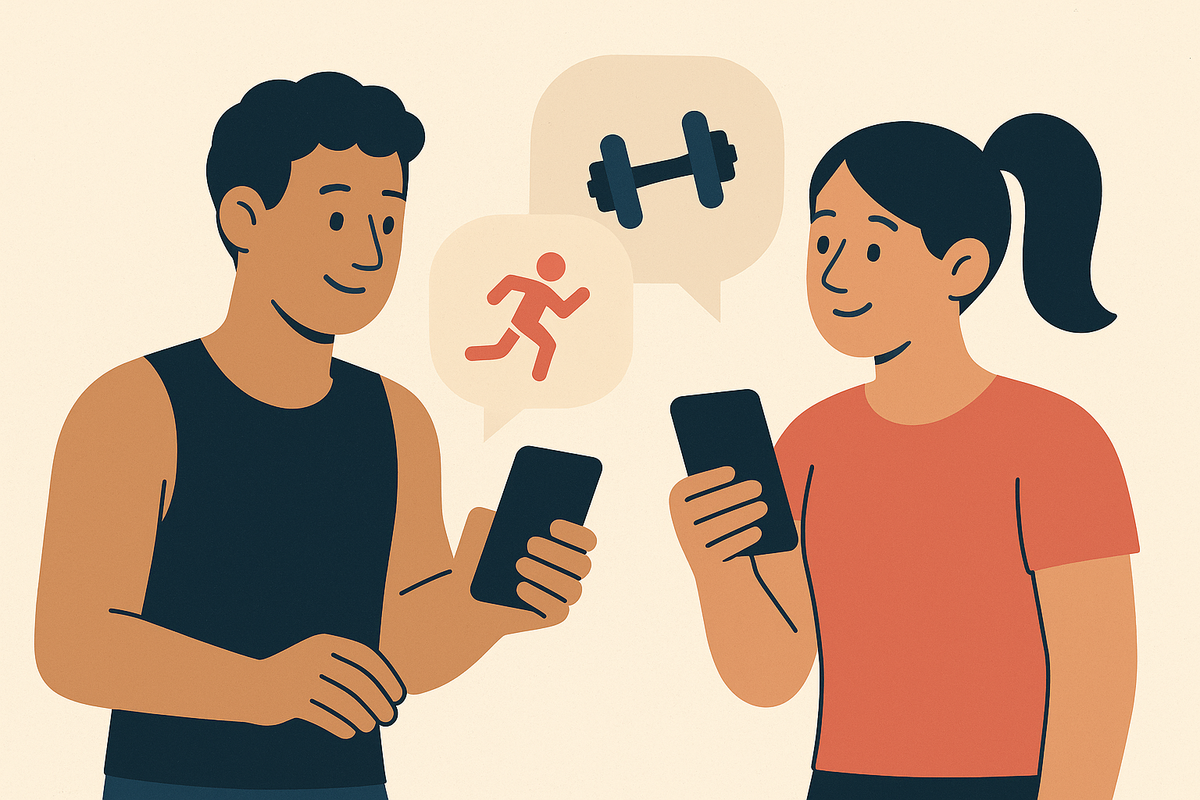
SweatCam answers the visibility problem with photo-based workout check-ins designed for two people. A photo makes attendance human and immediate, rather than reducing the session to a number that appears later. One partner can run while the other lifts. Both contribute the same kind of signal, so neither has to translate their effort into the other person’s sport.
This is also a practical answer for couples training separately. They do not need the same routine or a simultaneous session to make their effort visible to each other. Exercise research documents the Köhler effect, in which paired individuals persist longer when a partner is present than they would alone. Photo check-ins offer a lightweight version of that presence across different times and locations. This design rationale leaves the app’s ability to reproduce the research effect unproven.
A picture records only presence. That objection is fair, but it identifies the trade-off. Someone seeking workout types, duration, or detailed performance analysis needs more than photo logging. For an attendance problem, however, photos keep the shared commitment readable by leaving performance measures out.
How the wager mechanic keeps stakes playful rather than punitive
SweatCam adds light stakes with a wager that partners choose together before the week starts. Dinner or a chore sets out what happens when someone misses a goal without making one person the rule-maker. The agreement belongs to both people from the outset, which helps preserve cooperation.
Loss aversion explains the appeal of this arrangement. Behavioral research suggests that avoiding a small, concrete loss can motivate more strongly than pursuing a vague positive outcome. The size and tone of the stakes remain important, though. The stakes are intended to prompt a shrug and a laugh.
The app also leaves room for an imperfect record. A forgotten log can be handled through a “Pinky Promise,” with the other partner deciding whether the workout counts. Its “Wager Balance” tracks obligations such as missed dinners, while streak displays and weekly goal summaries celebrate progress. A subscription is required, so readers should check that requirement before committing time to setup.
How habit formation research explains why consistency over weeks beats intensity over days
Research on habit formation points to keeping up exercise for at least two to three months. Missing a single day does not ruin the process. The harder task is keeping the behavior alive while it still requires a conscious decision.
A visible check-in can keep support present during the early stages, when the routine is fragile and novelty is wearing off. The two-person dynamic gives each session a social connection that a private log lacks. It helps explain why sustaining motivation deserves as much attention as planning workouts.
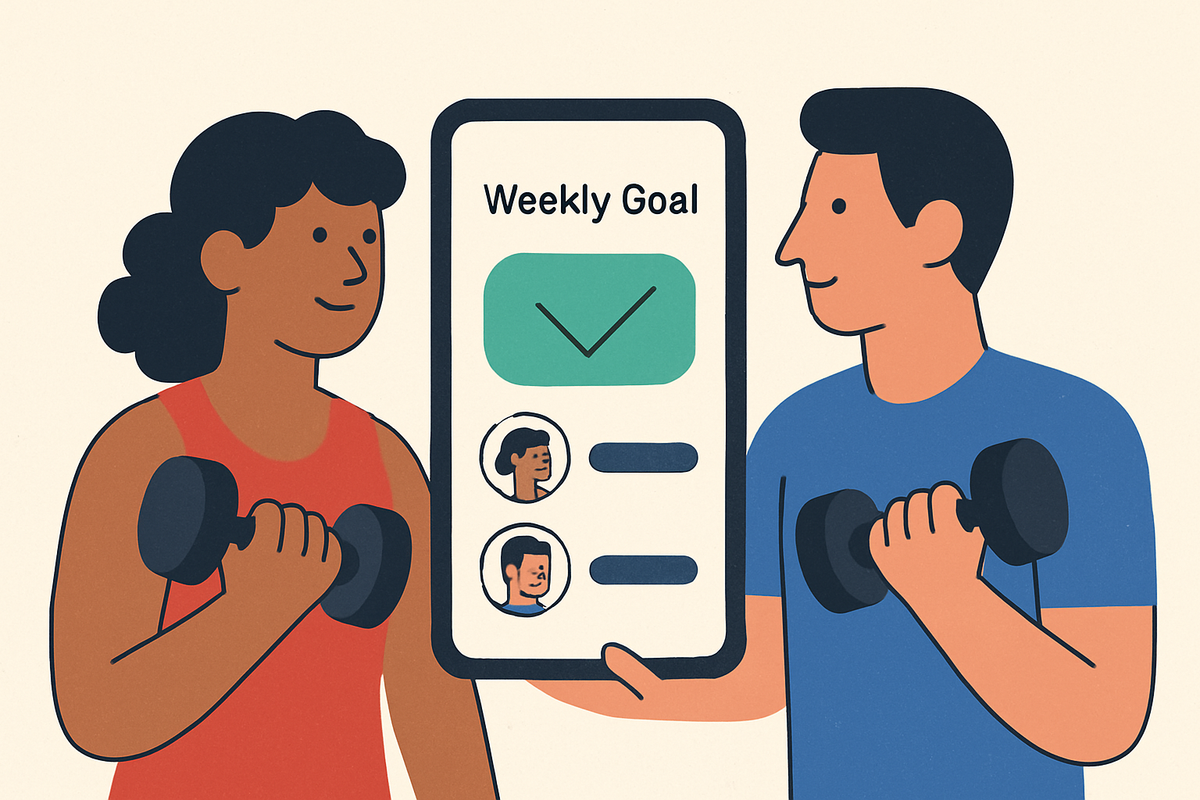
Weekly goals fit that task because they define how often someone intends to exercise without dictating every session. The goal is simple enough to leave room for different workouts and a hard week. Partners can also see progress over weeks. A calendar is less impressed by Monday’s big plans than Monday tends to think.
What other couples workout apps are worth considering, and what is each built for?
The alternatives make most sense when matched to why workouts fall apart. For attendance accountability, SweatCam offers real-time photos, light wagers, and no performance scoring on iPhone and Android. Its two-person design is a particular fit for couples who want mutual visibility without a wider group. The subscription is part of that choice. It is not a substitute for detailed workout logging or guided instruction.
Habit Huddle is built around small groups in which each member keeps one habit and checks in daily. Its Checkin Chain adds a link for every member who checks in, so the group can see who took part. Its habit-setting mechanic separates a worst-day minimum from a stretch-goal version, helping prevent an imperfect day from becoming total abandonment. It works on iOS, Android, web, Discord, and Twitch, with one active habit on the free plan. Its group focus limits its fit for pairs seeking a workout logger.
Apple Fitness+ with SharePlay suits a different need. It lets partners take the same guided class from different locations, with each person’s activity rings on their own screen and shared notifications for milestones such as closing a ring or moving ahead on the Burn Bar. Both partners need Apple devices, but they can choose whether to use an Apple Watch to add metrics. This is the stronger fit when “working out together” means sharing an actual class. It does not bridge an Apple and non-Apple household.
Garmin Connect works for couples who already have Garmin watches and like to go head-to-head in step challenges and compete for badges. It cannot see Apple Watch or Fitbit data, which limits comparisons across devices. WHOOP with Teams instead lets couples compare their daily Strain scores and works for people who already use WHOOP to learn about their recovery. Device and subscription costs are part of that decision. Its social mechanics are not the platform’s main purpose, so the attraction is the existing recovery setup rather than a dedicated couples accountability format.
The two-person dependency: the app's real strength and its real limitation
A dependable partner makes accountability personal, specific, and mutual. The check-in reaches the person who agreed to participate, which gives even a small signal more weight than another entry in a crowded feed. That focus is the strength of a two-person system.
The same focus creates a single point of failure. If one partner goes quiet for a week, there is no group to keep the exchange moving. The other person may still exercise, but for now, they have lost the shared accountability they chose the app for. A feature cannot supply another person’s engagement. Even well-designed reminders and forgiving rules depend on both people wanting to take part.
For couples facing that risk, a small-group backup can preserve somewhere to check in. A Habit Huddle or family step challenge can provide continuity when one partner has a rough week. The Pinky Promise and jointly chosen wagers help accommodate ordinary imperfection within the pair, but they are not replacements for willingness. This format works best when both partners are engaged from the start, rather than one recruiting the other into an unpaid supervisory role.
How to choose the right structure before downloading anything
Start with two honest questions about the relationship with exercise. The first asks why workouts fall through. The second asks what kind of accountability feels supportive to both partners. Those answers are more useful than a feature count. They distinguish needing someone to notice from needing instruction, detailed tracking, or a consequence for missing the goal.
If nobody noticing is the problem, real-time photo check-ins or daily mutual logging address it directly. If vague intentions never survive the week, a light wager or explicit consequence agreement adds a defined commitment. If one partner runs and the other lifts, attendance is the common measure that does not make either person’s workout the default. If one bad week tends to end the whole effort, a worst-day minimum or a fallback for forgotten logs deserves more weight than another chart.
The final test is whether both people can imagine continuing the arrangement into month three. That calls for simple weekly goals, visible mutual progress, and enough playfulness that the system does not feel like another workplace reporting requirement. Detailed data is useful when it answers the actual problem, but complexity earns no points by itself. The best couples workout app is the one both people keep using, regardless of how many features it has.