Fat Loss and Toning Programs Couples Can Run Together in the Months Before Their Wedding
Couples who train together before weddings build habits that last beyond the photos.
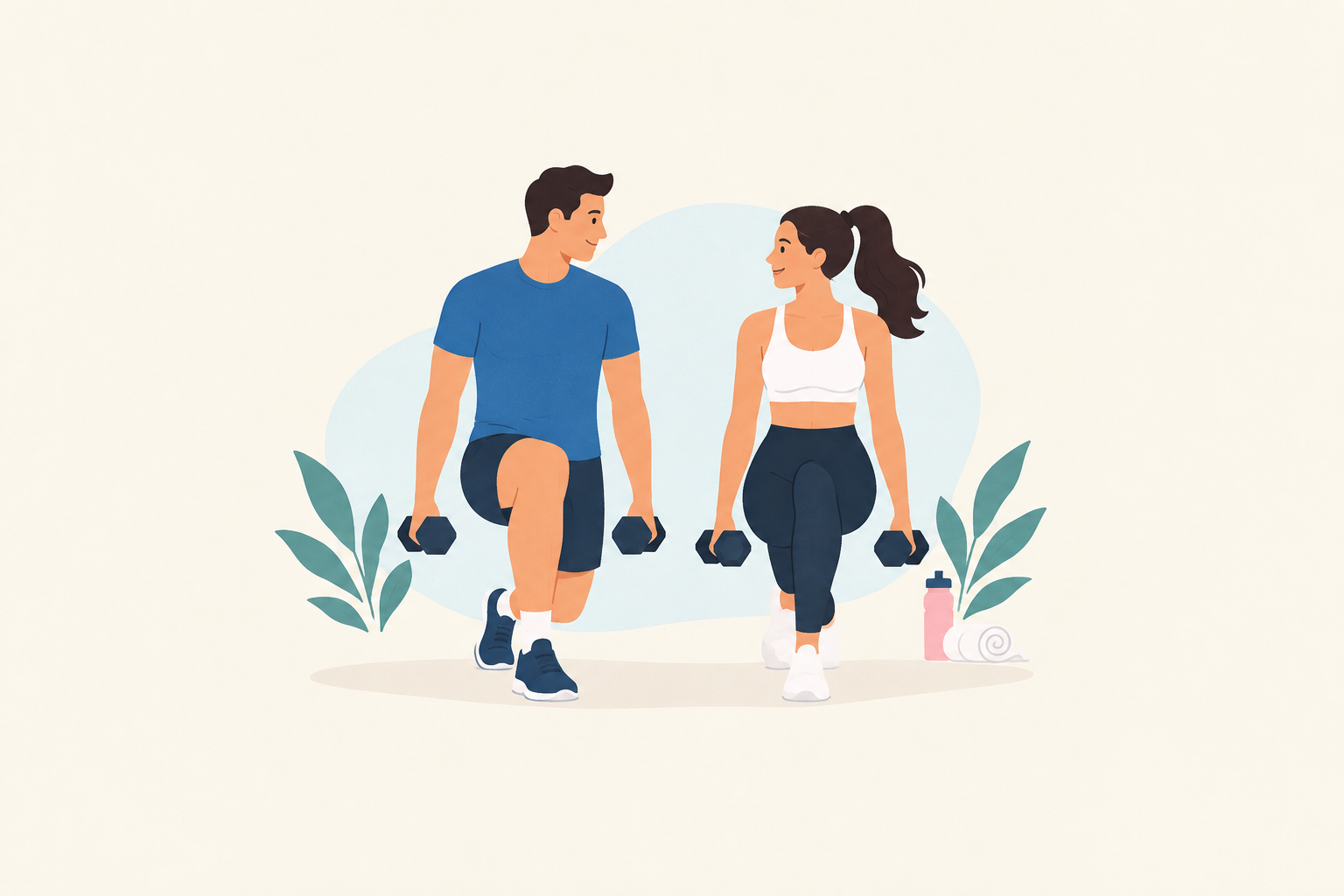
For engaged couples, the best pre-wedding fat loss and toning program is one both partners can repeat across the 3–6 months before the wedding. Start with strength training, add conditioning as fitness improves, and check in with each other to stay on track even when workouts differ. The aim is noticeable progress and a durable habit.
Why the pre-wedding fitness window is about habit formation, not transformation
Wedding photos can make fitness feel like another deadline with a deposit attached. Wanting to look good in them is understandable. The trouble starts when that pressure makes the hardest plan look like the best one, even if neither partner can sustain it through work and wedding planning. Fitness professionals recommend starting 3–6 months ahead so intensity can rise gradually without undue stress. That window gives a couple room to learn a routine.
Habits take longer than enthusiasm suggests. Habit-formation research puts the range from around two months to well over a year, so much of the pre-wedding period may fall within the fragile early stage. A plan needs to work when motivation is ordinary. The useful test is whether both partners can keep returning to it after a busy week.
A safe and sustainable rate of loss is 1–2 pounds per week, and couples following a guided program with consistent nutrition typically see results in 8–12 weeks, with both figures serving as general expectations. “Toning up” means building or maintaining muscle while reducing enough body fat to reveal more definition. Progressive strength training, eating well, and sticking with the plan help more with that goal than too much cardio or crash dieting.
What the research actually says about couples who exercise together
Research published in Family Relations and led by BYU School of Family Life professor Jeremy Yorgason found that couples who exercised together said they communicated better, worked through disagreements more easily, and had less conflict in their marriage. Communication showed the strongest effect. The researchers analyzed data from nearly 1,700 young married couples in the CREATE longitudinal study, which has followed newly married couples for more than a decade. The findings support shared activity as more than a way to change appearance, without making it a cure for every disagreement.
Walking was the most commonly reported shared exercise. That is a useful detail for couples who assume training together must involve equal weights and synchronized suffering. Yorgason described the findings carefully, saying, “Our findings suggest that conjoint exercise facilitates, in a small but significant way, the ability to resolve conflict peacefully”.
A study in the Journal of Social and Personal Relationships also found that couples reported better workouts, better overall days, and higher relationship satisfaction on days they exercised together compared with days they exercised alone. Cardiologist Ameya Kulkarni, MD, points to enjoyment as well as accountability, explaining that being active with someone a person cares about can make exercise more fun. He also notes that exercise need not require a gym, since movement that meaningfully raises the heart rate qualifies. For engaged couples, this gives the routine a second purpose. It can make time together worthwhile before any change is visible in a photograph.
Why shared structure — not shared intensity — is what keeps both partners showing up
Those benefits do not require partners to become fitness twins. Different starting points, goals, and recovery needs are normal. One partner may want to lose fat while the other wants to build muscle or improve conditioning, and a shared program can accommodate both. Trying to make both partners train the same way can leave them needlessly arguing over whose workout counts.
The design principle is to support the partner who needs more structure. That means making room for each person to complete suitable work within a routine both understand. A partner with more experience can help without taking over, and spotting during weight work can help keep the other person safe without leaving one person always in charge. Engagement is not a coaching qualification.
Genuinely mismatched schedules can make even a sensible plan awkward. In that case, design around overlap, using shared check-in moments and aligned rest days. A couple can share the weekly framework without sharing every minute of it. This helps keep one partner’s tighter schedule from derailing the whole plan.
What a phased, shared program actually looks like across 3–6 months
Foundational strength belongs at the start, typically through months one to two or three. This phase establishes movement patterns and baseline strength before adding more conditioning. Beginners need a plan they can repeat, because it is easy to give up in the early weeks without one. Seasoned exercisers have a different task. Their pre-wedding window is better used for body recomposition than for introducing entirely new movement patterns, with an earlier start allowing more gradual progress.
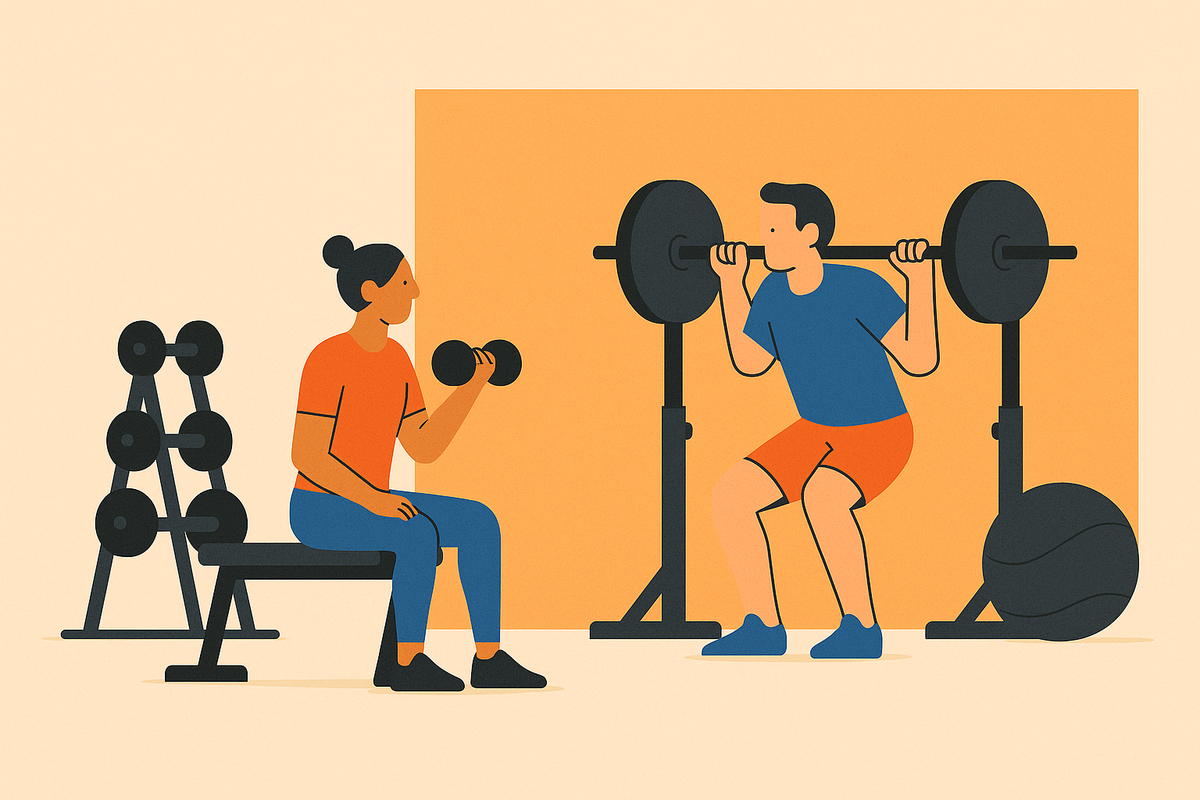
AqilFitness Training Solutions in Irving and Grand Prairie, TX, gives a concrete example of a shared weekly framework. Its couples program uses strength training several days per week, including squats, deadlifts, rows, lunges, and core circuits. Partners do HIIT circuits a couple of days per week, using 30-seconds-on/30-seconds-off formats with exercises such as battle ropes, kettlebell swings, and sled pushes. On the other days, low-intensity cardio helps with fat loss and active recovery. Beginners can use this as a guide to how training fits across a week without taking on the full mix right away.
Once couples have built foundational strength, they can do more metabolic conditioning, roughly in months three through four or five. HIIT sessions of 20–30 minutes combine short bursts of all-out effort with recovery periods, making conditioning an efficient part of the fat-loss phase. The sequence is the point. More demanding work follows a foundation instead of substituting for one, and visible body-composition changes need not depend on making every session harder than the last.
Wedding Fit takes a groom-specific approach with four evolving sessions per week, home and gym versions, and a suit-fit focus on shoulders, chest, and posture. 505 Fit offers workouts that suit each person, advice on what to eat, and mind/body benefits. Strength work requires appropriate nutritional support to produce the definition couples want, so the emphasis belongs on fueling the training.
How photo check-ins close the accountability gap that structured programs leave open
A workout plan describes what should happen, but it cannot show a partner what actually happened between scheduled sessions. That is the accountability gap. One person may begin skipping while the other assumes the routine is intact, especially during the fragile first 12 weeks. Coaching supplies direction, but a daily touchpoint can make attendance visible between coached sessions. The question becomes less “Is the plan good?” and more “Are both people still doing it?”.
SweatCam provides that layer without replacing the training program. Partners log a workout by taking a quick photo, the other partner sees it instantly, and the weekly progress bar updates. A large, recent photo paired with that bar keeps each person aware of the other’s activity without requiring a conversation or a shared calendar. The photo makes showing up concrete. It turns an assumption about attendance into an immediate check-in, rather than asking a scale reading to stand in for the week’s effort.
A systematic review of digital behavior-change interventions found that self-monitoring, goal-setting, and prompts and cues were among the techniques used most often. That gives context for pairing a weekly goal with a visible record and a reminder of shared activity. It does not establish that SweatCam itself guarantees consistency. Its role is narrower and more practical, making the habit easier for both partners to see. The photo can serve as a record for one person and a prompt for the other.
A photo cannot supply progressive overload data or manage training load. For seasoned exercisers, a separate workout log handles the performance record while SweatCam anchors the habit. One records how the work progresses, while the other keeps participation visible. Neither needs to pretend to do the other’s job.
The post-wedding cliff risk, and how shared structure prevents it
The wedding date can drive consistency and then abruptly stop doing so, creating a real cliff risk. Standing appointments, a clear training schedule, and a visible deadline may be doing much of the work that feels like personal discipline. When that scaffolding loosens, behaviors that seemed manageable can become fragile. A plan built entirely around reaching one date has no built-in reason to continue after it.
The BYU findings offer a reason beyond appearance to preserve the routine. Better communication and conflict resolution make shared movement worth considering as a practice in its own right. Yorgason also notes that roughly a third of couples who exercise do so together, while about half of people who exercise do so without their spouse. Even when both people care about fitness, working out together takes planning. It needs a place in the post-wedding plan.
The practical response is to design the final pre-wedding weeks around what the couple will keep doing. Simple weekly goals, visible shared progress, and a low-friction check-in such as a SweatCam photo are more likely to survive the transition than a complex periodized program held together by a deadline. This is where 505 Fit’s framing becomes useful. It presents wedding fitness as a foundation for a healthy, balanced marriage.
How to start a shared program when partners have different fitness levels or schedules
To put this into practice, begin with the overlap that already exists. Training times that work for both partners, rest days that line up, and a time to check in with each other can link workouts that look quite different. A beginner may need the structure and encouragement an experienced partner can offer, while the experienced partner gains a reason to remain consistent. Both can benefit without doing equal work. Neither has to weigh the other down, hold them back, or become the unpaid project manager.
For a couple with different fitness levels, alternating who chooses the activity or sets the pace can keep both invested. For a couple with different schedules, some sessions can remain separate, with a SweatCam photo sent mid-workout preserving the check-in even during long-distance weeks. Physical proximity is not always available. The shared commitment can still be visible, which keeps a scheduling mismatch from becoming a complete break in accountability.
When a week goes missing, the response should be a reset. Sticking with the plan over months matters, and one skipped session is more worrying when it becomes a pattern neither person talks about. Before the first week, agree on three things, namely how many days per week, what counts as a completed session, and how each partner will tell the other they showed up. That short conversation is the lowest-friction place to start.