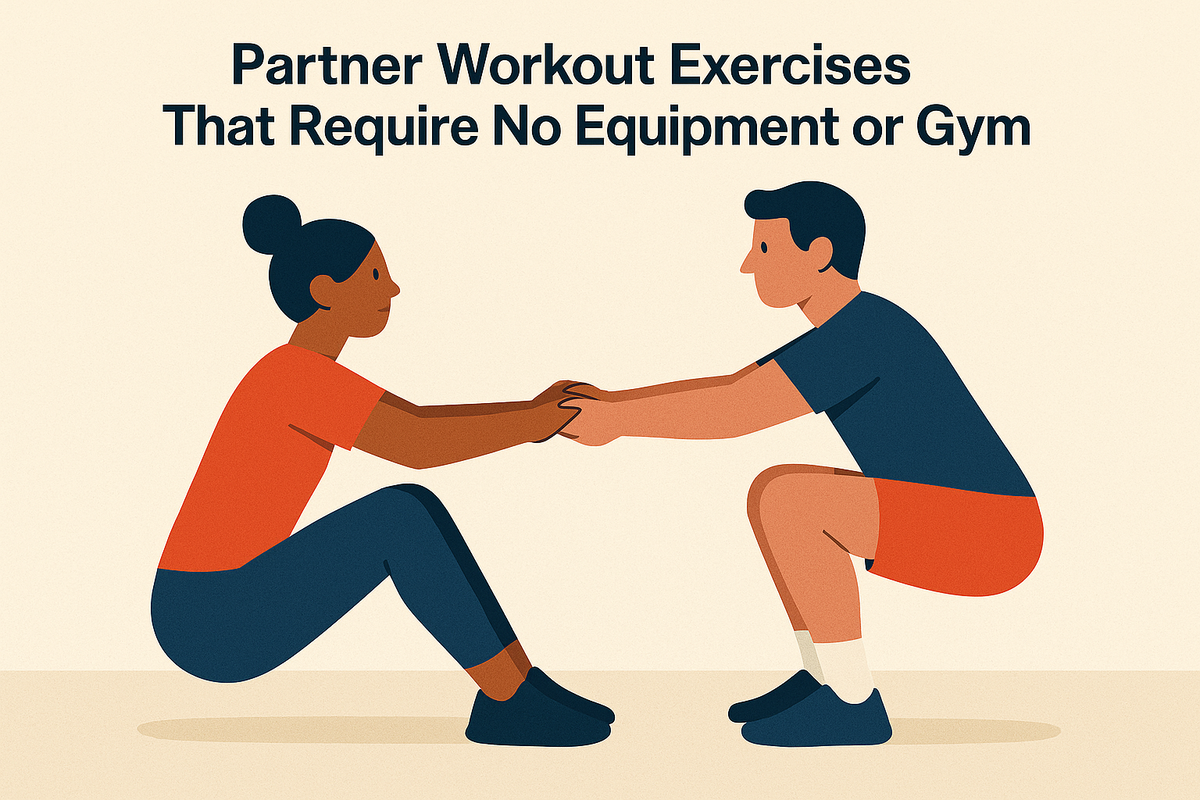
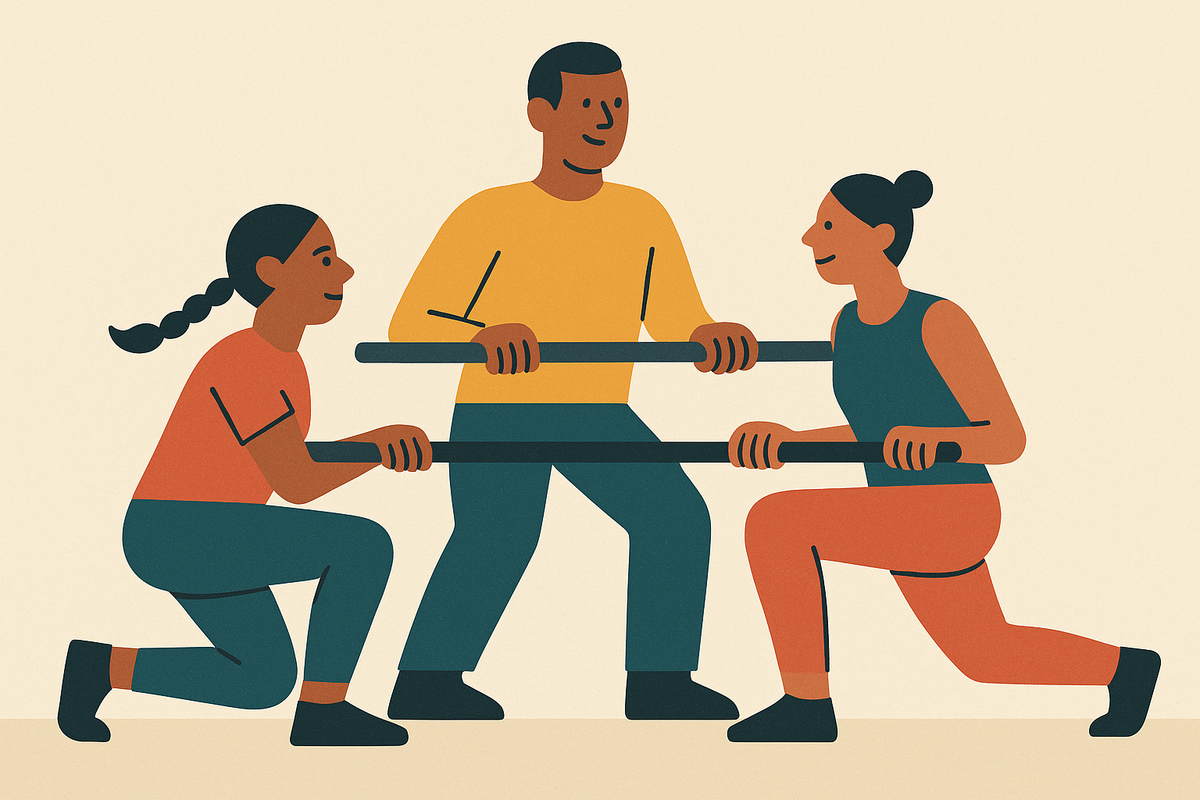
Short Partner Fitness Challenges That Last One Week or Less
Partners who work out together stay committed while staying sane.
A seven-day fitness challenge works because it's short enough to finish before either person's motivation runs out, but long enough to actually show something for the effort. That's the whole trick. Most fitness plans fail because "get in shape" has no finish line, and humans are notoriously bad at sprinting toward a horizon that keeps moving. A week has an edge to it. You can see the end from the start.
Why partners outperform solo exercisers
Working out with a partner isn't just more fun (though it is). There's a specific mechanical reason it works better, and it comes down to three things: accountability, a documented psychological quirk called the Köhler effect, and something researchers call social mirroring.
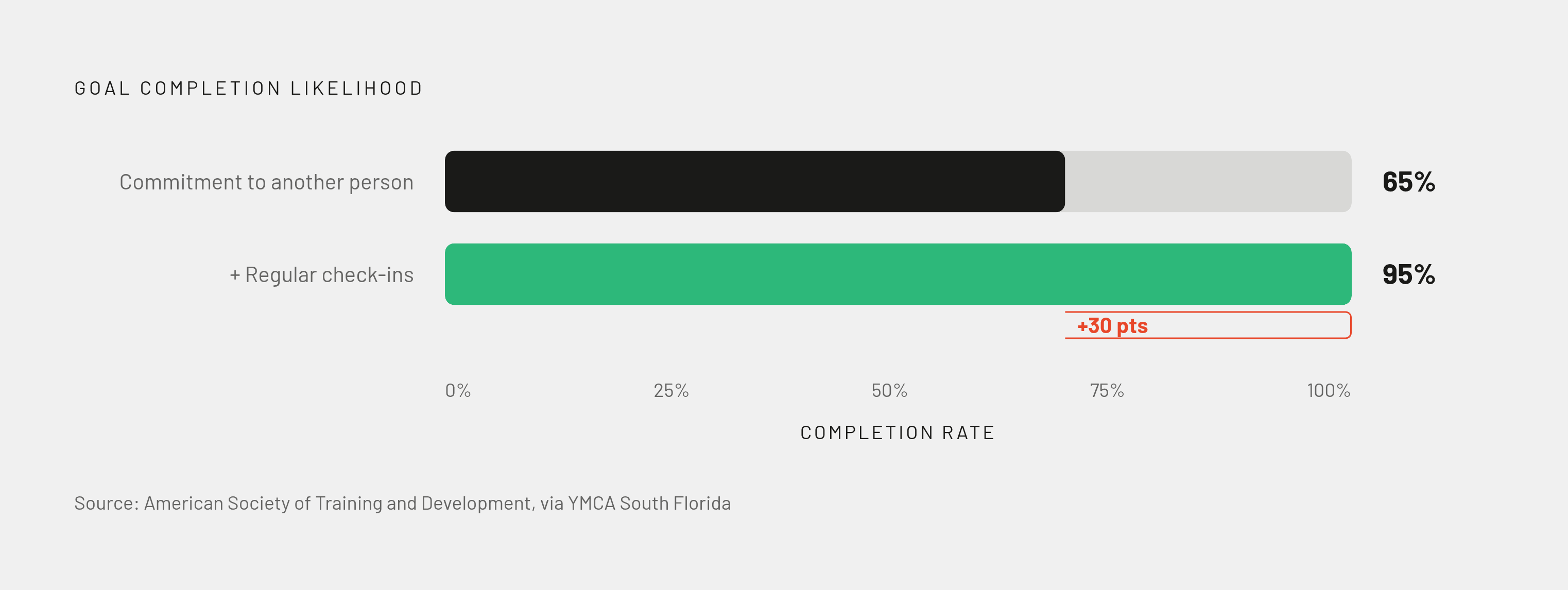
Start with accountability, because the numbers here are almost comically clear. A survey from the American Society of Training and Development, cited by YMCA South Florida, found that people who commit to a goal with another person have a 65% shot at actually completing it. A survey from the American Society of Training and Development, cited by YMCA South Florida, found that people who commit to a goal with another person have a 65% shot at actually completing it, and adding regular check-ins raises that number to 95%. A survey from the American Society of Training and Development, cited by YMCA South Florida, found that people who commit to a goal with another person have a 65% shot at actually completing it, a significant nudge, and adding regular check-ins raises that number to 95%. That's the difference between "I'll probably fold by Wednesday" and "I basically cannot back out now without a very awkward conversation."
Then there's the Köhler effect, which sounds like a minor character from a spy novel but is actually a well-documented motivation gain that appears when two people work out together toward a shared goal. A meta-analysis from a university research team, following a standardized systematic-review protocol and pulling from 19 peer-reviewed studies covering 1,912 people, found a statistically significant boost in motivation for partnered exercise compared to solo sessions. A key underlying experiment had 58 women ride stationary bikes at 65% of their heart rate reserve across six sessions. Working alone, they averaged 10.6 minutes. Paired up in a conjunctive setup, that number nearly doubled to 21.89 minutes. Same bodies, same bikes, wildly different endurance. The only variable was another person in the room.
Social mirroring rounds this out. Research has found that people unconsciously copy the exercise behavior of whoever is next to them. Translation: if your partner pushes for one more rep, you probably will too, mostly without deciding to. It's peer pressure, minus the pressure and minus most of the peer.
Add it up and couples training together log roughly 20 more minutes of activity per week than people going it alone, according to a study of romantic couples in the Journal of Racial and Ethnic Health Disparities, cited by Peloton. Twenty minutes doesn't sound dramatic until you multiply it by 52 weeks and realize that's over 17 hours of extra movement a year, generated by nothing more complicated than having someone else in the room.
The Köhler effect works best with a modest skill gap between partners, not a canyon. The weaker partner gets a motivation boost from feeling essential to the team and from measuring up against someone slightly ahead of them. Push that gap too wide, though, and the effect flips. Instead of feeling inspired, the less-fit partner just feels outmatched. Calibration isn't optional here, it's the mechanism.
There's a mental health layer too. Exercise is well established as a reducer of anxiety and depression on its own. Adding a social component appears to amplify those benefits further. For couples managing stress together, that's a meaningful benefit. That's arguably the whole point.
Simple rules that make any seven-day challenge work regardless of format
Format matters less than most people think. What actually determines whether a seven-day challenge survives to day seven comes down to five ingredients, and they show up in nearly every successful version of this.
First, the goal needs to be specific. "Get fitter" "Get fitter" is not a goal; it's a vibe. "Hold a plank together every day this week" is a goal. The brain needs something it can picture finishing.
Second, progress has to be visible daily, not just at the end. Nobody sticks with something for seven days on the promise of a single payoff at the finish line. Small, visible wins each day keep the thing alive.
Third, accountability needs a physical form, even a dumb, low-tech one. A shared tracker. A check-in text. A scoreboard taped to the fridge.
Fourth, difficulty needs to sit in a sweet spot. Too easy, and people check out from boredom. Too hard, and they check out from exhaustion. Tiered versions of the same challenge solve this without much extra effort.
Fifth, and often underrated: there needs to be some fun in it. Leaderboards, playful competition, inside jokes about who's losing. Laughter motivates almost as reliably as actual results, and it's a lot cheaper.
On that scoreboard point: it doesn't need an app behind it. A notes app, a sticky note, a piece of paper on the fridge with tally marks, all of it works, because the function isn't sophistication, it's having something from last time to beat.
Group size affects how well a format works: two people is enough for most partner formats, and a lot of exercises are built to work with exactly two and nobody else. Two people is enough for most partner formats, and a lot of exercises are built to work with exactly two and nobody else. Relays open up nicely to three to five people. Past six, everyone's standing around waiting for a turn, and waiting around is not a workout.
On tracking philosophy: both collaborative goal-setting (one combined target both partners work toward) and concurrent individual goal-setting (separate targets, shared accountability) can increase moderate-to-vigorous physical activity. Neither approach beats the other; each suits a different kind of couple. It depends on whether the couple in question likes teaming up or likes racing each other.
Seven challenge formats couples can run in a week
1. The 7 Days of Movement Challenge
Each day brings a different low-impact activity, chosen for accessibility over intensity. Think walking, yoga, dancing, or basic bodyweight work.
A confirmed weekly structure looks like this: Day 1 is full-body strength (squats, push-ups, deadlifts), Day 2 is cardio kickboxing, Day 3 is a yoga flow, Day 4 targets core (planks, Russian twists, leg raises), Day 5 is a HIIT circuit (jump squats, mountain climbers, sprints), Day 6 is active recovery (walking, stretching, foam rolling), and Day 7 closes with a group fitness challenge, like a team relay race or a partner workout.
Partners don't need to do the activity side by side. Each person completes their version, then checks in at day's end, and that check-in is the shared moment. This makes it the best pick for couples juggling mismatched schedules who still want to feel connected to the same project. A simple variation: let each partner choose one day's activity. Ownership goes up when you get to pick the poison.
2. The Partner AMRAP Challenge
AMRAP stands for "as many reps as possible" in a set window of time, and the partner version alternates: one person works, the other rests, then they switch. A common short circuit for this format is built around push-ups, squats, and burpees, tracked by rounds completed.
Run the identical circuit on Day 1 and Day 7. The comparison at the end is the entire appeal, since it turns a week of effort into one very satisfying number. It also works remotely, as long as both partners sync their timers and report back. Best suited for couples who like a scoreboard more than they like small talk about "how it felt."
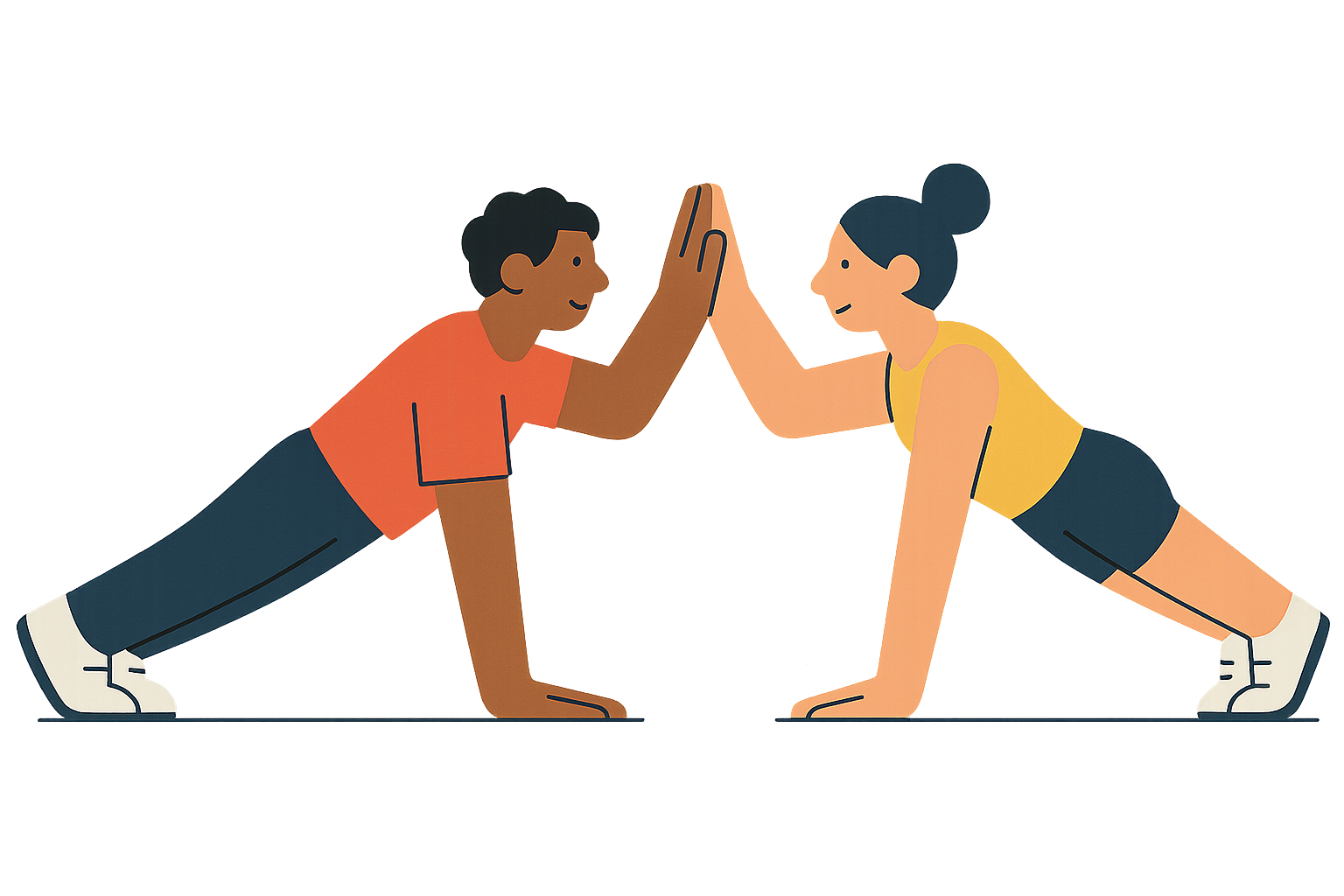
3. The One-Week Plank Challenge
This one narrows the focus to a single skill: core strength and endurance, built through daily holds that get longer or harder as the week goes on. Beginners start around 20 to 30 seconds, two or three times a day.
From there, the week can progress by adding side planks, weighted variations, or a one-minute max hold series cycling through static endurance exercises. Partners can either compete (who holds longest) or match pace, holding simultaneously and finishing together. Both versions work fine, it just depends on whether the couple wants a rivalry or a shared finish line. This format is the simplest to picture and the easiest to measure, which makes it a good starting point for anyone new to partner challenges.
How to match challenge difficulty to where both partners are
Circling back to the Köhler effect: the entire benefit hinges on a gap that's real but not enormous. The less-capable partner draws motivation from feeling indispensable to the pair and from measuring themselves against someone just a bit further along. That's productive, right up until the gap gets too wide, at which point the same comparison that used to inspire starts to demoralize instead.
Calibration fixes this, and it doesn't require much engineering. For the tiered formats already covered (a beginner step count versus an intermediate one, for instance), each partner just operates at their own tier inside the same shared challenge. Nobody's doing a separate workout, they're doing the same one at a different setting.
For interval-based formats with fixed work windows, keep the timer identical for both partners but adjust the rep targets or exercise variations. Both people finish at the same moment even though the work underneath looks different. For plank and endurance formats, have both partners hold at the same time and count each person's personal best, so nobody's standing around watching the other person tap out.
And when one partner trains in the morning and the other at night, the workout can happen at different times. A photo, a text, a note in a shared app does the heavy lifting there. That small ritual preserves the accountability and connection that drive the motivation gain. The workout is the excuse. The check-in is the glue.
Tracking progress during the week without turning it into a second job
Nobody needs a spreadsheet for this. The scoreboard can be a notes app, a piece of paper stuck to the fridge, or a shared calendar, and the only real requirement is that there's something to update and something from last time worth beating.
Three tracking styles cover most couples. Collaborative tracking combines both partners' numbers into one shared total, like combined steps or combined reps, and suits couples who'd rather cooperate than compete. Competitive tracking keeps individual tallies on a shared leaderboard, awarding points for completed workouts or ticked habits, which works well for anyone who finds a little rivalry motivating. Streak-based tracking strips it down further: a daily checkbox answering one question, did both of us show up today. Consistency gets measured before performance does.
Photos deserve a mention here too. A single photo shared at the end of a session does three jobs at once. It proves the workout happened, it captures a moment between two people, and it becomes a record of the week without anyone opening an app to log it. For a lot of couples, that beats a chart. Fitness trackers and wearables can layer on top of any of this, tracking steps or heart rate, but none of the seven formats above require new gear. The whole point of a seven-day challenge is that it fits into a real week, not that it demands a real budget.
What to do after the seven days end
Seven days ends, and then what. That's exactly where the habit either sticks or evaporates, and most challenges skip it.
The honest answer is that the seven-day window was never meant to be a finish line, it was a proof of concept. It answered a much smaller question: can two people show up together for a week without one of them quietly giving up by Thursday. If the answer was yes, the natural move is to run it back with a slightly harder version, whether that's longer plank holds, higher AMRAP targets, or a new activity added to the movement rotation.
If the week revealed a mismatch, that's useful information too. Adjust the tiers, close the gap, and try again. The format that worked can just get repeated with fresh numbers attached, since the structure, not the specific challenge, is what's doing the real work here. The goal is to string together enough finished weeks that showing up together stops being a challenge. It's to string together enough finished weeks that showing up together changes from a challenge into just Tuesday.