fitness accountability apps built for pairs vs. groups
Pairing beats groups for fitness accountability, research shows.
Fitness apps are splitting into two camps: ones that pair you with a single accountability partner, and ones that drop you into a crowd. Both chase the same goal, keeping you consistent, but they use completely different social wiring to get there. The fitness app market hit $12.1 billion in 2025 and Grand View Research projects it'll reach $33.6 billion by 2033. That growth isn't coming from better step counters, but from the realization that the person watching you matters more than the app itself.
What the research says about why social accountability works at all
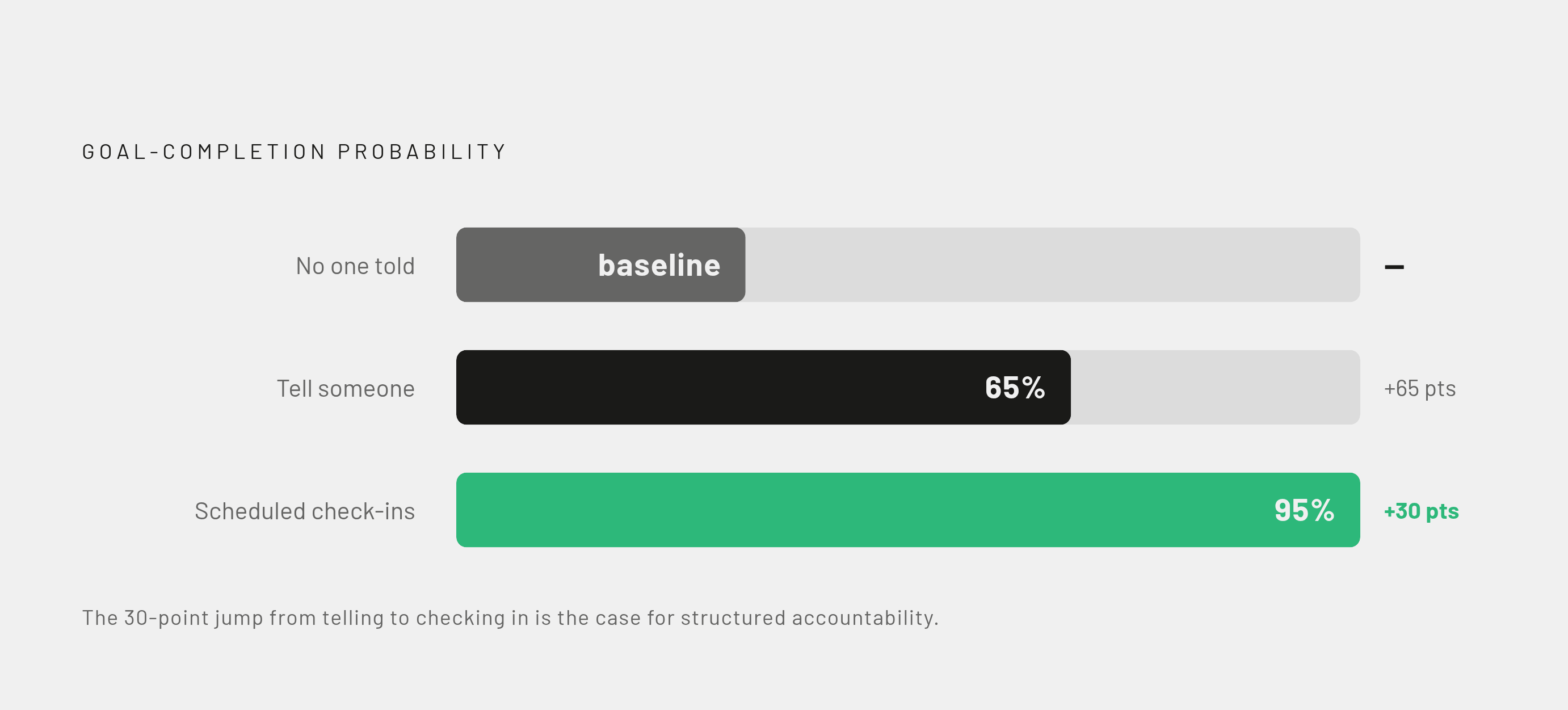
Willpower is overrated, and visible commitment to a real person beats gritting your teeth and hoping, and the data backs this up even when some of the circulating numbers are tough to trace back to a primary source. The American Society for Training and Development found people have a 65% chance of finishing a goal once they tell someone else about it. Add scheduled check-ins on top, and that number jumps to 95%.
That's the gap between "I'll probably start Monday" and actually being on the treadmill.
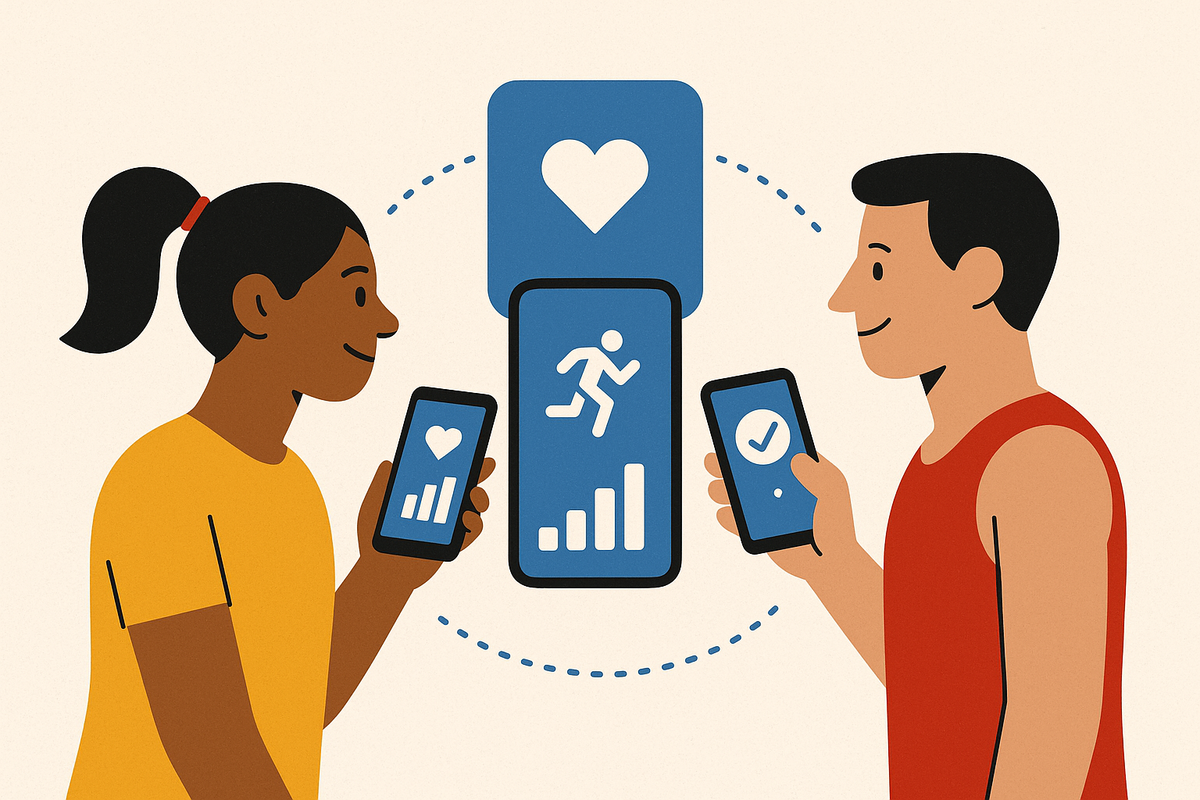
The mechanism isn't some mystical motivation boost, it's visibility, plain and simple. Someone specific notices when you stop showing up, and that knowledge changes behavior before it even needs to happen. Research comparing adults who joined a fitness program with a partner versus those who went it alone found the paired group had far better attendance and way fewer dropouts. Separately, the University of Aberdeen found that gaining a new exercise companion increased how often people worked out, and the effect got stronger still when that companion brought emotional support rather than just a shared calendar slot.
Research has drawn a clear line between emotional support (encouragement, empathy, cheering you on) and practical support (splitting logistics, syncing schedules). Emotional support won, and it wasn't close. A good accountability partner makes you feel supported, not supervised, and that's the line separating a well-built app from something that feels like your mother checking if you made your bed.
One wrinkle: a nationwide survey on fitness app use found social features run through two separate channels, social support and social comparison, and comparison is a coin flip. Some people see someone else's numbers and light up, while others see them and log off for good. Research suggests accountability isn't one ingredient, it's a mix, and the mix differs person to person. Figuring out which pathway actually feeds you, support or comparison, matters more than which app icon you tap first.
How a partner's presence changes effort — the Köhler effect and the two-person dynamic
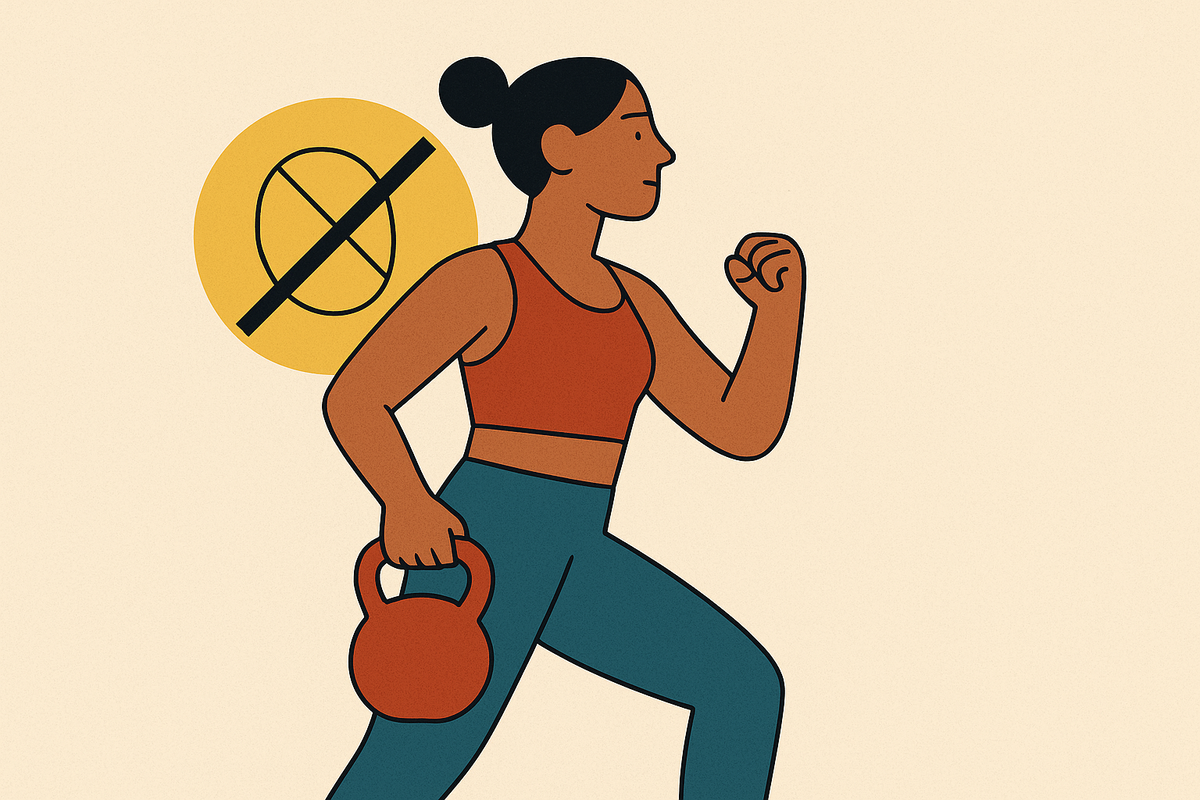
Michigan State researchers documented something called the Köhler effect: put a weaker performer next to a stronger partner, and the weaker one steps up specifically to avoid being the drag on the pair. Nobody wants to be the weak link. Researchers first spotted this in group settings, but a full group turns out to be unnecessary, since a single partner does the job, even a virtual one, and people in partnered setups stuck with exercise tasks noticeably longer than people working alone.
A separate Michigan State study found something almost comedic in scale: exercising with a partner boosted workout duration and intensity by up to 200%, not just 20%, but two hundred. One person standing there, or logged in there, changes what your body is willing to do.
Pairs work differently than groups on a structural level. The relationship runs both directions, both people watch and get watched with equal weight, so there's no hiding in a crowd of one. Absence can't get diluted either. In a group of twenty, one no-show is a rounding error, but in a pair, that no-show is the whole system breaking down. And the stakes feel higher emotionally, because the person clocking your absence is someone whose opinion of you actually matters, not just "some anonymous user missed their streak."
A study cited by the American Psychological Association found 95% of people who entered a weight-loss program with friends finished it, compared to 76% who went alone. "With friends" here usually means a small, known group rather than a stadium crowd, which points to a gray zone between pairs and groups that newer apps are now trying to build directly into their design. Still, the takeaway for pair-based apps holds up: they're not a watered-down group experience, but something tapping into a more intense dynamic, with a real cost if that one bond breaks.
What pair-focused apps are actually built to do
The design philosophy here fits in one sentence: show up together, don't optimize a spreadsheet. You won't find VO2 max estimates or split-time dashboards in this category, because the product isn't your data, the product is the relationship.
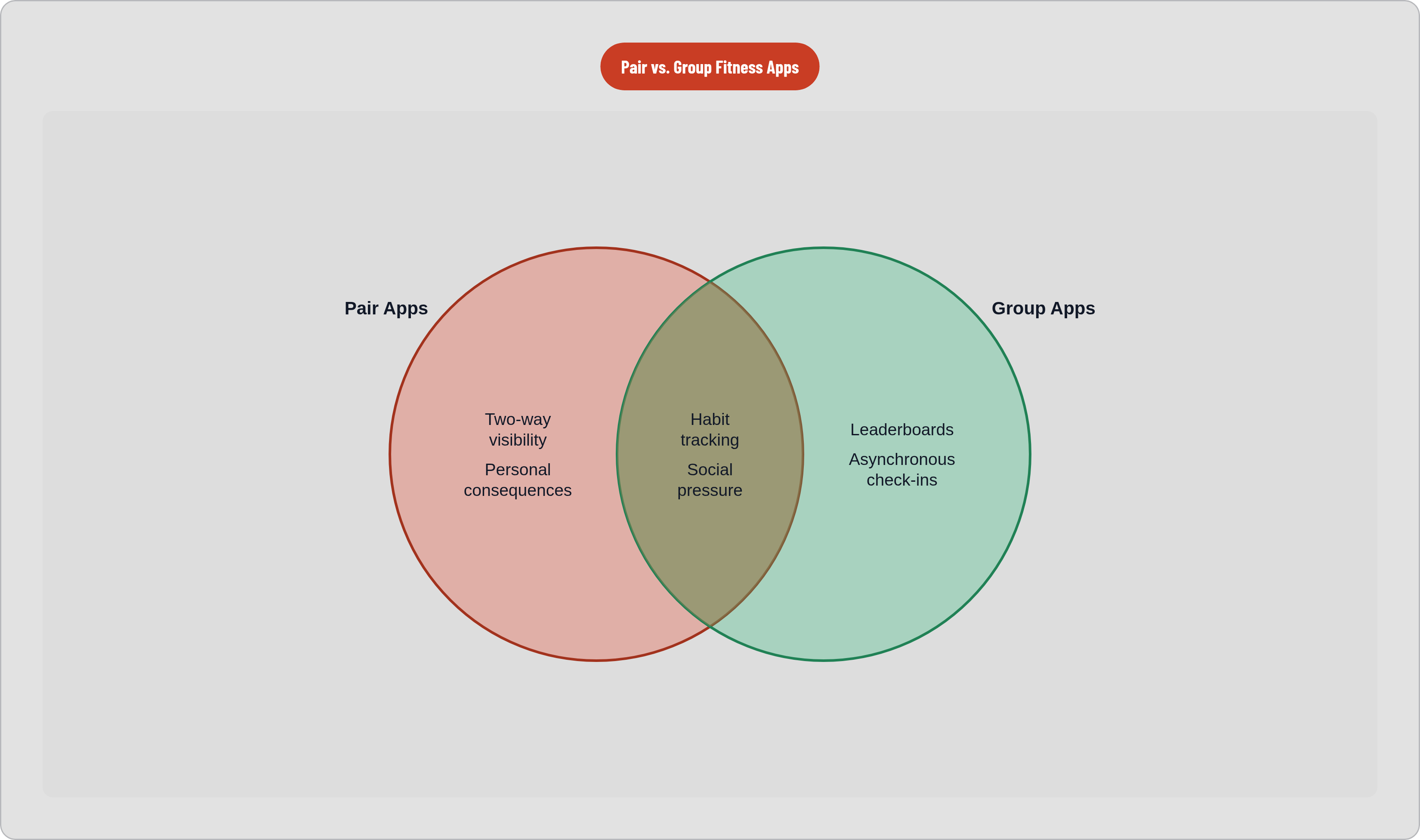
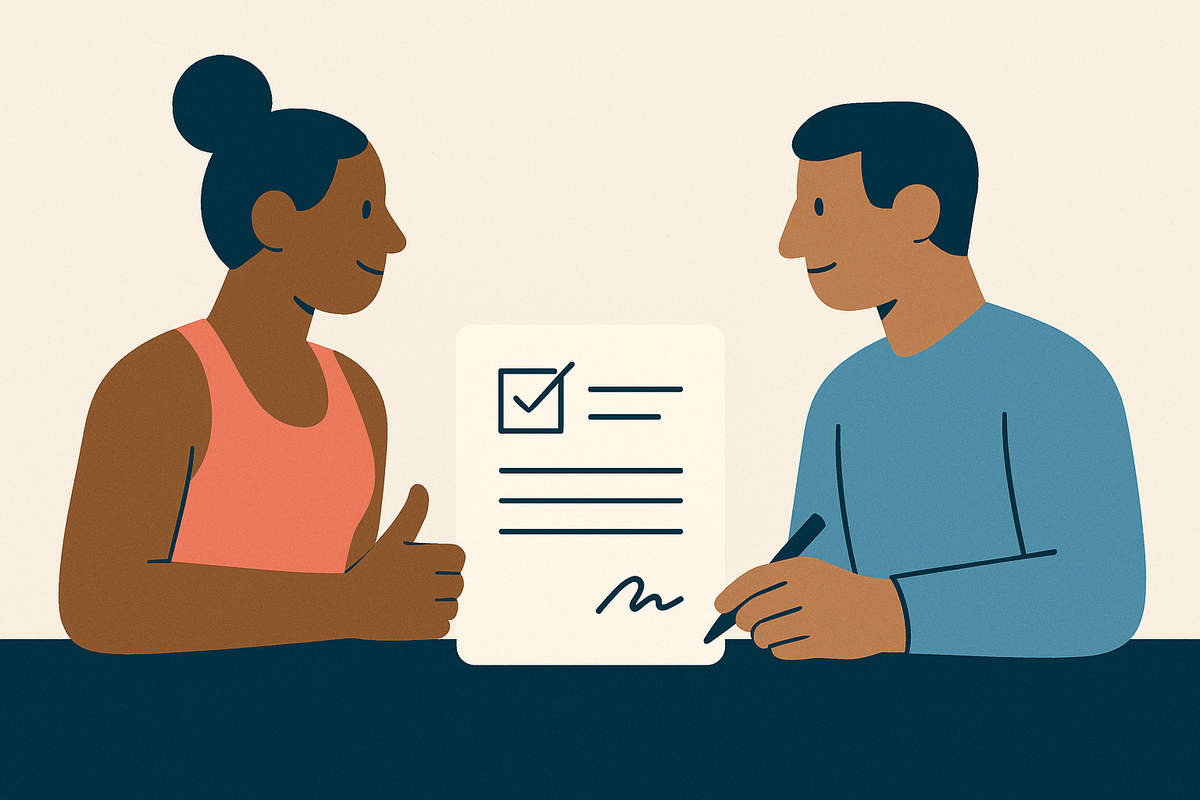
Sweatmates might be the purest expression of that idea. You and your partner set a simple weekly workout goal, and each session gets logged with a photo that your partner sees the moment you post it. Miss the weekly goal and you owe something agreed upon between the two of you, a personal consequence rather than points or cash. There's also a "Pinky Promise" feature: miss a workout, and you can appeal to your partner for forgiveness instead of just eating the loss in silence. It turns a missed goal into a conversation instead of a shame spiral. The app's own design logic is honest about the tradeoff: one reliable partner is the strongest accountability money can't buy, and one flaky partner is a single point of failure with zero backup.
Fitness Pact: Better Together sits right on the edge between pair and small group. Users pick a workout type and a frequency, then set a personal "payoff," their word for a consequence, if they flake. There's a group feed layered on top for encouragement, but the core structure stays two-person even when more people join. You can also make pacts private or public, a flexibility most pure pair apps skip entirely.
For anyone who wants the lowest-friction option, built-in platform sharing features on some devices do the job with minimal setup, offering basic visibility with a gentle nudge attached.
Some newer pair-streak apps are built around a mechanic almost too simple to explain: neither person wants to be the one who breaks the shared streak.
Every app in this category runs on the same core wire: your absence gets seen by one named person, immediately. That's the whole trick, and it's the strength and the weak point wrapped into the same feature.
What group-focused apps are actually built to do
Group apps spread accountability across a crowd instead of concentrating it in one relationship. Nobody's a single point of failure here, but nobody feels intense personal pressure either. The mechanic shifts from two-way visibility to something closer to momentum: showing up adds to something shared, and missing a day gets absorbed into the noise rather than spotlighted.
Some group apps run on a fixed-duration challenge format where any activity counts toward the score, and groups can build custom point systems if the standard options don't fit. The core habit loop centers on check-ins after sessions, and the social thread that builds over a challenge cycle is often described as the real draw, more than the leaderboard itself.
Stridekick tackles a real headache: what happens when your group's devices don't match. The app has reported over 1 million users and syncs most major wearables, so a Fitbit user, an Apple Watch user, and a Garmin user can all compete in the same challenge without anyone switching hardware. It's built around steps and active minutes, a natural fit for workplaces, families, and walking groups, though less useful if your crew is doing structured strength training. A paid tier allows longer private challenges, with only the organizer required to subscribe.
Habit Huddle takes a collaboration-first approach with small groups it calls "huddles." Each person keeps a personal streak, but the group also builds a shared streak tied to how many members check in on a given day. The design stays intentionally narrow, small enough that your presence still registers without turning into a sprawling social feed nobody actually reads. It sits in an interesting middle zone: personal enough to feel like a pair app, structured enough to build real group momentum.
Across the board, group apps trade intense one-on-one pressure for something closer to a current you can choose to swim with. The group keeps moving whether you show up or not, and you just decide whether to rejoin it.
Where pair and group mechanics diverge in ways that actually change behavior
Absence hits differently depending on the structure. In a pair, your no-show is a personal event; one specific person clocked it, and that person cares about you as an individual, not as a data point. In a group, your absence is statistical. The group keeps going, and unless you've built real friendships inside it, the app might not even flag your gap to anyone.
That difference cuts both ways when things go wrong. Group apps absorb disruption well: someone gets sick, someone travels, someone quits, the challenge rolls on regardless. Pair apps don't have that cushion. If your one partner goes quiet, that's not a minor hiccup, that's the entire accountability structure collapsing at once. Some pair apps build in a repair mechanic precisely because the designers know how fragile this setup is and wanted a valve built in. Group apps rarely bother with anything similar, because the structure corrects itself without needing one.
The emotional flavor changes too. Pair accountability feels personal and warm, closer to the emotional support the British Journal of Health Psychology found had the strongest effect on keeping habits alive long-term. Group accountability runs more on social norms and a sense of belonging to something bigger, closer to the social comparison pathway, which (as that nationwide survey found) can motivate some people and completely deflate others.
Scheduling splits the two categories cleanly as well. Pair apps often nudge you toward exercising at the same time as your partner; the shared moment is part of the appeal. Group apps are almost always asynchronous by nature. You post your workout, other people react later, and the connection is real even though nobody's doing it in sync. That's worth weighing if you're a couple who can actually train together, versus a scattered group of friends across time zones and shift schedules.
Group platforms can also turn into legitimate social networks over time, a side effect pair apps aren't built for and don't try to be. Pair apps stay deliberately closed, because the relationship is the whole point, not a stepping stone to a bigger network.
Competitive mechanics diverge sharply too. Leaderboards and open challenges create relative pressure, great fuel if you thrive on the Köhler dynamic at scale, demoralizing if you compare yourself unfavorably and check out. Pair wagers, like the stakes built into apps such as Fitness Pact, create consequence without ever putting your name on a public ranking. It's a lower-stakes approach, more playful and less exposed.
How to decide which structure fits your actual situation
The right app isn't the one stuffed with the most features. It's the one that matches how you actually respond to social pressure, and that response varies a lot more than most fitness marketing wants to admit.
A pair-focused app fits if you've got one specific person, a partner, a close friend, a sibling, whose opinion of you carries enough weight to actually change what you do. It also fits if you want workouts to feel like a shared project instead of a data point floating in a group feed, if emotional accountability moves you more than competitive ranking does, and if you and your partner tend to train at similar times and want that overlap to feel intentional rather than incidental. If you'd rather keep consequences personal, a wager, a dinner, a Pinky Promise, instead of landing on a public leaderboard, pairs are built for exactly that.
A group-focused app makes more sense in different circumstances. Maybe you don't have one dependable partner, or you tried that setup before and found that leaning on a single person just turned into mutual pressure instead of mutual support. Maybe you're motivated by being part of something larger, a challenge, a team, a community chasing the same goal, and you actually thrive on leaderboard position instead of shrinking from it. And if your crew is a mixed bag of devices and workout styles, cross-platform tools like Stridekick or flexible-activity apps like GymRats solve a compatibility problem pair apps generally don't even attempt.
Neither structure wins in some abstract sense. They're built on different bets about human nature, one banking on the weight of a single relationship, the other on the pull of a moving crowd. Your job is figuring out which bet actually describes you.